

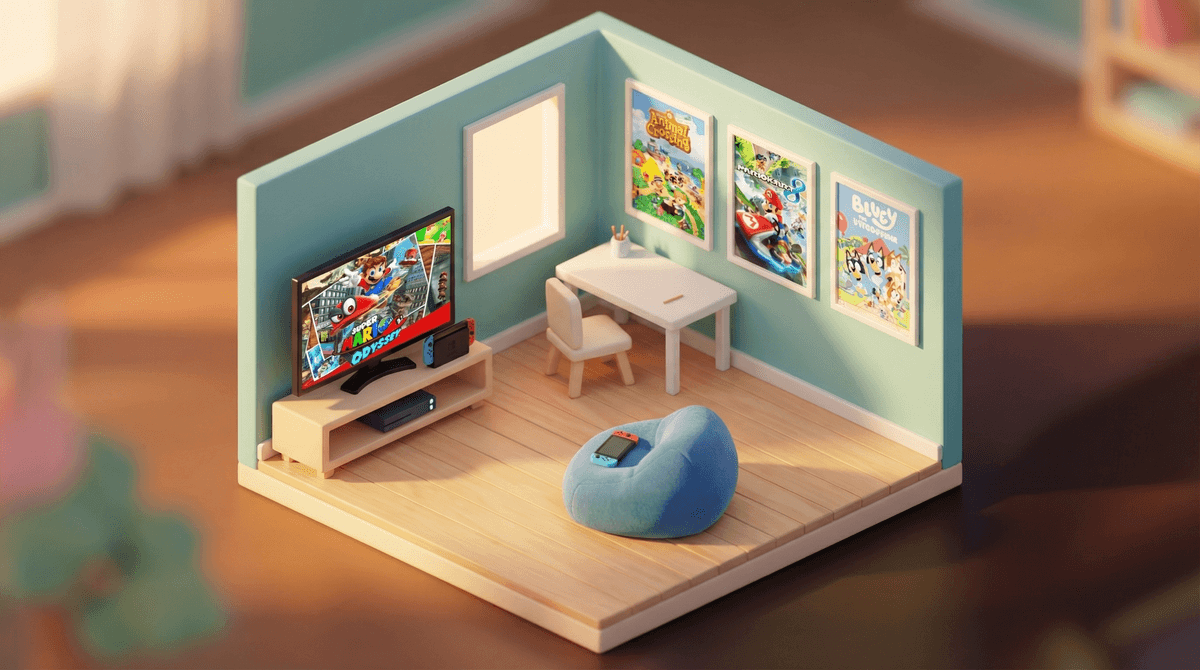
The Nintendo Switch is honestly one of the best things to happen to family gaming in a long time. It's that hybrid console that works both on your TV and as a handheld, which means it's perfect for car rides, waiting rooms, and those "I need 20 minutes to make dinner" moments. But here's the thing – not all Switch games are created equal, especially when it comes to younger kids.
When we talk about Switch games for young players, we're generally looking at ages 4-10, though some games work great for older kids too. These are games with intuitive controls (because those Joy-Cons are tiny and sometimes frustrating), age-appropriate content, and ideally, something that won't have them rage-quitting and throwing the controller across the room.
The Switch library is massive – we're talking thousands of games – but the good news is that Nintendo has always been the family-friendly gaming company. They've got this down to a science.
For kids, the Switch hits differently than other consoles. It's genuinely portable in a way that feels special – not like playing on a phone or tablet. There's something about having a "real" gaming console they can take to their friend's house or on vacation. Plus, the game selection includes so many colorful, creative, non-violent options that feel age-appropriate without being babyish.
For parents, the Switch is kind of the sweet spot. The parental controls are actually robust (you can set time limits, spending limits, and content restrictions through a phone app). The games tend to be less intense than what you'd find on PlayStation or Xbox. And honestly? Some of these games are genuinely fun to play together. Like, you might actually want to join in, not just supervise.
The local multiplayer is also huge – multiple kids can play together on one console with separate controllers, which means less "it's my turn!" drama and more actual cooperative play.
Ages 4-6: First Gaming Experiences
Pokémon: Let's Go, Pikachu/Eevee is often the gateway drug for this age group. It's colorful, the Pokémon are cute, and the mechanics are simple enough that a 5-year-old can grasp them. Plus, if they're into the shows or cards, this connects those interests.
Kirby and the Forgotten Land is surprisingly perfect for beginners. Kirby games have this brilliant feature where they're almost impossible to truly fail – you can't really get stuck. The pink puffball aesthetic is appealing, and the gameplay is forgiving.
Paw Patrol, Bluey, and other licensed games – look, I know these feel like cash grabs, and some are, but for very young kids who are just learning controllers, starting with familiar characters can reduce the learning curve. Just check reviews first because quality varies wildly.
Ages 6-8: Building Skills
Super Mario Odyssey is the gold standard here. It's a 3D platformer that starts easy and gradually builds complexity. The "Assist Mode" helps struggling players, and there's genuine creativity in the level design. This is the game that teaches kids how to really play games.
Animal Crossing: New Horizons became a cultural phenomenon for good reason. It's essentially a digital dollhouse where kids build their island, decorate, catch bugs, and fish. There's a whole guide on Animal Crossing if you want to dig deeper, but the short version: it's creative, open-ended, and genuinely calming. The real-time clock system teaches patience (you can't rush everything), though it can also create some "but I want to play NOW" frustration.
Mario Kart 8 Deluxe is the family multiplayer game. Period. The "auto-accelerate" and "steering assist" features mean even a 6-year-old can participate in family tournaments. Fair warning: this game can get competitive, so know your kid's temperament around winning and losing.
Ages 8-10: More Complex Gameplay
The Legend of Zelda: Breath of the Wild is incredible but requires reading skills and problem-solving. It's open-world, which means kids can explore at their own pace, but it can also be overwhelming. Some 8-year-olds are ready; some 10-year-olds aren't. You know your kid.
Minecraft – yes, it's on Switch, and yes, it's still massive. If they're already playing on other devices, the Switch version lets them play the same game in different contexts. Check out our guide on Minecraft alternatives for more context on why this game has such staying power.
Splatoon 3 is Nintendo's take on shooter games, but with ink instead of bullets. It's colorful, fast-paced, and has online multiplayer. This is where you need to think about whether your family is ready for online play with strangers. The game itself is fine, but online interactions are always a consideration.
Luigi's Mansion 3 hits a sweet spot – it's slightly spooky but not scary, puzzle-based, and has great co-op mode where a second player can help.
The Money Conversation
Let's talk about the elephant in the room: these games are expensive. New Switch games typically run $50-60, which is... a lot. Here's what I've learned:
- Physical cartridges can be resold or shared with friends, but they're tiny and easy to lose
- Digital games never get lost but can't be shared or resold
- The eShop has sales regularly – if you can wait, you can save 30-50%
- Some games have free-to-play elements or require subscriptions for online features
Nintendo Switch Online ($20/year for basic, $50/year for expansion pack) is needed for online multiplayer in most games. It also includes a library of classic NES and SNES games, which is actually a cool way to share gaming history with your kids.
Screen Time Reality Check
A Switch game session typically runs 30-60 minutes for younger kids, longer for older ones deep in an Animal Crossing or Zelda session. The parental controls app lets you set daily limits and sends notifications to the console when time's almost up (which gives kids time to save and finish up – much better than just yanking it away).
The "one more level" phenomenon is real. Some games have natural stopping points (Mario levels, Mario Kart races), while others (Animal Crossing, Minecraft, Zelda) are more open-ended and harder to pause. Factor this into your game choices based on your family's screen time approach.
Safety Settings
The parental controls are genuinely good. Through the app, you can:
- Set age restrictions for games
- Disable in-game purchases
- Restrict online communication
- Set playtime limits by day
- See what they've actually been playing
Online play is the biggest safety consideration. Games like Mario Kart let you race against strangers online, but there's no voice chat unless you set it up separately. Splatoon has more interaction. Find guidance on online gaming safety to think through your family's approach.
The Switch is probably the most parent-friendly gaming console out there right now, and that's not an accident – Nintendo has been in the family gaming business for decades. The game library genuinely offers something for every age and interest, from creative building to problem-solving to pure fun racing games.
Start with physical games for young kids (easier to manage, can be resold), and consider going digital once they're older and more responsible. Begin with single-player or local multiplayer before venturing into online play. And use those parental controls – they're there for a reason and actually work well.
The real magic of Switch games for young players is that they can grow with your kid. A 6-year-old playing Mario Kart with steering assist will eventually turn off those helpers and get genuinely skilled. A 7-year-old catching bugs in Animal Crossing is learning resource management and planning. And honestly, these are some of the better screen time options out there – they're interactive, often creative, and can be social in healthy ways.
Not sure which game is right for your specific kid? Find game recommendations based on their age and interests. Already dealing with gaming conflicts in your house? Explore strategies for managing gaming time. And if you want to understand the bigger picture of gaming in your kid's life, Screenwise's survey can help you see how your family's gaming habits compare to others in your community – because context really does matter.