

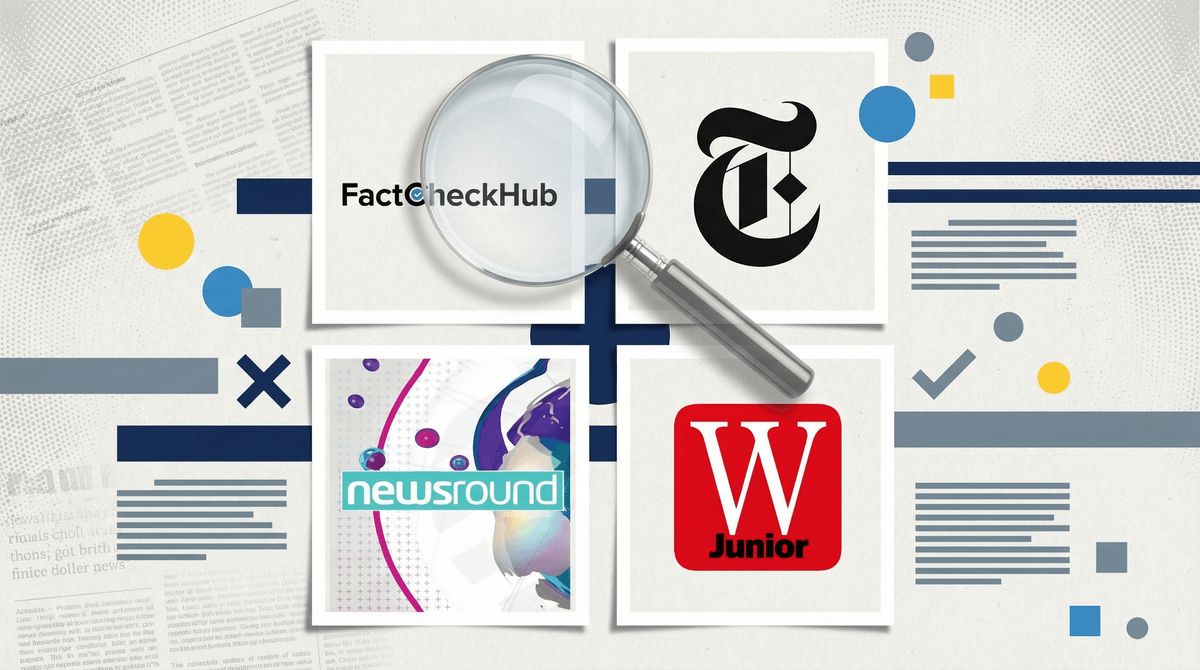
News Sources for Kids: Teaching Media Literacy in the Age of Misinformation
Here's the thing: our kids are growing up in a world where "news" can mean a TikTok from someone's bedroom, a YouTube video with 10 million views, or an actual journalist reporting from the scene. And honestly? They often can't tell the difference.
By middle school, most kids are getting their news primarily from social media—not because they're seeking it out, but because it's just there, mixed in with dance videos and gaming content. A study from Common Sense Media found that only 44% of teens say they can tell the difference between a news story and an opinion piece. That's... not great.
The good news? Media literacy is a teachable skill. And unlike trying to explain why they can't have Snapchat at age 10, this is one area where kids actually want to learn. Nobody likes feeling fooled.
Remember when news was just the thing that came on at 6 PM? Now it's everywhere, all the time, and designed to trigger emotional reactions that keep kids scrolling.
Your 10-year-old might see a headline about "BREAKING: Scientists Discover Chocolate Cures Cancer!" and take it at face value. Your 13-year-old might watch a convincing YouTube video about a conspiracy theory and not realize it's been debunked. Your 16-year-old might share a politically charged meme without checking if it's even true.
And here's what makes it tricky: some of the most engaging content is specifically designed to look like real news. Clickbait headlines, AI-generated articles, deepfakes, sponsored content disguised as journalism—it's a minefield.
The stakes are real. Kids who can't distinguish credible sources from misinformation are more likely to fall for scams, develop distorted worldviews, and struggle with critical thinking in school and beyond.
Ages 6-9: Building the Foundation
At this age, it's about establishing that not everything online is true. Start simple:
- Watch age-appropriate news together like Newsela Kids or PBS NewsHour Extra
- Ask "How do you think they know that?" when watching or reading news
- Introduce the concept that some websites are more trustworthy than others
- Point out ads vs. content—even kids' sites have sponsored posts
Ages 10-13: Developing Critical Thinking
This is when kids start consuming news independently (whether you know it or not). They need tools:
- Teach the "lateral reading" technique: when you see a claim, open new tabs to verify it rather than just scrolling down the same page
- Introduce fact-checking sites like Snopes and FactCheck.org
- Show them how to identify opinion vs. reporting (look for "I think," emotional language, lack of sources)
- Practice together: find a viral claim on social media and fact-check it as a family activity
- Subscribe to kid-focused news sources like The Week Junior or Youngzine
Ages 14+: Advanced Media Literacy
Teens are getting their news from TikTok, Instagram, and YouTube. Meet them where they are:
- Discuss bias—not just "fake news," but how all sources have perspectives
- Teach them to identify sponsored content and native advertising
- Talk about algorithms and filter bubbles: why does your feed show you what it shows you?

- Encourage following diverse sources with different viewpoints
- Discuss deepfakes and AI-generated content—it's getting incredibly sophisticated
The "Credibility Checklist" to Teach Your Kids:
- Who created this? Can you find the author's name? What are their credentials?
- What's the source? Is it a known news organization, a blog, a random TikTok account?
- When was it published? Old news can resurface and seem current
- Why was this created? To inform? To sell something? To make you angry?
- Where's the evidence? Are there sources cited? Can you verify them?
Good News Sources for Kids (By Age):
Elementary (6-10):
- Time for Kids
- Newsela (adjustable reading levels)
- National Geographic Kids
Middle School (11-13):
High School (14+):
- The Skimm (daily email newsletter)
- NPR Student Podcast Challenge
- 1440 Daily Digest (unbiased news summary)
- Mainstream sources: NYT, Washington Post, BBC, NPR (with guidance)
What About Social Media News?
Look, kids are going to see news on TikTok and Instagram. You can't stop it. But you can teach them to be skeptical:
- Social media is for discovering news, not for consuming it as fact
- Always verify before sharing
- Follow credible news organizations' official accounts, not random aggregators
- Understand that viral ≠ true
Don't make it a lecture. Instead, make media literacy part of everyday conversation:
- When something big happens in the news: "Where did you first hear about this?"
- When they share something: "That's interesting—where did you see that? Should we check if it's accurate?"
- During family dinner: "Did anyone see any interesting news today? How do we know if it's true?"
Model good behavior. Let them see you fact-checking, reading multiple sources, and admitting when you're not sure about something.
Make it a game. Challenge them to find the most outrageous fake news story of the week. Laugh about it together. Discuss why someone would create it.
Media literacy isn't about making kids cynical—it's about making them thoughtful. In a world where anyone can publish anything, the ability to evaluate sources is as fundamental as reading itself.
You don't need to be a journalism professor to teach this. You just need to start the conversation, provide some tools, and practice together. Think of it like teaching them to look both ways before crossing the street, except the street is the internet and the cars are misinformation.
The goal isn't to shield kids from all unreliable information—that's impossible. The goal is to give them the skills to navigate it themselves.
This week:
- Pick one news source appropriate for your child's age and explore it together
- Find a viral claim on social media and fact-check it as a family
- Start asking "How do we know that's true?" in everyday conversations
This month:
4. Set up a regular "news time" where you discuss current events together
5. Teach them one fact-checking website and how to use it
6. Talk about a time you fell for misinformation—normalize that it happens to everyone
Ongoing: 7. Make media literacy a regular part of your digital wellness conversations 8. Revisit these skills as your kids get older and their news consumption evolves 9. Stay curious yourself—the landscape is always changing
Need help navigating a specific news event or teaching moment? Get guidance on how to talk to kids about current events.