

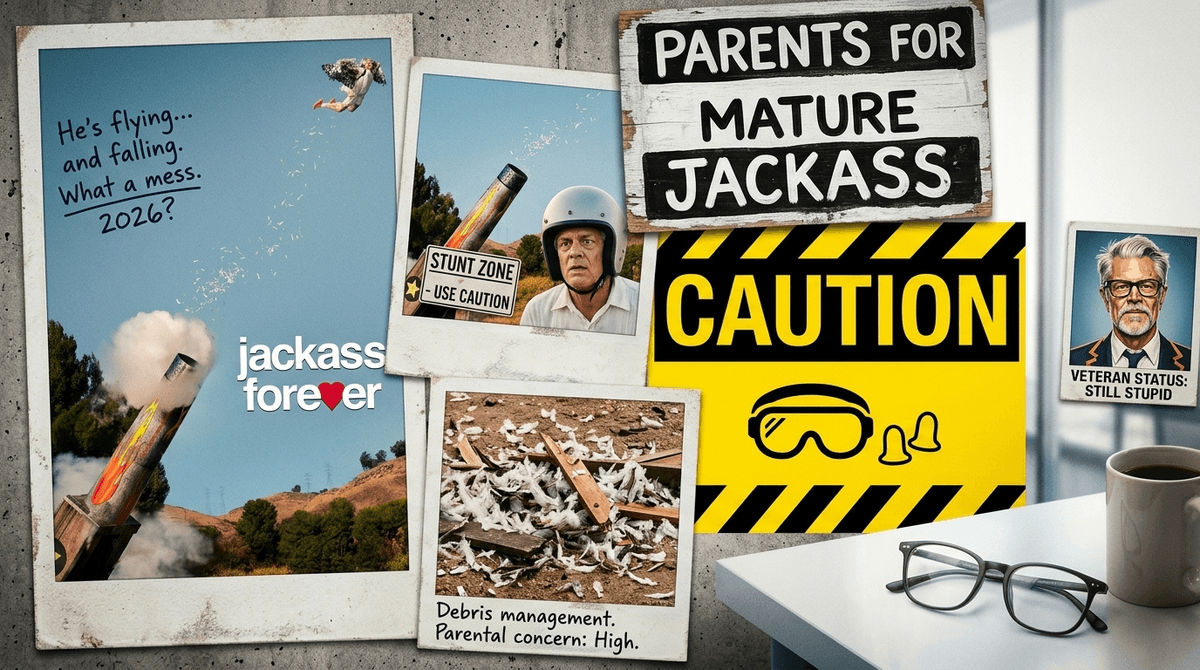
The New Jackass Movie: A Parent's Survival Guide
TL;DR: Johnny Knoxville and the crew are back with a new Jackass film dropping June 2026. It'll be rated R (obviously), full of painful stunts and bodily fluids, and yes, your teen will want to see it. Here's what you need to know about the franchise's latest installment and how to handle the inevitable "can I watch it?" conversation.
If you somehow missed the cultural phenomenon that launched in 2000, Jackass started as an MTV show where a group of friends performed increasingly dangerous and disgusting stunts for laughs. Think: getting hit by shopping carts, eating terrible things, and generally inflicting pain on themselves in creative ways. It spawned multiple movies (Jackass: The Movie in 2002, Jackass Number Two in 2006, Jackass 3D in 2010, and Jackass Forever in 2022), all rated R, all wildly successful.
Screenwise Parents
See allThe June 2026 release marks what could be the franchise's final hurrah, with Johnny Knoxville (now in his mid-50s) and the remaining crew members promising "one last ride." Given that previous films have featured everything from bull riding gone wrong to elaborate pranks involving actual danger, parents should expect more of the same—just with an aging cast who probably need longer recovery times.
The appeal is pretty straightforward: watching people do things you'd never do (and shouldn't do) is entertaining. There's something about the combination of genuine friendship, fearlessness, and complete absurdity that resonates with teens. The crew clearly cares about each other even while launching each other into pools or setting up elaborate pranks.
For boys especially (though not exclusively), Jackass represents a kind of id-driven entertainment that feels transgressive. It's the cinematic equivalent of "hold my juice box and watch this"—except with production values and insurance. The stunts are real, the pain is real, and there's no CGI safety net.
The franchise also has genuine cultural cachet. References to Jackass show up in YouTube videos, TikTok trends (though only 8% of families in our community allow TikTok), and teen conversations. Not knowing about Jackass can feel like missing a major cultural touchstone.
The Rating Isn't Negotiable: Every Jackass film has been rated R for a reason—actually, for multiple reasons. Expect:
- Graphic injuries and blood (these are real stunts with real consequences)
- Nudity (male nudity, specifically, often as part of pranks)
- Crude sexual content and humor
- Strong language throughout
- Bodily fluids and functions prominently featured
- Dangerous stunts that could inspire imitation
The "Don't Try This at Home" Problem: Here's the uncomfortable truth: kids absolutely have tried stunts inspired by Jackass. The franchise includes warnings, but teens aren't exactly known for their risk assessment skills. Every film has been followed by reports of injuries from copycat stunts. This isn't theoretical—it's documented.
The difference between watching professionals with safety crews (however minimal) and your 14-year-old attempting a skateboard trick off the garage roof is significant. But that distinction isn't always clear to developing brains that are literally still forming their prefrontal cortex.
It's Actually Rated R for Good Reasons: Unlike some R-rated films where you might think "eh, my mature 15-year-old could handle this," Jackass earns its rating. The gross-out factor is real. The injuries are real. The content is genuinely not appropriate for younger viewers, and even mature teens might find some sequences hard to watch.
The Aging Factor: With the crew now in their 40s and 50s, there's something almost poignant about watching them continue these stunts. Some parents report this actually makes the films slightly more palatable—there's a self-awareness and acknowledgment of mortality that wasn't present in the earlier, younger-and-invincible entries.
Under 13: Hard no. The content is inappropriate on multiple levels, and younger kids are more likely to attempt imitation without understanding consequences.
Ages 13-15: Still probably no for most families. If you're considering it, watch it yourself first. Some mature teens in this range might handle the content, but the imitation risk is highest here. The frontal lobe development that governs impulse control and risk assessment isn't complete until the mid-20s, and this age group is particularly vulnerable to "that looks fun, I should try it" thinking.
Ages 16-17: This is where family values and individual maturity come into play. Many teens this age have already seen clips online (42% of kids in our community use YouTube solo, without supervision). Some parents choose to watch together, using it as an opportunity to discuss:
- Risk assessment and real consequences
- The difference between trained performers with safety measures and random attempts
- Media literacy and understanding how stunts are actually planned
- Why pain and injury aren't actually that funny in real life
Ages 18+: They're legally adults and can make their own choices, though you can still express your concerns about the franchise's influence and the copycat behavior it's inspired.
If your teen asks to see the new Jackass movie, here's a framework:
Start with curiosity: "What interests you about it? Have you seen clips?" Understanding their motivation helps you respond appropriately.
Be honest about content: Don't sugarcoat what's in these films. If they're old enough to ask, they're old enough to hear specifics about why it's rated R.
Discuss the imitation issue directly: "The reason I'm hesitant isn't just the content—it's that people have been seriously hurt trying to copy these stunts. What would you do if your friends wanted to try something similar?"
Consider alternatives: If they're interested in stunt work and physical comedy, there are better options. The Fall Guy (2024) shows actual stunt work with some behind-the-scenes context. Jackie Chan films demonstrate incredible physical comedy with more artistic merit. Even America's Funniest Home Videos scratches the "people falling down is funny" itch without the R-rated content.
Set clear boundaries: If you decide no, explain why and stick to it. If you decide yes with conditions (watching together, discussing afterward), follow through.
The new Jackass movie will be exactly what you expect: painful stunts, gross-out humor, and content that absolutely earns its R rating. It's not appropriate for younger teens, and even older teens should probably watch with parental guidance if they watch at all.
The real issue isn't whether the movie itself is "good" or "bad"—it's whether your teen has the judgment to not attempt anything similar, and whether you want to tacitly endorse entertainment that's built on people hurting themselves for laughs.
For some families, that's a hard no at any age. For others, it becomes a teaching moment about media consumption, risk assessment, and the difference between professional stunts and dangerous imitation. Only you know which approach fits your family values.
Next Steps:

Whatever you decide, make it a deliberate choice rather than a default "everyone else is watching it" situation. That's what intentional parenting looks like—even when the topic is grown men willingly getting hit in sensitive areas for entertainment.