

Multicultural books for kids are stories that reflect the diverse world we actually live in — not just the one that dominated children's literature for decades. These are books where kids can see themselves, their families, their traditions, and their communities represented on the page. And just as importantly, they're windows for kids to see into lives and cultures different from their own.
We're talking about books with protagonists of different races, ethnicities, religions, abilities, family structures, and cultural backgrounds. Books that celebrate different holidays, foods, languages, and ways of life. Books where diversity isn't "the point" but just... is.
Screenwise Parents
See allAnd look, this isn't about checking boxes or performative reading lists. It's about the basic reality that when kids only see one type of family, one type of hero, one type of "normal" in their books, they're getting a wildly incomplete picture of the world. Plus, they're missing out on some genuinely amazing stories.
The research here is pretty clear: kids who read diverse books develop greater empathy, better critical thinking skills, and more nuanced understanding of the world. They're better equipped to navigate an increasingly diverse society, whether that's in their classroom today or their workplace tomorrow.
For kids who see themselves reflected in books, the impact is even more profound. There's actual data showing that when children of color see themselves as protagonists in stories — as heroes, problem-solvers, and complex characters — it positively impacts their self-esteem and academic engagement. Representation isn't just a nice-to-have; it's fundamental to how kids understand their place in the world.
But here's what's wild: despite progress, the numbers are still pretty dismal. According to the Cooperative Children's Book Center, only about 40% of children's books published in recent years feature characters of color as protagonists, despite these kids making up more than half of the U.S. child population. We're getting better, but there's still a massive gap.
Beyond the academic research, there's something simpler happening: kids are naturally curious about differences. They want to know why their friend celebrates different holidays, why some families look different from theirs, why people speak different languages. Books give them a safe, low-stakes way to explore these questions.
Multicultural books also help kids develop what researchers call "cultural competence" — the ability to interact effectively with people from different backgrounds. In a world where your kid will likely work on global teams, have friends from around the world (virtual and IRL), and navigate increasingly diverse communities, this isn't optional. It's essential.
And honestly? These books are often just better stories. When you expand beyond the same narrow set of experiences, you get richer narratives, more interesting characters, and fresh perspectives that make reading more engaging.
Not all diverse books are created equal. Here's what to look for:
Own Voices When Possible: Books written by authors from the culture they're representing tend to have more authentic details, nuanced characters, and genuine emotional resonance. A book about the Mexican holiday Día de los Muertos written by a Mexican or Mexican-American author will likely capture traditions and meanings that an outsider might miss.
Avoid Stereotypes: Watch out for books that reduce cultures to stereotypes or present them as exotic or "other." If every character from a particular background is depicted the same way, or if cultural elements are treated as strange rather than normal, that's a red flag.
Look for Complexity: The best multicultural books show characters as full, complex people whose cultural identity is part of who they are — but not their only characteristic. The protagonist who happens to be Korean-American should be dealing with friendship drama, solving mysteries, or going on adventures, not just "teaching" readers about Korean culture.
Check the Publication Date: Older books, even classics, often contain outdated or problematic depictions. That doesn't mean you can't read them, but it does mean you might need to have conversations about how perspectives have changed.
Read Reviews from the Community: Look for reviews from people within the culture being represented. If a book about Native American experiences is getting criticized by Native reviewers for inaccuracies or stereotypes, listen to that.
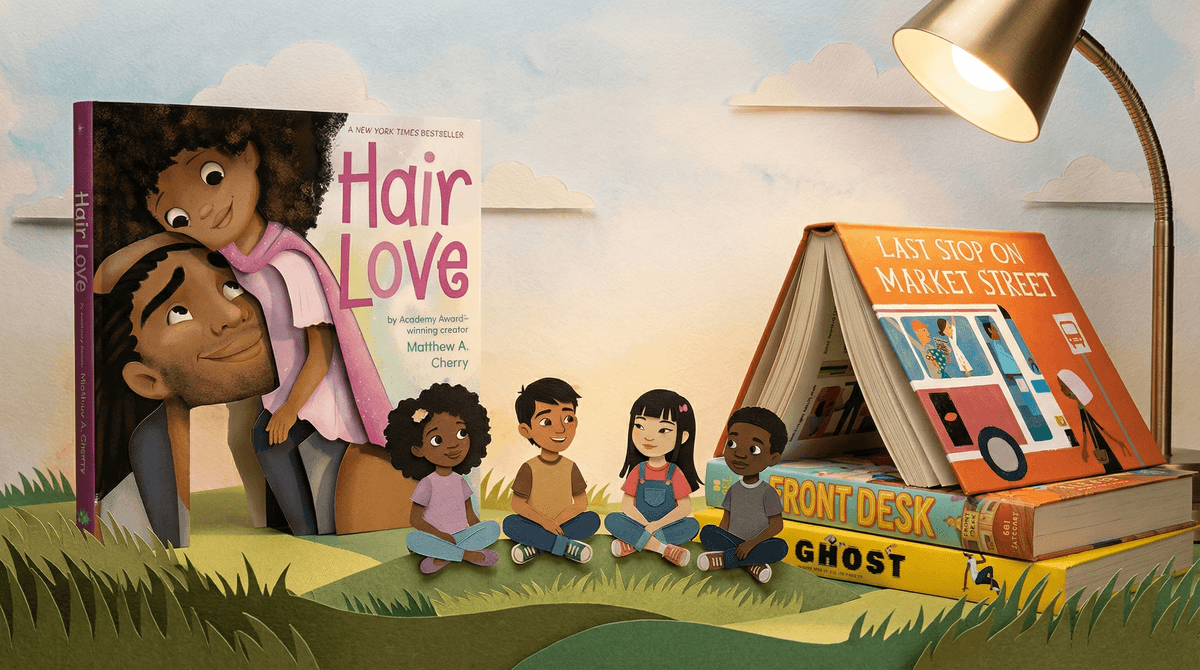
Ages 0-5: Board books and picture books that show diverse families, celebrations, and daily life. Books like Last Stop on Market Street or Hair Love normalize diversity without making it "the lesson." At this age, representation is about what's visible and normal.
Ages 6-8: Early readers and picture books that explore cultural traditions, different family structures, and historical figures from diverse backgrounds. This is a great age for books that answer the "why" questions kids are starting to ask about differences.
Ages 9-12: Middle grade novels with complex plots where diverse characters navigate universal kid experiences — friendship, school, family, identity. Books like Front Desk or Ghost by Jason Reynolds let kids see how cultural background intersects with typical middle school challenges.
Ages 13+: Young adult novels that tackle more complex themes around identity, discrimination, cultural expectations, and systemic issues. These books don't shy away from difficult topics but present them in age-appropriate ways.
Building a diverse home library isn't about hitting quotas or virtue signaling. It's about giving your kids access to the full range of human experience through stories. It's about preparing them for a world that is, in fact, incredibly diverse — whether your immediate community reflects that or not.
Start where you are. Add one or two diverse books to your next library trip. Follow book lists from organizations like We Need Diverse Books or the Conscious Kid. Ask your librarian for recommendations (they're usually thrilled to help with this).
And remember: this isn't just about reading books "about" diversity. It's about making diversity the default in your home library, the same way it is in the actual world.
Your kids won't thank you for this specifically (they're kids, they don't thank you for anything). But they'll grow up with a more expansive, empathetic, and accurate view of the world. And honestly, that's the whole point.
Not sure where to start? Get book recommendations based on your kid's age and interests. Or check out curated lists from diverse books guides that break down options by age, theme, and cultural representation.