

Let's be real: representation in kids' media has come a long way, but there's still a massive gap when it comes to Afro-Latino stories and faces on screen. We're talking about characters and actors who embody the beautiful, complex intersection of African and Latin American heritage — a reality for millions of families that's been largely invisible in mainstream entertainment.
This isn't just about checking a diversity box. It's about kids seeing themselves reflected in heroes, comedians, scientists, and everyday characters. It's about all kids understanding that Latino identity isn't monolithic, and that Black excellence shows up in every culture and language.
The good news? There are some genuinely great films out there that center Afro-Latino experiences, from animated adventures to powerful dramas. The challenge? You kind of have to know where to look, because they're not always the ones Netflix is auto-playing on your home screen.
Here's what research consistently shows: kids who see themselves represented in media develop stronger self-esteem and cultural identity. And kids who see diverse representations of others develop more empathy and understanding of the world beyond their immediate experience.
For Afro-Latino kids specifically, the stakes are even higher. They're navigating identity in a world that often tries to put them in one box or another — "Are you Black or are you Latino?" — when the answer is beautifully, complexly, both. Seeing characters who reflect that duality matters.
And for kids who aren't Afro-Latino? These movies are windows into experiences and cultures that expand their understanding of what Latino identity looks like, what Black identity looks like, and how culture, language, and heritage intersect in real, nuanced ways.
Plus, let's be honest: some of these movies are just good. Like, everyone-should-watch-them-regardless-of-background good.
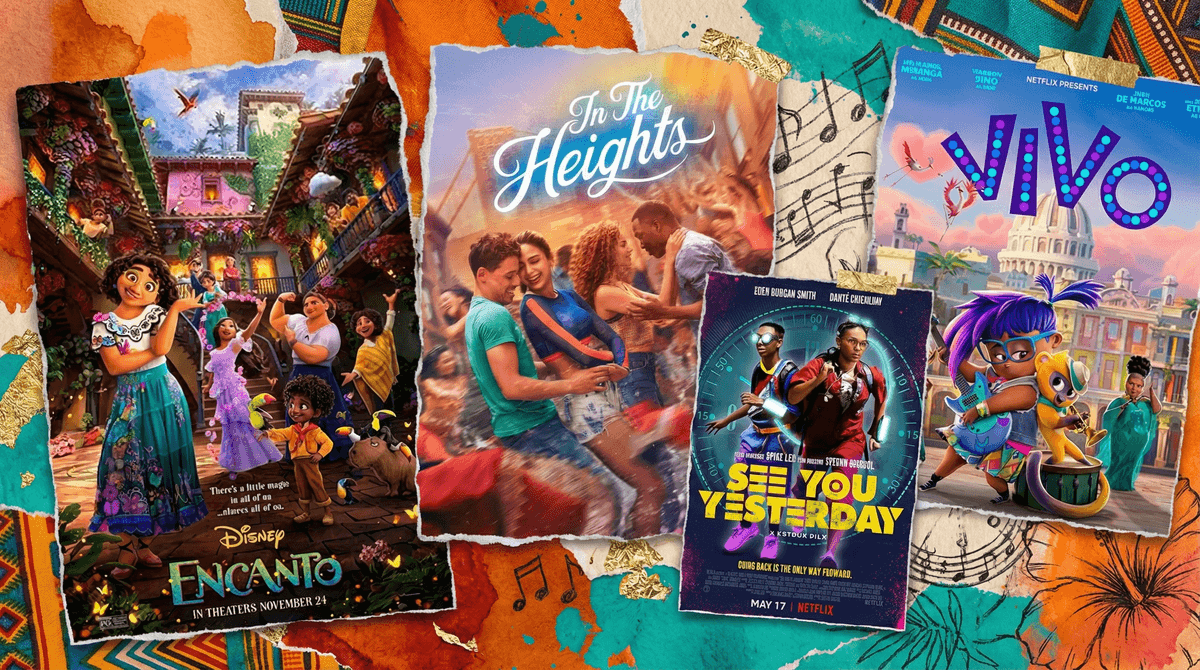
Encanto (Ages 5+) Yes, everyone's already seen it. But it's worth highlighting that this Disney film actually features Afro-Colombian representation in the character design and voice cast, particularly with the character of Félix (voiced by Afro-Puerto Rican actor Mauro Castillo) and their kids. The film doesn't make a big deal about it — it just is, which is exactly how representation should work.
Vivo (Ages 6+) This animated musical features Cuban culture front and center, with Afro-Latino representation woven throughout. The music is by Lin-Manuel Miranda, and while the main character is a kinkajou (stay with me here), the human characters reflect the actual diversity of Cuban communities. It's visually stunning and the music slaps.
In the Heights (Ages 12+) Lin-Manuel Miranda's musical celebration of Washington Heights features Afro-Latino characters and explores colorism within Latino communities in a way that's age-appropriate for tweens and teens. The character of Benny and his relationship with Nina touches on these themes without being heavy-handed. Fair warning: there's some mild language and mature themes, so preview first for younger kids.
The Book of Life (Ages 7+) This gorgeous animated film about Día de los Muertos features voice work from Zoe Saldaña (Afro-Dominican and Puerto Rican) and celebrates Mexican culture with stunning visuals. It's a great entry point for talking about cultural traditions and the way different communities honor their ancestors.
See You Yesterday (Ages 14+) This Netflix sci-fi film features Afro-Latino teens in Brooklyn who invent time travel to prevent a tragedy. It's produced by Spike Lee and deals with police violence and grief in a way that's powerful but intense. Definitely a family watch for older teens where you can process together.
Here's the frustrating part: there simply aren't enough films centering Afro-Latino experiences, especially for younger kids. The ones that exist are often:
- Animated films where representation shows up in character design but isn't explicitly discussed
- Teen/adult films that tackle heavier themes around identity and discrimination
- Independent films that never got wide distribution
This means you might need to do some digging beyond the Netflix top 10. It also means having conversations with your kids about why certain stories are harder to find — because that's a valuable lesson in itself about whose stories get told and amplified.
For younger kids (5-10): Keep it simple and observational. "Did you notice that Félix and his kids have darker skin than some of the other family members? That's because Colombian families, just like families everywhere, have all different skin tones." Or: "The characters in this movie speak Spanish and English, just like lots of families in our community."
For tweens (10-13): You can go deeper into cultural identity. "Why do you think it's important to see different kinds of Latino characters in movies?" or "What did you notice about how the film showed Cuban culture?" These are great ages for talking about stereotypes and why diverse representation matters.
For teens (13+): They're ready for real conversations about colorism, identity, and representation in media. "Why do you think there are so few films about Afro-Latino experiences?" or "How does this character's experience compare to other Latino characters you've seen in movies?" These discussions can tie into broader conversations about media literacy and who gets to tell which stories.
Finding movies with Afro-Latino representation takes a bit more work than it should in 2026, but the films that exist are worth seeking out. They offer something valuable to every kid — mirrors for those who share these identities, and windows for those who don't.
The representation isn't perfect, and there aren't nearly enough options, especially for younger kids. But supporting the films that do exist — watching them, talking about them, requesting more like them — is how we signal to studios and streaming platforms that these stories matter.
Start with the age-appropriate films above and make it a regular practice to seek out diverse representation in your family's media diet. Check out our guide to talking about race and identity with kids for more conversation starters, and explore our recommendations for diverse kids' shows to expand beyond just movies.
And hey, if you find a gem we didn't mention, let us know. We're all in this together, trying to give our kids a media landscape that actually reflects the beautiful, complex world they're growing up in.