

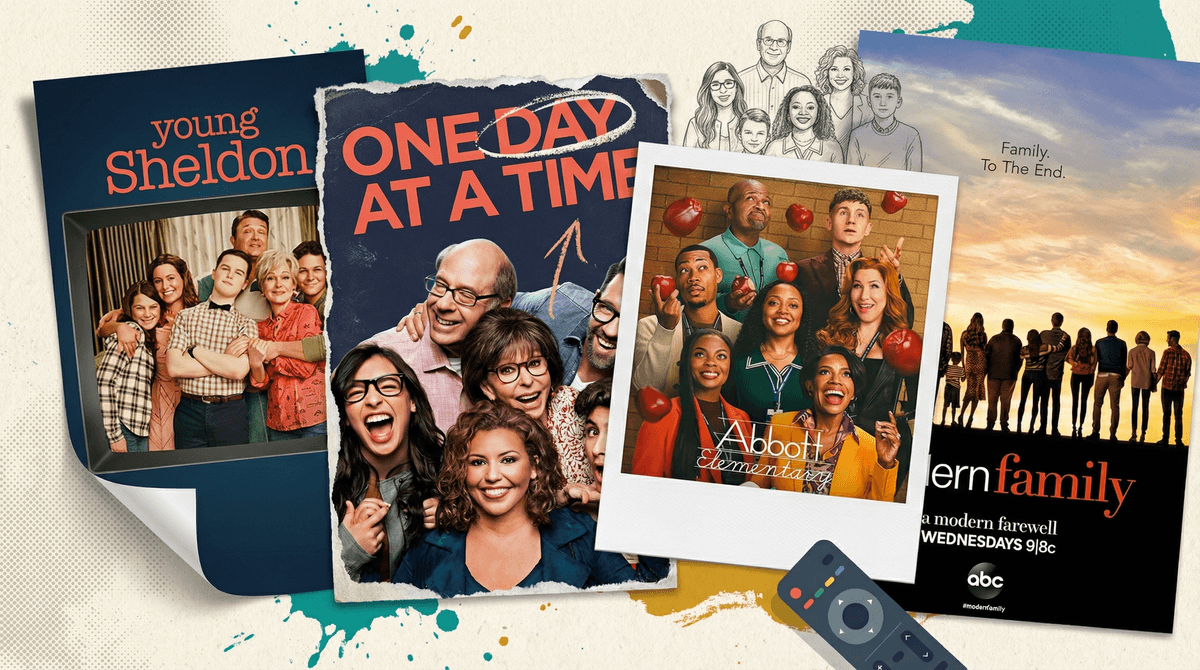
We're talking about the contemporary family comedies your kids are actually watching—shows like Abbott Elementary, The Conners, Young Sheldon, and yes, even reruns of Modern Family itself. These aren't the sanitized family sitcoms of the '90s where every problem gets solved in 22 minutes with a hug. Today's family comedies are messier, more diverse, and honestly? Way more realistic about what family life actually looks like.
The genre has evolved significantly. Where older sitcoms presented an idealized (and let's be real, predominantly white and heteronormative) vision of family life, today's shows feature blended families, same-sex parents, economic struggles, neurodivergent characters, and families that don't always have their shit together—and that's kind of the point.
Screenwise Parents
See allHere's the thing: family sitcoms are having a moment because they're one of the few types of content families can actually watch together without anyone dying of cringe. Your 10-year-old gets the physical comedy, you catch the adult references, and everyone can relate to the sibling rivalry or the parent trying desperately to stay cool.
But there's more happening here than just entertainment. These shows are actively shaping your kids' understanding of what families look like, how conflict gets resolved, what's considered funny, and what "normal" means. When your kid watches a show where a character has two moms or a family struggles with money or someone deals with anxiety, that becomes part of their reference point for the world.
The humor style matters too. Shows like The Middle normalize family chaos and financial stress in a way that can be genuinely comforting for kids whose lives don't look Instagram-perfect. Meanwhile, something like Black-ish tackles race, identity, and culture with humor that educates while it entertains.
Let's get specific about the values embedded in these shows:
Diversity as default, not special episode content. Modern family sitcoms don't do "very special episodes" about diversity—they just show diverse families existing. One Day at a Time features a Cuban-American family where immigration status, LGBTQ+ identity, and mental health are ongoing threads, not one-off lessons. This normalization is powerful.
Imperfect parents are good parents. The bumbling-but-lovable parent is a sitcom staple, but today's shows take it further. Parents make real mistakes, sometimes apologize, sometimes don't. They have their own problems, their own growth arcs. This can be healthy modeling—perfection isn't the goal, showing up is.
Sarcasm as love language. Here's where it gets tricky. A LOT of modern family comedy relies on sarcastic putdowns, eye-rolling, and snark between family members. Shows like Modern Family built entire character dynamics on this. For some kids, this registers as "oh, this is how families joke around." For others, especially younger or more literal kids, it can blur the line between playful teasing and actual meanness.
Problems don't always resolve neatly. Unlike older sitcoms, contemporary shows often leave threads hanging or acknowledge that some family issues are ongoing. This is more realistic, but it also means less of that comforting "everything's fine now" feeling.
Economic realities vary wildly. Some shows (The Conners) depict real financial struggle. Others (looking at you, most shows set in major cities) have families in massive apartments with unclear employment that makes zero economic sense. Kids absorb these lifestyle expectations, sometimes without realizing most families can't afford what TV families can.
Ages 6-9: Most contemporary family sitcoms are actually too sophisticated for this age group, despite being "family shows." The humor relies on sarcasm, innuendo, and relationship dynamics that go over their heads. Better bets: Bluey (yes, it counts as a family sitcom and it's genuinely brilliant), The Ghost and Molly McGee.
Ages 10-13: This is the sweet spot for family sitcoms. Shows like Young Sheldon, Raven's Home, and Sydney to the Max are designed for this age. They'll catch most of the jokes, relate to the kid characters, and start understanding family dynamics beyond their own experience. Watch for: sexual innuendo (it's there, even in "kid" shows), and whether your kid understands sarcasm or takes mean comments literally.
Ages 14+: Pretty much anything goes, but now you're dealing with different concerns. Shows like Schitt's Creek or even Modern Family have more adult themes, sexual content, and complex relationship dynamics. The question shifts from "is this appropriate?" to "what conversations should we have about what we're watching?"
Co-viewing is your friend here. Family sitcoms are literally designed for this. You don't have to do it every time, but watching together occasionally lets you gauge what they're picking up, what's going over their heads, and what deserves a conversation.
The "funny" family dysfunction isn't always funny. Some shows normalize behaviors that would be genuinely problematic in real life—parents who are checked out, siblings who are cruel to each other, family members who never apologize. It's worth occasionally naming this: "You know how Phil never listens to Claire? That would actually be pretty frustrating in a real marriage."
Representation matters, but tokenism is real. Yes, it's great that your kids see diverse families on screen. But some shows do this thoughtfully (like One Day at a Time) while others feel like they're checking boxes. You know your values—choose shows that align with them.
The laugh track is manipulating everyone. Shows with laugh tracks (or even without them) are teaching kids what's supposed to be funny. Sometimes that's a parent being lovingly exasperated. Sometimes it's a kid being bratty with no consequences. Sometimes it's a fat joke or a joke at someone's expense. You don't need to be the humor police, but you can notice patterns.
Your kids are comparing their family to TV families. They just are. If every family on TV lives in a gorgeous house and takes amazing vacations, that becomes the baseline expectation. If every TV family is more chaotic than yours, your rules might seem unreasonably strict. Context helps: "You know TV families aren't realistic, right? Like, where do they all work?"
Modern family sitcoms aren't evil, and they're not perfect. They're doing something genuinely valuable by showing kids that families come in all configurations, that imperfection is normal, and that humor can help us deal with hard things.
But they're also teaching values—about how family members treat each other, what's considered funny, what families should look like, and how problems get solved (or don't). The good news? You have way more influence than any TV show. These shows become teaching opportunities when you watch together and talk about what you're seeing.
The best approach: Choose shows intentionally (check out our guide to the best family shows for different ages), watch together when you can, and don't be afraid to pause and say "wait, that was actually kind of mean" or "I love how they handled that."
Your kids will roll their eyes. They'll say "it's just a show, Mom." And they're not entirely wrong—but they're not entirely right either. The stories we consume shape how we see the world, even the funny ones. Especially the funny ones.
- Audit what your kids are actually watching. Not to ban things, but to know what messages they're absorbing.
- Pick one show to watch together this week. Make it a thing. Popcorn, commentary, the works.
- Ask questions that start conversations: "Which family is most like ours? Least like ours?" "Would you want to be friends with [character]?" "Was that actually funny or just mean?"
- Explore alternatives if sitcoms aren't working for your family—there are other ways to get that shared viewing experience.
And remember: if your kid starts talking in a sarcastic sitcom voice, you have permission to be annoyed. That's not a value judgment on the shows—it's just genuinely irritating.