

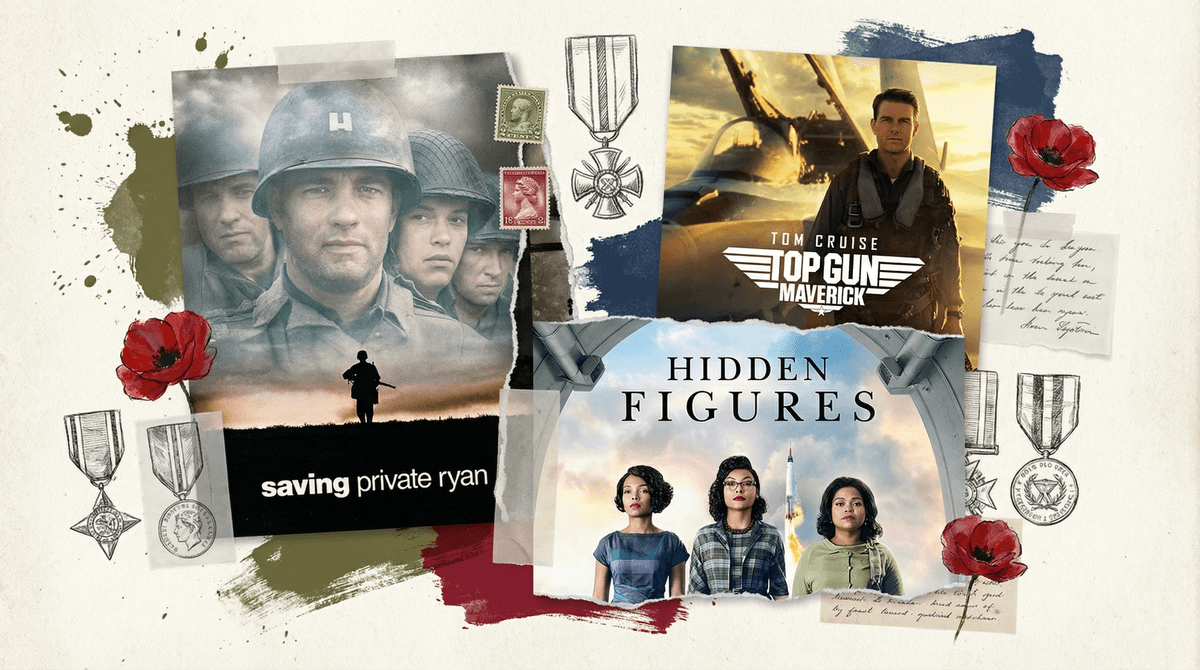
Memorial Day weekend has become synonymous with blockbuster releases and movie marathons, but the holiday itself is about honoring those who died in military service. Many families want to mark the occasion with films that teach kids about sacrifice, service, and history—but here's the thing: most war movies are absolutely not appropriate for kids.
We're talking about a genre where the "good" ones are often the most brutally realistic. Saving Private Ryan opens with 27 minutes of D-Day carnage that traumatized adults in theaters. Platoon is a masterpiece that no child should watch. Even Top Gun: Maverick—which feels like a recruitment video wrapped in a summer blockbuster—has intense combat sequences.
So how do you honor the holiday's meaning without exposing your 8-year-old to graphic violence? That's what we're here to figure out.
Memorial Day offers a genuine teaching moment about service, sacrifice, and the cost of freedom—concepts that are abstract for kids until you give them stories. But there's a massive gap between "age-appropriate patriotic content" and "historically accurate war films."
The challenge is that sanitizing war too much teaches the wrong lesson. If we only show kids movies where war is exciting and heroic with no consequences, we're not honoring anything—we're just creating propaganda. But showing a 10-year-old the opening of Saving Private Ryan is going to give them nightmares, not teach them history.
The sweet spot exists, but it requires being intentional about what you're showing and why.
Ages 5-8: Focus on Service, Not Combat
At this age, skip war movies entirely. Instead, focus on stories about helping others, community service, and what it means to be brave.
Better options:
- Talk about what Memorial Day means in simple terms: "We remember people who were very brave and helped keep others safe"
- Watch documentaries about military working dogs or service animals
- Read picture books about veterans or service (not combat)
- Do a service project together—visit a memorial, put flags on graves, write thank-you cards to active service members
If you must have screen time, Bluey has episodes about remembrance and community that work better than any war film.
Ages 9-12: Historical Context with Careful Curation
This is when you can start introducing WWII and historical conflict, but you need to be selective.
Solid choices:
- Hidden Figures (PG) - Not a war movie, but shows the home front contribution during the Space Race/Cold War era. Smart, inspiring, and teaches about overlooked heroes.
- Flags of Our Fathers (R, but...) - This is rated R and has intense battle scenes, so it's really for mature 12-year-olds only. The film focuses on what happened after the famous Iwo Jima photo—the propaganda tour, the complexity of heroism, the cost of war. If you watch it with a 12-year-old, you'll need to fast-forward through the most graphic combat.
- Unbroken (PG-13) - Louis Zamperini's story is incredible, but heads up: the POW camp scenes are intense. This is for mature tweens who can handle sustained psychological tension and some physical abuse (not graphic, but difficult).
- The Tuskegee Airmen (1995, PG-13) - HBO film about the first Black military pilots. Deals with racism and combat, but less graphic than most war films.
What to avoid: Anything Spielberg directed about WWII (Saving Private Ryan, Schindler's List), Hacksaw Ridge (unbelievably violent despite the protagonist being a pacifist), 1917, Dunkirk (too intense for most kids despite PG-13 rating).
Ages 13+: Real Conversations About War
Teens can handle more, but "can handle" doesn't mean "should watch without context." This is when you can introduce truly great war films—but you need to watch with them and talk afterward.
Worth watching together:
- Saving Private Ryan (R) - If you're going to show them a WWII film, this is the one. But seriously, prepare them for the opening sequence and be ready to pause and discuss.
- Glory (R) - About the first Black regiment in the Civil War. Powerful, important, and yes, violent.
- Letters from Iwo Jima (R) - Shows the Japanese perspective. Critical for teaching that war is more complex than "good guys vs. bad guys."
- Band of Brothers (TV-MA) - The miniseries, not a movie, but if your teen is interested in WWII, this is the gold standard. Graphic, but historically valuable.
Modern war films to skip entirely with kids: American Sniper, The Hurt Locker, Lone Survivor, Black Hawk Down. These are about recent conflicts that are still politically charged, and they're incredibly violent. Save these for when they're adults.
The Patriotism Problem
Here's the uncomfortable truth: a lot of "patriotic" war movies are just propaganda. They glorify combat, simplify complex conflicts, and treat enemy soldiers as faceless villains. That's not honoring service—that's recruitment marketing.
The best war films are actually anti-war films. They show the cost, the trauma, the moral complexity. Saving Private Ryan isn't pro-war—it's pro-"never forget what these people went through." That's a crucial distinction.
If you're showing your kid a war movie and they come away thinking "that looks cool, I want to do that," you've chosen the wrong movie.
The Violence Question
You know your kid better than any rating system. Some 13-year-olds can handle Saving Private Ryan's opening and understand it in context. Some 16-year-olds will be traumatized.
Things to consider:
- Is your kid anxious? War movies might not be the move.
- Have they learned about this conflict in school? Context helps.
- Can they separate historical violence from entertainment violence? If they're still watching Marvel movies and going "cool!" at explosions, they might not be ready for realistic war films.
- Are you willing to watch with them and talk afterward? If not, skip it.
Documentaries Are Underrated
Honestly? For most families, documentaries are better than war movies for Memorial Day. They provide historical context without the Hollywood treatment.
Good options:
- The War by Ken Burns (PBS) - WWII documentary series, some intense footage but more educational than traumatizing
- Valor & Sacrifice (various streaming) - Shorter documentaries about individual stories
- National Geographic's WWII series - Age-appropriate historical content
These teach without the graphic violence, and they feel more respectful to the actual people who served.
Memorial Day isn't really about movies. It's about remembrance. If you're using screen time to mark the occasion, make sure you're teaching something real—not just filling time with patriotic imagery.
For younger kids, skip war content entirely and focus on service and gratitude. For tweens, choose carefully and watch together. For teens, use it as an opportunity to discuss the real cost of conflict.
And honestly? The best way to honor Memorial Day might be to skip the screen time altogether. Visit a memorial. Talk to a veteran. Do a service project. Put flags on graves. Have a conversation about what sacrifice means.
If you do watch something, make it count. Watch together, pause when needed, and talk afterward. Ask: "What did you learn? How do you think those people felt? Why is it important to remember this?"
Because the goal isn't to make your kid think war is cool. It's to help them understand why peace is worth fighting for.
- Know your kid's readiness level - Age ratings are guidelines, not rules. A mature 12-year-old might handle more than an anxious 15-year-old.
- Preview before showing - Seriously. Watch it yourself first or read detailed parent reviews on Common Sense Media.
- Plan to watch together - This isn't background noise. If you're showing a war film, you need to be present for questions and conversations.
- Balance screen time with real-world remembrance - Movies are fine, but they shouldn't be the only way you mark the holiday.
- Follow up with conversation - "What did you think?" "What surprised you?" "What questions do you have?"
Want to explore more age-appropriate historical content? Or wondering how to talk to kids about difficult topics like war?
The right movie can teach. The wrong one just traumatizes. Choose wisely.