

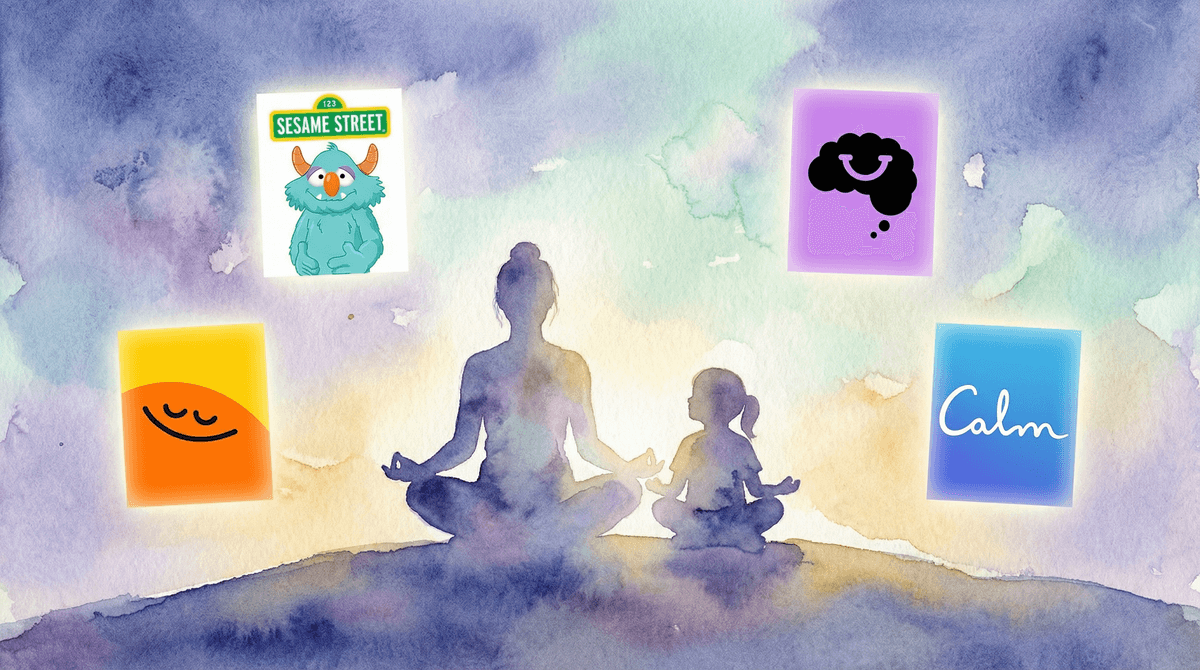
Look, I get it. The idea of using more screen time to solve the problems caused by screen time feels a little... ironic? But here's the thing: meditation and mindfulness apps designed for families are actually one of the few categories of digital tools that consistently deliver on their promises.
These apps teach breathing exercises, guided meditations, body scans, and other mindfulness techniques that help both kids and adults manage stress, improve focus, and regulate emotions. Some are designed specifically for children with kid-friendly voices and short sessions. Others offer family modes where everyone can practice together. And unlike most apps vying for your family's attention, these are explicitly designed to help you disengage from screens and be more present.
The best part? They're actually working. Research shows that even short, consistent mindfulness practice can help kids with anxiety, improve attention spans, and build emotional regulation skills. And parents? We need this stuff just as much as our kids do.
If you've noticed your kid melting down more frequently, struggling to focus on homework, or spiraling into anxiety about school or friendships, you're not alone. Childhood anxiety rates have been climbing for years, and the constant stimulation from devices isn't helping.
But here's what's interesting: while excessive screen time can contribute to stress and attention problems, mindful screen time can actually be part of the solution. Apps like Headspace and Calm aren't trying to keep your kid hooked for hours. They're teaching skills that translate directly to real life—like how to calm down before a test, fall asleep when your brain won't shut up, or handle disappointment when you lose at Fortnite.
And let's be honest: modeling healthy coping strategies is hard when we're all stressed out ourselves. Using a meditation app together gives you a shared language for managing emotions. When your kid is losing it, you can say "Hey, want to do a three-minute breathing exercise together?" instead of "JUST CALM DOWN" (which has never worked in the history of parenting).
Headspace has a dedicated kids section with meditations organized by age (under 5, 6-8, 9-12) and topic (calming down, focus, kindness, sleep). The animations are adorable without being babyish, and sessions range from 3-10 minutes. Parents get their own content too, including meditations specifically about parenting stress. Yes, please.
Calm is probably best known for its celebrity sleep stories (Harry Styles reading you a bedtime story, anyone?), but their kids' content is solid. They have breathing exercises, sleep stories for children, and movement-based mindfulness activities. The production quality is top-notch.
Smiling Mind is a free Australian app that's completely ad-free and nonprofit. It has programs designed for different age groups from preschool through adults, plus specific programs for sports, classrooms, and workplaces. The fact that it's free makes it incredibly accessible.
Breathe, Think, Do with Sesame is perfect for younger kids (ages 2-5). It features a furry monster who needs help with everyday challenges like feeling frustrated or going to bed. Kids tap, drag, and swipe to help the monster practice breathing and problem-solving. It's more interactive than most meditation apps and feels like play.
Stop, Breathe & Think Kids (ages 5-10) lets kids check in with their emotions using emoji-like faces, then suggests meditation and breathing activities based on how they're feeling. This emotional check-in process is valuable on its own—teaching kids to identify and name their feelings.
Ages 3-5: Keep it short (2-3 minutes max) and interactive. Apps like Breathe, Think, Do work well because they involve tapping and movement, not just sitting still. Practice together and make it part of your routine—before nap time or after a tantrum.
Ages 6-9: Kids this age can handle 5-10 minute sessions and are starting to understand the concept of "thoughts" versus "feelings." They can benefit from guided visualizations and simple breathing exercises. This is a great age to introduce meditation as a tool for specific situations—before tests, after arguments with friends, or when feeling worried.
Ages 10-13: Tweens can use most adult meditation content, though kid-specific versions often feel less intimidating when starting out. They're old enough to practice independently and might actually want to—especially if they're dealing with school stress or social anxiety. Some kids this age prefer meditation apps without the cutesy animations.
Ages 14+: Teens can use any adult meditation app. The challenge here isn't capability—it's convincing them to try it. Many teens are surprisingly receptive to meditation if it's framed as a performance tool (athletes use it!) or a way to manage stress without talking to adults about their feelings.
These apps work best as a regular practice, not an emergency intervention. Sure, you can pull out a breathing exercise when your kid is mid-meltdown, but the real benefits come from consistent use. Even 3-5 minutes daily makes a difference.
You don't need to be "good at meditation" to use these apps. If your kid (or you) gets distracted, fidgets, or thinks it's boring at first, that's completely normal. The point isn't to empty your mind or achieve some zen state—it's just to practice paying attention to the present moment.
Model it yourself. If you're telling your kid to meditate while you're doomscrolling Instagram, the message doesn't land. Use the apps yourself. Let your kids see you taking a breathing break when you're stressed.
Watch out for subscription fatigue. Most of these apps require subscriptions ($5-15/month or $50-70/year). Some offer family plans. Smiling Mind is completely free, which is amazing. Many apps offer free trials—use them to figure out what actually resonates with your family before committing.
It's not therapy. Meditation apps are excellent tools for general stress management and emotional regulation, but they're not substitutes for professional help if your child is struggling with significant anxiety, depression, or other mental health concerns.
The hardest part isn't finding the right app—it's building the habit. Here's what actually works:
Anchor it to existing routines. Five minutes of meditation after teeth-brushing at bedtime. Three minutes of breathing before homework. Right after soccer practice in the car.
Do it together, at least at first. Family meditation sessions—even short ones—make it feel less like a chore and more like something you value as a family.
Let kids choose. Once they understand how the app works, let them pick which meditation or exercise to do. Autonomy increases buy-in.
Track it visually. Some apps have built-in streak trackers. Or make your own chart. Kids love seeing their progress.
Talk about what you notice. "I felt calmer after that breathing exercise." "Did you notice your shoulders relaxed?" Naming the benefits helps kids connect the practice to real outcomes.
Meditation apps for families occupy a rare category: screen time that actually helps you be less dependent on screens. They teach skills that translate directly to managing the stress, overstimulation, and emotional dysregulation that often come from too much screen time.
Are they going to solve all your family's problems? No. But they're a tool—a good one—for building emotional regulation skills that serve kids (and adults) for life.
Start with a free option like Smiling Mind or a free trial of Headspace or Calm. Try it for two weeks, just 5 minutes a day. See what happens. You might be surprised how much calmer bedtime becomes, or how much easier it is for your kid to transition from screen time to homework.
And hey, if nothing else, you'll have a legitimate reason to tell your kid to get on their iPad. That's worth something.
- Explore Headspace or Calm to see which interface appeals to your family
- Download Smiling Mind (it's free!) and try one family session this week
- Learn more about managing screen time anxiety

- Check out our guide on creating healthy bedtime routines that incorporate mindfulness