

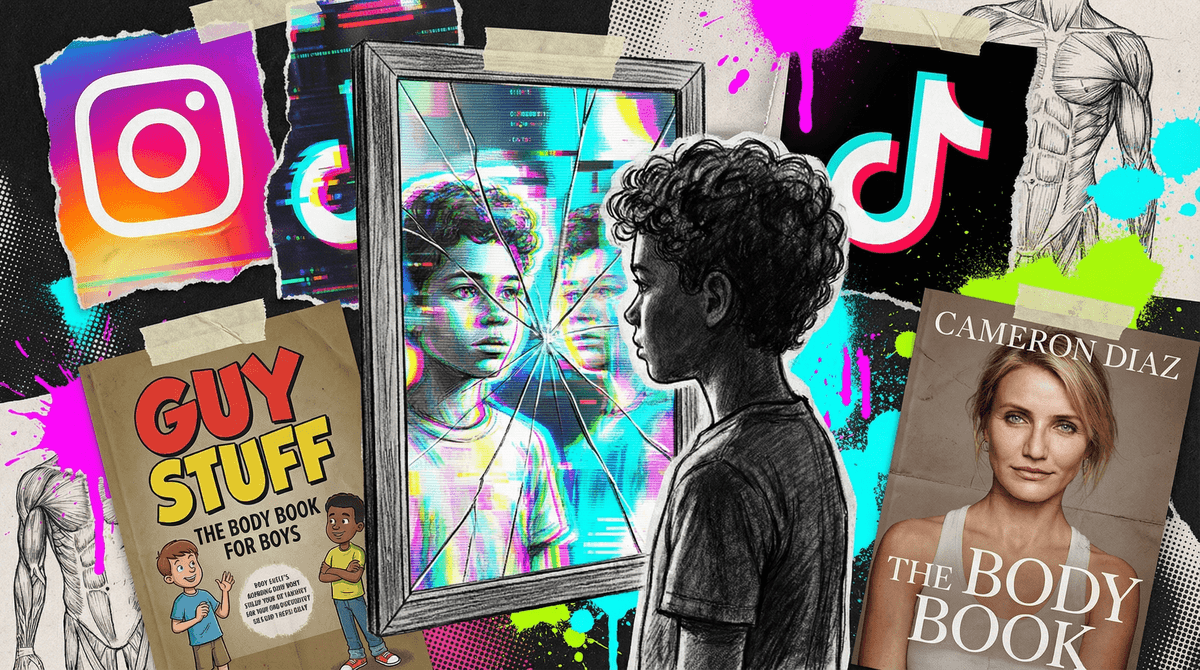
Let's just say it: our kids are growing up in the first generation where they can edit their face before anyone else sees it. Where "beauty" means a filter. Where the gap between what bodies actually look like and what bodies look like on screens has never been wider.
And the research? It's not great.
A 2023 study found that teens who spend more than 3 hours daily on social media face double the risk of poor mental health outcomes, including body image issues and eating disorder symptoms. Another study showed that 40% of girls ages 10-12 have already used a filter or editing app to change their appearance. Ten. Years. Old.
But here's what's tricky: it's not just about "too much screen time." It's about what they're seeing, who they're comparing themselves to, and how platforms are literally designed to make them feel inadequate so they keep scrolling.
The body image stuff isn't new. We grew up with magazines and unrealistic beauty standards too. But social media has fundamentally changed three things:
1. The comparison is constant and personalized
It's not a magazine you flip through once. It's an endless feed, algorithmically designed to show you exactly the content that triggers engagement (read: anxiety, envy, inadequacy). Your 13-year-old isn't comparing herself to one supermodel. She's comparing herself to 47 influencers, her classmates' curated highlight reels, and AI-generated "perfect" bodies that don't even exist.
2. The feedback is immediate and quantifiable
Every post becomes a referendum on their worth. Likes, comments, views—it's all data about how "good" they look. Research from the University of Pennsylvania found that teens who reduced social media use to 30 minutes per day showed significant decreases in anxiety and fear of missing out. The metric-ification of appearance is genuinely messing with their heads.
3. The editing tools are in their pockets
Filters aren't just fun bunny ears anymore. They're sophisticated face-tuning that smooths skin, enlarges eyes, slims noses, and creates a version of themselves that doesn't exist. One study found that 90% of young women use filters on social media. When your "real" face doesn't match your "online" face, that's called cognitive dissonance, and it's exhausting.
Let's get specific about what we know:
Instagram and TikTok are the worst offenders. Internal research from Meta (leaked in 2021) showed that Instagram made body image issues worse for 1 in 3 teen girls. TikTok's algorithm is even more aggressive, serving up an endless stream of "what I eat in a day" videos, fitness content, and appearance-focused trends.
Boys aren't immune. While girls face pressure around thinness and conventional beauty, boys are dealing with toxic fitness culture, steroid content, and pressure to look "jacked." Research shows that muscle dysmorphia among teen boys has increased significantly alongside social media use.
YouTube can be a mixed bag. While YouTube has problematic content (diet culture, fitness extremism, beauty standards), it also has longer-form content that can be more educational and less comparison-focused than Instagram or TikTok. It really depends on what they're watching.
Even "positive" content can backfire. Body positivity and self-love content sounds great, but research shows that even exposure to body-positive posts can increase body dissatisfaction for some teens—because they're still focused on appearance, just with a different message.
Ages 5-9: The foundation years
They're probably not on social media yet (and shouldn't be—most platforms require age 13+). But they're watching YouTube, seeing ads, and absorbing messages from shows and games. This is when you build media literacy: talk about how images are edited, how ads work, how characters in shows don't represent real bodies.
Good moves: Watch stuff together. Point out when something looks "too perfect." Read books with diverse body types like The Body Book by Cameron Diaz (actually age-appropriate and science-based).
Ages 10-13: The danger zone
This is when it starts. They're getting phones, creating accounts, seeing what everyone else looks like online. Research shows this is the age when body dissatisfaction spikes, especially for girls.
Good moves: Delay social media as long as possible (seriously). If they're on platforms, have their accounts private and follow them. Use Instagram's parental supervision tools if they're on there. Talk explicitly about filters and editing—show them before/after photos of influencers without editing.
Ages 14-17: The long game
They're on everything. You're not going to control their media diet anymore. Now it's about critical thinking and ongoing conversation.
Good moves: Ask questions. "How do you feel after scrolling?" "Do you think that's what she really looks like?" "What do you notice about the bodies you see online vs. real life?" Follow diverse creators together—people with different body types, abilities, ages. Check out this guide on helping teens develop media literacy .
.
You can't monitor everything, but watch for:
- Sudden changes in eating habits or exercise obsession
- Spending excessive time taking/editing selfies
- Negative self-talk about appearance
- Withdrawal from activities they used to enjoy
- Following a lot of fitness/beauty/diet content
- Asking for cosmetic procedures or products
If you're seeing these signs, it's time for a real conversation—and possibly professional support. This isn't "just a phase."
You can't eliminate the problem, but you can reduce the harm:
Model healthy behavior. If you're constantly complaining about your own body or editing your photos, they're learning that's normal.
Diversify their feeds. Help them follow athletes, artists, scientists, comedians—people valued for what they do, not just how they look. Suggest creators like Tabitha Brown (body positivity), Hank Green (science), or sports figures they admire.
Create phone-free zones. Research shows that even just having your phone visible during meals increases anxiety. Make bedrooms, dinner table, and family time phone-free.
Talk about the business model. Help them understand that platforms make money by keeping them scrolling, and that feeling inadequate is literally the point. It's not a conspiracy theory—it's their business model.
Emphasize function over form. Talk about what bodies do—run, dance, hug, create—not just how they look.
The research is clear: social media and screen time are contributing to a body image crisis among kids and teens. But this isn't about being anti-technology or banning everything.
It's about being intentional. It's about teaching kids to be critical consumers of media. It's about delaying access to the most harmful platforms as long as possible. And it's about having ongoing, honest conversations about what's real and what's not.
Your kid is going to see unrealistic beauty standards. They're going to compare themselves to others. They're going to feel inadequate sometimes. That's unfortunately part of growing up in 2026.
But with your guidance, they can also learn to recognize manipulation, question what they see, and build self-worth that isn't based on likes and filters.
-
Audit their current media diet. What apps are they on? Who do they follow? What content dominates their feed?
-
Have the filter conversation. Show them examples of influencers without filters
or before/after editing. Make it explicit that what they see online isn't real. -
Set some boundaries. Whether it's screen-free meals, no phones in bedrooms, or limiting certain apps, pick something that works for your family.
-
Keep talking. This isn't one conversation. It's an ongoing dialogue about media, bodies, self-worth, and what really matters.
If you want personalized guidance based on your kid's age and what they're actually using, take the Screenwise survey to get recommendations specific to your family.