

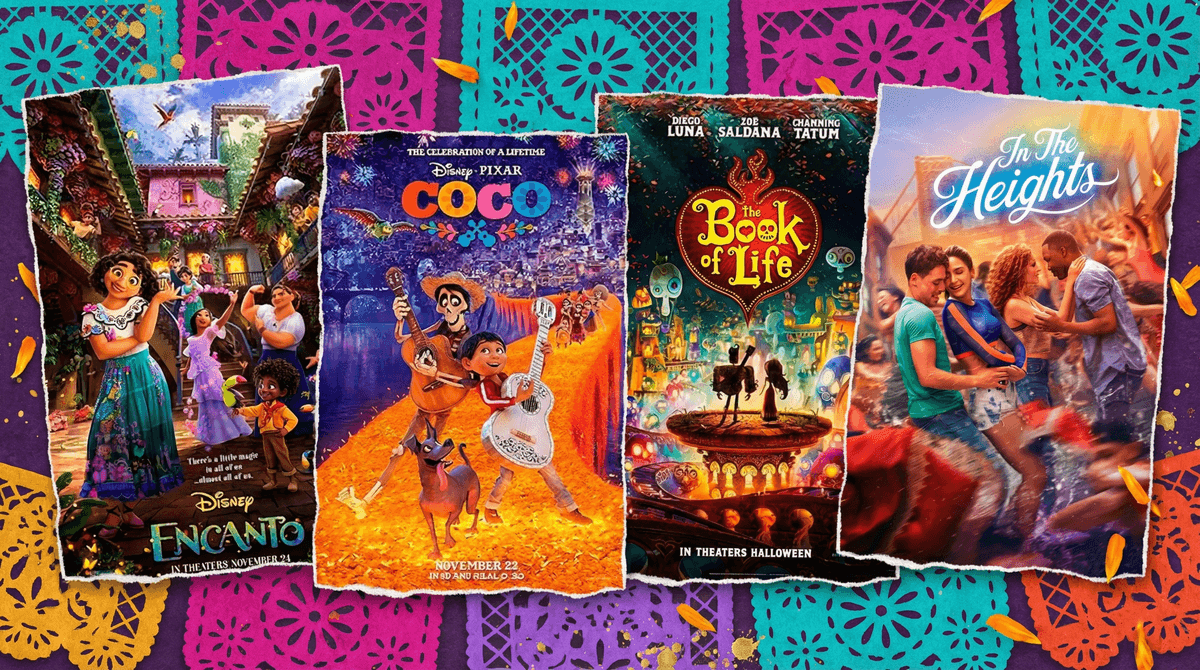
Latino movies for families are films that center Latino characters, culture, stories, and experiences — from animated adventures featuring Mexican folklore to coming-of-age stories set in Miami's Cuban community. These aren't just "movies that happen to have Latino characters" (though representation matters everywhere). These are films where Latino culture, language, values, and experiences are front and center.
And here's the thing: these movies aren't just for Latino families. They're for all families who want their kids to see diverse stories, hear different languages, and understand that there are many ways to be a family, celebrate traditions, and navigate the world.
Whether you're looking to connect your kids to their heritage, expose them to Spanish language in a natural way, or simply show them that not every protagonist looks like the last fifty Disney princes, Latino family films offer something powerful: stories that reflect real experiences while being genuinely entertaining.
Let's be real — representation in media shapes how kids see themselves and others. For Latino kids, seeing their culture celebrated on screen (not stereotyped, not tokenized, but genuinely celebrated) sends a message: your stories matter, your language is beautiful, your family's traditions are worth sharing.
For non-Latino kids, these films build cultural fluency and empathy. They normalize hearing Spanish in conversation, seeing different family structures, and understanding that quinceañeras and Día de los Muertos aren't exotic — they're just life for millions of families.
Plus, many Latino films center family in a way that's honestly refreshing. Multi-generational households, tight-knit extended families, the tension between tradition and assimilation, the immigrant experience — these themes resonate across cultures because they're fundamentally human stories.
Ages 3-7: Animation & Magic
Encanto is the obvious starting point, and for good reason. It's gorgeous, the music slaps (your kids will sing "We Don't Talk About Bruno" for months, sorry), and it tackles family pressure and generational trauma in a way that's accessible for young kids but hits hard for adults. Set in Colombia with a magical realist vibe, it's genuinely one of Disney's best recent films.
Coco is another Pixar masterpiece. Yes, it deals with death and Día de los Muertos, but it's handled so beautifully that even young kids can process it. The message about family, memory, and pursuing your dreams is universal. Fair warning: you will cry. Multiple times.
Maya and the Three (Netflix limited series) is from the creator of The Book of Life and features Mesoamerican mythology with a fierce warrior princess protagonist. It's more intense than Encanto — think epic battles and higher stakes — so better for older kids in this age range (6-7+), but the animation is stunning and the cultural references are rich.
Ages 8-12: Coming of Age & Adventure
Vivo (Netflix) is a Lin-Manuel Miranda musical about a kinkajou and a girl traveling from Havana to Miami to deliver a love song. It's sweet, the music is catchy, and it explores Cuban culture and the immigrant experience without being heavy-handed.
The Book of Life is visually stunning (the animation style is inspired by Mexican folk art) and centers on the Day of the Dead. It's got romance, adventure, and a really fun take on Mexican mythology. Great for kids who loved Coco and want something with more action.
McFarland, USA is a true story about a cross-country team in a predominantly Latino farming community in California. It's a sports movie, yes, but it's also about class, immigration, family sacrifice, and what it means to belong. Inspiring without being cheesy (mostly). PG for some mild language and thematic elements.
Gabi's Dollhouse (Netflix) — okay, this is for younger kids (preschool-early elementary), but worth mentioning. Gabi is Latina, bilingual, and the show incorporates Spanish naturally throughout. It's crafty, colorful, and doesn't make a big deal about representation — it just is.
Ages 13+: Real Stories & Complex Themes
In the Heights is the Lin-Manuel Miranda musical set in Washington Heights, NYC. It's about gentrification, community, dreams deferred, and what "home" means when your neighborhood is changing. The music is incredible, and it's a love letter to Latino culture in New York. PG-13 for some language and thematic elements.
Selena (1997) is a classic biopic about Selena Quintanilla, the Tejano music icon. It's a great conversation starter about cultural identity, family dynamics, and the pressure of fame. Jennifer Lopez is fantastic. PG for some mild language and emotional intensity.
Spare Parts is based on the true story of undocumented high school students who built a robot and competed against MIT. It's about STEM, immigration, and perseverance. PG-13 and genuinely inspiring.
On My Block (Netflix) — this is a teen dramedy set in a predominantly Latino neighborhood in LA. It's funny, heartfelt, and deals with real issues like gang violence, poverty, and friendship. Definitely for older teens (TV-14) due to language, sexual content, and mature themes, but it's one of the most authentic portrayals of Latino teen life on TV.
Language: Many of these films include Spanish dialogue, sometimes with subtitles, sometimes code-switching naturally between English and Spanish. This is a feature, not a bug. If your kids aren't used to subtitles, start with films like Encanto or Coco where Spanish is present but not dominant. It's actually a great way to normalize bilingualism.
Cultural specificity matters: Not all Latino cultures are the same. Mexican, Cuban, Puerto Rican, Colombian, Dominican — these are distinct cultures with different histories, traditions, and experiences. Films like Encanto (Colombia), Coco (Mexico), and Vivo (Cuba) each offer specific cultural windows. Don't treat them as interchangeable.
Stereotypes to watch for: Unfortunately, not every film with Latino characters avoids stereotypes. Watch out for movies that only show Latino characters as gang members, maids, or comic relief. The films listed above center Latino characters as fully realized people with complex stories — that's the standard.
Family conversations: These films often touch on immigration, identity, language, and belonging. Be ready for questions. "Why did Miguel's family not want him to play music?" "What does it mean to be undocumented?" "Why does Mirabel feel like she's not good enough?" These are good conversations to have.
Latino movies for families aren't a niche category — they're just good movies that happen to center Latino culture and experiences. Whether you're connecting your kids to their heritage, building cultural awareness, or just looking for something fresh that isn't another Marvel sequel, these films deliver.
Start with the animated classics (Coco, Encanto) if you have younger kids. Branch into coming-of-age stories and true-life dramas as they get older. And don't skip the subtitles — embracing Spanish dialogue is part of the experience.
Representation matters. Stories matter. And honestly? These films are just really, really good.
Looking for more diverse family content? Check out our guides on Asian movies for families and Black movies for families.
Want to explore more Latino media? Try Latino shows for kids or bilingual books for children.
Curious about how other families approach cultural representation in media? See how to balance screen time with cultural education .
.