

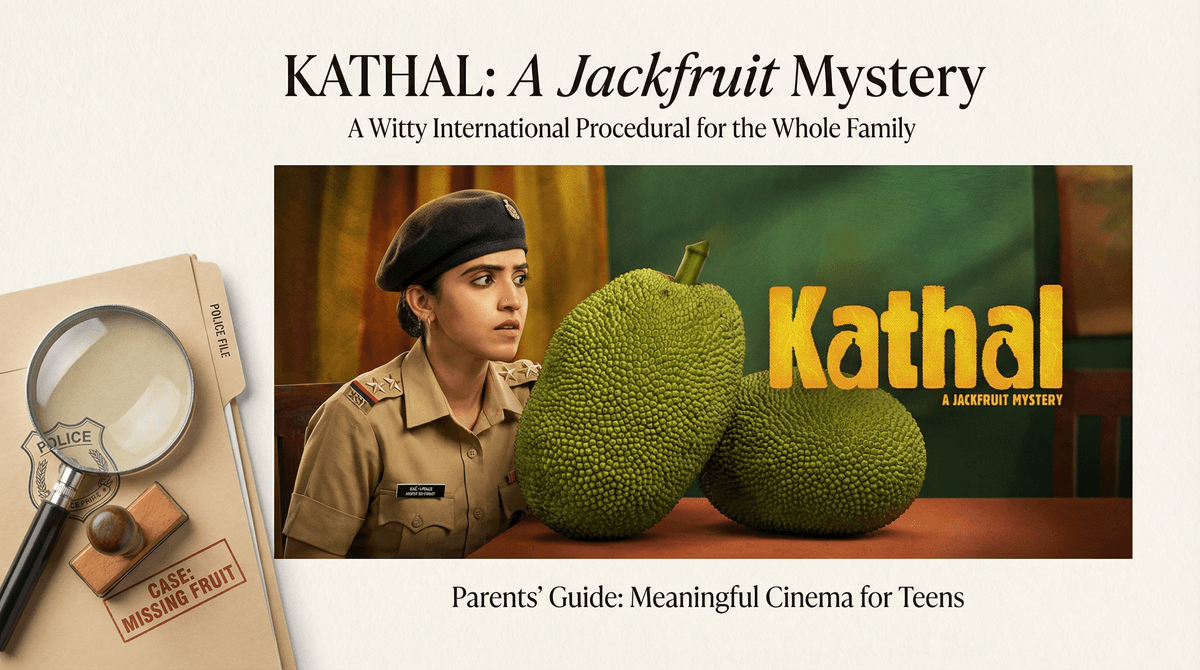
Kathal: Why This Jackfruit Mystery Is Must-Watch Satire for Families with Teens
TL;DR: Kathal is a 2023 Indian Netflix comedy that uses the absurd premise of stolen jackfruits to deliver sharp social commentary about class, caste, corruption, and justice. Perfect for teens 13+ who are ready for sophisticated satire that doesn't feel like homework. Runtime: 1h 56m. Language: Hindi with subtitles.
Kathal (which literally means "jackfruit" in Hindi) follows a small-town police inspector named Mahima who's forced to investigate the theft of two prized jackfruits from a local politician's garden. The absurdity? While she's mobilizing the entire police force to find missing fruit, a far more serious case—two missing lower-caste girls—gets completely sidelined.
It's satire in the best sense: funny enough to keep you watching, smart enough to make you think, and specific enough to teach you something real about contemporary India while landing universal truths about power, privilege, and what society decides matters.
Most "educational" international films feel like vegetables—good for you but kind of a chore. Kathal is different. It's genuinely entertaining while being genuinely meaningful, which is the sweet spot for media that can actually spark conversations with teens.
The comedy works. The premise is inherently ridiculous (a massive police investigation... for fruit), and the film leans into that absurdity without losing its edge. Your teen won't feel like they're being lectured.
The protagonist is compelling. Mahima is a young woman navigating a male-dominated profession, dealing with sexism from colleagues, pressure from superiors, and her own complicity in unjust systems. She's flawed, ambitious, and trying to do the right thing while also trying to keep her job. That's relatable complexity.
The social commentary is clear but not heavy-handed. The film draws direct parallels between how the missing jackfruits get immediate attention (because they belong to someone powerful) while the missing girls are treated as low priority (because they're poor and Dalit). It's not subtle, but it's not preachy either—it just shows you what's happening and trusts you to get it.
Language and Content: The film is in Hindi with English subtitles, which means your teen will actually have to pay attention (no scrolling while watching). There's some mild language in the subtitles, no sexual content, and minimal violence. The mature themes are about systemic inequality, not graphic content.
The Caste Context: American families might need a brief primer on India's caste system to fully appreciate the film's critique. The missing girls are Dalit (historically called "untouchables"), the lowest rung in a social hierarchy that officially doesn't exist anymore but absolutely still shapes Indian society. The film makes this accessible, but a quick conversation beforehand helps: learn more about caste discrimination in Indian media .
.
Political Corruption: The film depicts police corruption, political favoritism, and the way power protects power pretty directly. If your teen is starting to understand how systems work (or don't work), this is a great case study from a different cultural context that might make American parallels easier to discuss.
Pacing: At nearly two hours, it's not a quick watch. But it moves well—this isn't a slow art film. It's structured like a procedural mystery with comedic beats.
Ages 13-15: Absolutely appropriate with maybe a tiny bit of context-setting beforehand. The themes of discrimination, privilege, and justice are exactly what middle schoolers are starting to grapple with in social studies and real life. The humor keeps it accessible.
Ages 16+: Perfect. Older teens will catch more of the political nuance and appreciate the satire more fully. Great for AP Government students, kids interested in criminal justice, or anyone who's starting to question how systems actually work.
Ages 12 and under: Probably too nuanced. The humor and pacing work, but the social commentary requires enough context about discrimination, political systems, and institutional bias that younger kids might miss the point entirely.
One of the best things you can do for your teen's media diet is expose them to stories from outside the American bubble. Not in a "eat your vegetables" way, but in a "the world is bigger and more interesting than Netflix's algorithm thinks" way.
Kathal does something really valuable: it shows how satire works as a tool for social criticism. Your teen is growing up in an era of TikTok commentary and YouTube video essays—they're consuming "takes" constantly. Watching a well-crafted satirical film helps them understand how storytelling can make arguments, how comedy can carry serious messages, and how specific cultural contexts illuminate universal problems.
Plus, honestly? The more international content your teen watches, the better. It builds empathy, expands their reference points, and makes them more interesting humans. Check out more international films for teens if this lands well.
The best part about Kathal is that it naturally generates discussion. You don't have to force it. But if you want to lean in:
"Why do you think the jackfruits got more attention than the missing girls?" Let them articulate the power dynamics. They'll get it.
"Have you seen examples of this kind of thing—where something matters more because of who it affects?" This could go anywhere: school resources, news coverage, whose neighborhood gets better services.
"What did you think of Mahima's choices?" She's not a perfect hero. She makes compromises. That's interesting to discuss—when do you go along with a broken system, and when do you push back?
"Did the satire work for you, or did it feel too obvious?" Talk about how comedy and social commentary mix. What makes satire effective vs. preachy?
Kathal is smart, funny, accessible, and meaningful—basically the unicorn of family viewing for teens. It's the kind of movie that makes your teen feel sophisticated for watching it (because it is sophisticated) without making them feel lectured at (because it's genuinely entertaining).
If your teen is ready for media that treats them like they can handle complexity, this is a great pick. If they're interested in social justice, criminal justice, international perspectives, or just good storytelling that doesn't insult their intelligence, queue it up.
And hey, if they finish it and want more films that use humor to tackle serious topics, check out satirical movies for teens or Bollywood films beyond the stereotypes.
- Watch the trailer together to see if the tone and humor land with your teen
- Set up the context: Two minutes on what satire is and why the caste system matters
- Watch it together (or at least be available for questions)
- Let the conversation happen naturally—you don't need to turn it into a lesson
If your teen engages with it, you've just opened a door to more international cinema, more sophisticated comedy, and more conversations about how stories can change the way we see the world. That's worth two hours and a stolen jackfruit.