

Evolution can feel like one of those topics that's either painfully dry (remember those textbook diagrams?) or weirdly controversial depending on your community. But here's the thing: kids are naturally curious about where things come from. Why do giraffes have long necks? How did whales end up in the ocean? Why don't we look like our pet hamster even though we're both mammals?
The good news? There are some genuinely engaging films and documentaries that tackle evolution in ways that spark curiosity rather than induce naptime. We're talking dinosaurs, deep-sea creatures, time-lapse sequences that blow minds, and stories that make scientific concepts actually stick.
And with about 80% of families in our community using streaming services like Netflix or Disney+, chances are you already have access to several of these without needing another subscription.
The 8-12 age range is honestly the sweet spot for evolution content. Kids are old enough to grasp big concepts like adaptation and natural selection, but they haven't yet developed that middle-school eye-roll reflex toward educational content. They still think learning is cool (even if they won't admit it in front of friends).
Plus, understanding evolution helps kids develop critical thinking skills that extend way beyond science class. It's about understanding evidence, recognizing patterns, and grasping how small changes add up over time—concepts that honestly apply to everything from their own growth spurts to why their Roblox avatar keeps getting new features.
For the Dinosaur-Obsessed (Ages 8-10)
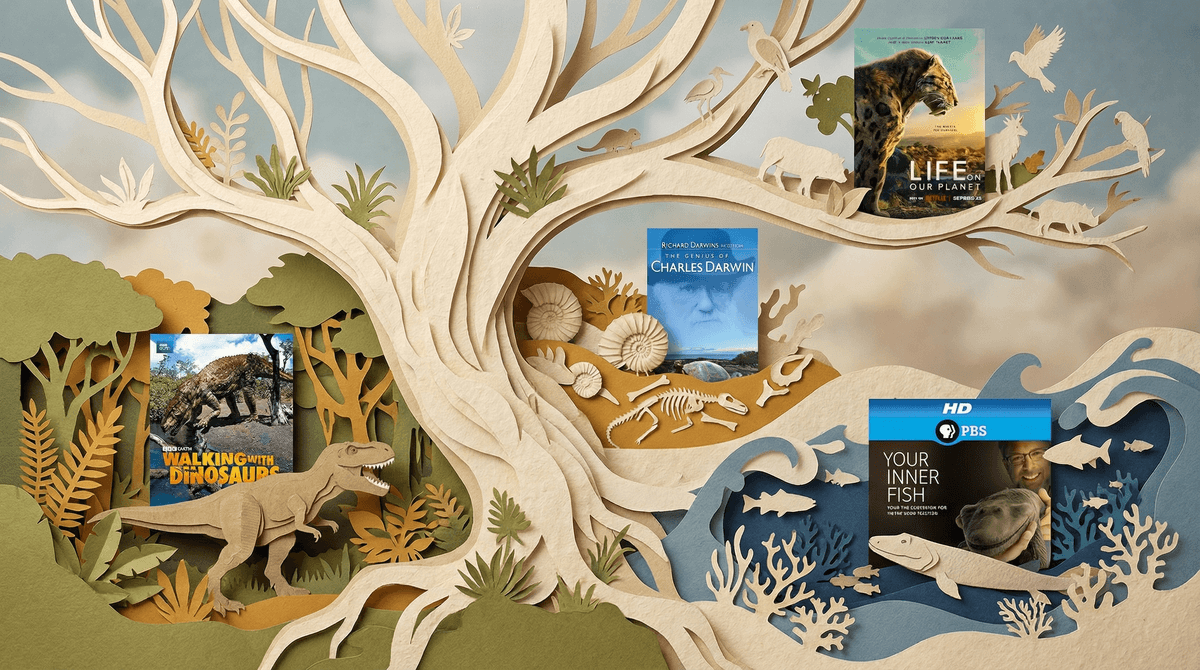
Walking with Dinosaurs (BBC series, available on various platforms) This is the gateway drug for evolution content. The CGI holds up surprisingly well, and it presents prehistoric creatures as real animals with behaviors and habitats, not just scary monsters. Each episode focuses on different time periods, showing how species changed and adapted. Fair warning: there are predator-prey scenes that might be intense for sensitive kids, but nothing gratuitous.
Dinosaur (2000) (Disney+) Yes, it's animated. Yes, the dinosaurs talk. But the underlying story actually deals with migration, adaptation to climate change, and survival of different species. It's a gentler entry point for younger kids who aren't ready for full documentary format.
For Visual Learners Who Love Spectacle (Ages 9-12)
Our Planet (Netflix) David Attenborough's voice makes everything better, and this series has jaw-dropping footage that shows evolution in action. The episode "From Deserts to Grasslands" is particularly good for showing how different species adapted to harsh environments. Heads up: there are some circle-of-life moments that can be emotional—animals die, ecosystems collapse. It's real, and that's kind of the point, but know your kid's sensitivity level.
Life on Our Planet (Netflix) This 2023 series is specifically ABOUT evolution, tracing life from single-celled organisms to the present day. The CGI recreations of extinct creatures are incredible, and it explicitly shows how mass extinctions led to new opportunities for different species. It's more directly educational than Our Planet, making it perfect for kids who are actually studying this stuff in school.
For Kids Who Like Stories Over Lectures (Ages 10-12)
The Croods (Netflix, various platforms) Okay hear me out—this is a comedy about a prehistoric family, but it's actually sneakily about adaptation and survival. The whole plot revolves around being willing to change versus sticking with "the old ways," which is... kind of exactly what natural selection is about? It's not scientifically accurate (obviously), but it's a fun conversation starter.
Charles Darwin and the Tree of Life (BBC documentary) Another David Attenborough special, this one tells Darwin's story while explaining his theory. It's only about an hour long, making it perfect for kids with shorter attention spans. The animation showing how the "tree of life" branches out is particularly helpful for visual understanding.
For the Deep Divers (Ages 11-12)
Your Inner Fish (PBS, available on various streaming platforms) Based on the book by Neil Shubin, this three-part series shows how humans evolved from fish. Sounds weird, right? But it traces specific body parts (hands, necks, etc.) back through evolutionary history. It's more sophisticated and best for older kids in this age range who are ready for college-lecture-style content presented in an engaging way.
The Incredible Human Journey (BBC) This focuses specifically on human evolution and migration patterns. It's fascinating for kids who are starting to think about ancestry and where they came from. The host, Alice Roberts, visits actual archaeological sites and explains the evidence scientists use to piece together our evolutionary story.
The "controversy" factor: Depending on your family's beliefs and your community, evolution might be a sensitive topic. These films present evolution as scientific fact (because it is), but they do so in ways that focus on wonder and discovery rather than being combative. Still, you know your family best—maybe watch an episode yourself first if you're unsure.
Nature is nature: Many of these documentaries show predation, death, and extinction. That's kind of the whole point of natural selection—not everything survives. For younger or more sensitive kids, stick with the animated options or watch together so you can talk through tough moments.
Attention span reality check: Even the most engaging documentary can't compete with YouTube shorts or TikTok for pure dopamine hits. With 42% of kids in our community watching YouTube solo, their brains are trained for quick cuts and constant stimulation. You might need to watch these in chunks rather than full episodes, and that's totally fine.
Here's the thing about educational content—it works way better when it's not just passive consumption. With 50% of families in our community watching Disney+ together, there's already a culture of co-viewing happening. Evolution content is perfect for this because kids will have questions.
"Why did that happen?" "How long did that take?" "Could that happen again?" These questions are gold. They mean your kid is actually thinking, not just zoning out.
Try this: pause and predict. Before a segment about how a species adapted, pause and ask "What do you think happened?" Let them theorize. They'll be way more invested in finding out if they were right.
Ages 8-9: Stick with animated options like Dinosaur or The Croods, or highly visual documentaries like Walking with Dinosaurs. Watch together and be ready to explain concepts like "extinct" or "adapt."
Ages 10-11: They're ready for real documentaries like Our Planet or Life on Our Planet. They can handle more complex concepts and some intense nature moments, but co-viewing is still ideal for processing.
Ages 12+: Your Inner Fish and The Incredible Human Journey become accessible. They can watch independently but will get more out of it if you check in afterward with "what was the most surprising thing you learned?"
Evolution content doesn't have to be boring or controversial—it can be genuinely awe-inspiring. The right film or documentary can turn a kid who thinks science is "whatever" into someone who's fascinated by how a whale's flipper has the same bones as their own hand.
Start with what matches your kid's current interests. Dinosaur phase? Walking with Dinosaurs. Ocean obsessed? The marine episodes of Our Planet. Loves stories? The Croods is secretly educational.
And remember: you don't need to become an evolution expert yourself. You just need to be willing to watch alongside them and say "Wow, that's cool—I didn't know that either." That curiosity is contagious.
This week: Pick one option from the list above based on your kid's age and interests. Watch the first 15 minutes together. If they're hooked, great. If not, try a different one next week.
Conversation starter: "If you could have any animal's special adaptation—like a cheetah's speed or an eagle's vision—what would you pick and why?" (This gets them thinking about how specific traits help survival without feeling like a quiz.)
Going deeper: If your kid gets really into this, check out some age-appropriate books about evolution or look for local natural history museums with evolution exhibits.
The goal isn't to raise the next Charles Darwin (though hey, you never know). It's to help your kid see that science is about asking questions and finding evidence—skills that'll serve them well whether they're evaluating a YouTube video's claims or deciding if that Fortnite "hack" their friend told them about is actually real.