

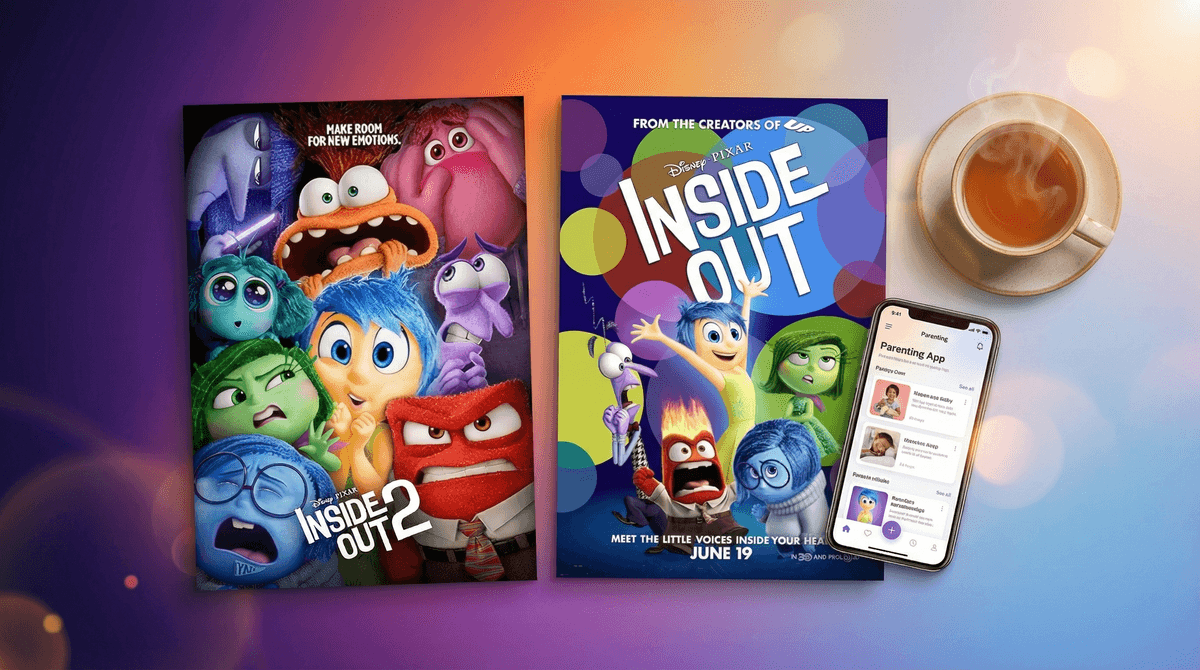
Inside Out 2 PG Rating Explained: Is It Safe for Younger Kids?
Inside Out 2 earned its PG rating primarily for intense emotional content, including a realistic panic attack sequence and themes around anxiety that can be genuinely unsettling for younger viewers. While the original Inside Out was also PG, this sequel goes deeper into more complex mental health territory.
Quick age guidance:
- Ages 8+: Most kids this age can handle it with parent support
- Ages 5-7: Proceed with caution—depends heavily on your individual kid
- Under 5: Probably skip it for now
No violence, no language concerns, no scary monsters—just some pretty heavy emotional stuff that hits different than your typical animated fare.
The PG rating for Inside Out 2 isn't about content you'd typically worry about. There's no inappropriate language, no violence, no sexual content. This is Pixar, after all.
The rating comes from emotional intensity. Specifically:
The panic attack scene. Riley experiences a full-blown anxiety attack during a hockey game, complete with rapid breathing, feeling trapped, and losing control. It's animated, yes, but it's also one of the most accurate depictions of a panic attack in any kids' movie. Ever. Some kids will watch it and feel seen. Others will find it genuinely frightening.
Anxiety as a character. The new emotion Anxiety (voiced by Maya Hawke) isn't portrayed as a villain exactly, but she's relentless, overwhelming, and creates a spiral of catastrophic thinking that dominates much of the film's second half. Watching Riley get consumed by anxious thoughts about her future, her friendships, and her sense of self is... a lot.
The "sense of self" crisis. Riley literally questions who she is as a person, experiences a breakdown of her core beliefs, and has to rebuild her identity. For kids already navigating their own identity questions (hello, every tween ever), this can hit uncomfortably close to home.
The first Inside Out dealt with sadness, moving, and growing up—heavy themes, sure. But it was more about accepting that sadness is part of life. The emotional arc was ultimately about integration and balance.
Inside Out 2 is about anxiety taking over. It's about spiraling, about losing yourself, about the voice in your head that tells you you're not good enough. That's a fundamentally different kind of heavy.
Ages 8-12: The Sweet Spot (With Caveats)
This is Pixar's target demographic for this film, and most kids in this range can handle it. But "can handle it" doesn't mean it won't be intense.
Green lights:
- Your kid has seen the first Inside Out and understood it
- They can talk about feelings and emotions somewhat comfortably
- They've experienced some anxiety themselves and might benefit from seeing it visualized
- You're planning to watch together and talk afterward
Yellow lights:
- Your child is already dealing with significant anxiety issues (could be therapeutic OR triggering—you know your kid best)
- They're highly sensitive to emotional content in movies
- They tend to ruminate on scary or upsetting scenes
What to prep them for: Let them know there's a scene where Riley feels really overwhelmed and scared, and it might feel intense. Remind them it's okay to close their eyes or take a break if they need to.
Ages 5-7: Tread Carefully
The original Inside Out was already pushing it for this age group, and the sequel is even more complex. Some emotionally mature 7-year-olds will be fine. Most 5-year-olds? Probably not.
Consider skipping if:
- Your child doesn't yet have language for complex emotions
- They get scared easily by intense scenes (even without traditional "scary" elements)
- They're not ready for conversations about anxiety and panic
If you do watch together:
- Pause frequently to check in
- Be ready to explain what's happening ("Riley's brain is feeling really worried right now, and it's making her body feel uncomfortable")
- Have an exit strategy if it's too much
Tweens and Teens: They Need This (Maybe More Than Anyone)
If you have a 10-14 year old, this movie might be exactly what they need to see. The depiction of anxiety, social pressure, and identity formation is remarkably accurate to what many kids this age are experiencing.
This is the demographic where Inside Out 2 can actually be a conversation starter about mental health. Use it.
The panic attack scene is no joke. It's about 2-3 minutes of Riley hyperventilating, feeling trapped, and experiencing physical symptoms of anxiety. It's not played for laughs. Some kids will find it educational and validating. Others will find it scary. If your child has experienced panic attacks themselves, this could go either way—deeply affirming or potentially triggering.
There's no easy resolution. Unlike many kids' movies where everything gets wrapped up neatly, Riley doesn't "defeat" anxiety. She learns to live with it, to make room for it without letting it take over. That's realistic and healthy, but it might leave some kids wanting more closure.
The humor is there, but it's not dominant. The first movie balanced heavy themes with genuine comedy. This one is funnier than you might expect given the subject matter, but the emotional weight is heavier overall.
New emotions beyond Anxiety: The movie introduces Anxiety, Embarrassment, Envy, and Ennui (boredom/apathy). They're all well-done, but Anxiety is the star and the source of most of the intensity.
Before the movie: "This movie is about Riley getting older and dealing with new feelings, especially worry and anxiety. There's a part where she feels really overwhelmed, and it might seem intense. If you need to take a break or want to talk about what's happening, that's totally fine."
After the movie:
- "What did you think about Anxiety as a character?"
- "Have you ever felt like Riley did during that hockey game?"
- "What do you think about how Joy and the other emotions handled things?"
- "Do you think it's okay to feel anxious sometimes?"
For kids dealing with anxiety: "Riley's brain was trying to protect her by worrying about everything, but it went too far. That happens to lots of people. What do you think helped her feel better?"
Inside Out 2 earned its PG rating honestly. It's not inappropriate, but it is intense. The panic attack scene alone makes this a very different experience from most animated movies.
This is not a "throw it on for the kids while you make dinner" movie. This is a "watch together and talk about it" movie.
For the right age and the right kid, it's actually brilliant—a nuanced, compassionate look at anxiety that doesn't pathologize it but also doesn't minimize it. For younger or more sensitive kids, it might be worth waiting a year or two.
The good news? Unlike Bluey episodes that you'll watch 47 times, you probably only need to see this once to get the full impact. And that impact is real.
Trust your gut on this one. You know your kid better than any rating system. If you're on the fence, maybe watch it yourself first (it's worth it even without kids), or read through some of the parent reviews and detailed content breakdowns before deciding.
And hey, if you do watch it and your kid asks what a panic attack is, at least you'll have a really good visual reference point for the conversation. Silver lining?