

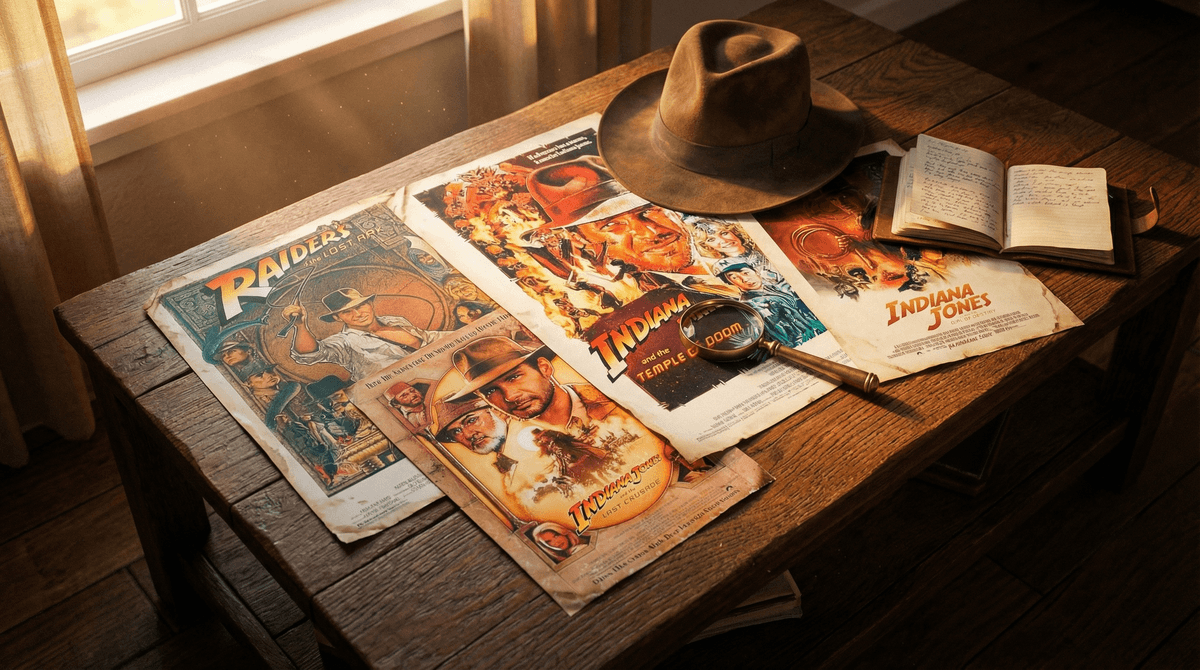
Indiana Jones: Does It Hold Up or Is It Not Great for Kids Anymore?
The Indiana Jones franchise is a series of adventure films that started in 1981 with Raiders of the Lost Ark. Created by George Lucas and Steven Spielberg, these movies follow archaeologist Dr. Henry "Indiana" Jones Jr. as he travels the world hunting for ancient artifacts while fighting Nazis, cult leaders, and Soviet agents. The original trilogy (Raiders of the Lost Ark, Temple of Doom, The Last Crusade) defined adventure cinema for a generation. Then came Kingdom of the Crystal Skull in 2008 and most recently Dial of Destiny in 2023.
Here's the thing: these movies were PG-13 before PG-13 existed (in fact, Temple of Doom literally helped create the PG-13 rating). They're now on Disney Plus, where 50% of families in our community watch content together and 30% let kids browse independently. So the question isn't really "can my kid watch Indiana Jones?" but rather "should they?"
Let's be honest: many of us watched these movies as kids and turned out fine. They're adventure classics with memorable moments, quotable lines, and that iconic John Williams score. But watching them now with parent eyes? It hits different.
The violence is surprisingly intense. We're talking melting faces, hearts being ripped out of chests, people getting shredded by airplane propellers, and bodies dissolving into skeletons. Yes, it's all very theatrical and "movie magic," but it's also genuinely disturbing imagery that can stick with kids. The PG rating on the original films is a relic of a different era—Temple of Doom would absolutely be PG-13 or even R today.
The cultural stereotypes are... rough. The films traffic heavily in Orientalist tropes, particularly in Temple of Doom, which depicts India through a deeply problematic colonial lens. Indigenous peoples are often portrayed as either mystical or savage. Arab characters are frequently villains. These weren't great representations in the 1980s, and they've aged like milk.
The gender dynamics are dated. Every film features a "love interest" who starts out competent and then needs rescuing. The female characters exist primarily in relation to Indy, and there's a running theme of women being portrayed as either helpless or deceptive. Marion in Raiders is probably the strongest female character, but even she spends much of the film tied up or screaming.
Despite all this, there are reasons these films remain appealing:
The adventure formula works. Puzzles, traps, treasure maps, ancient mysteries—this stuff is catnip for kids who love exploration and problem-solving. If your child enjoys games like Uncharted or Tomb Raider, they're essentially playing Indiana Jones.
Indy is fallible. Unlike modern superhero movies where characters are nearly invincible, Indiana Jones gets hurt, makes mistakes, and often succeeds through luck as much as skill. He's afraid of snakes! This vulnerability can be refreshing.
The practical effects hold up. In an age of CGI overload, the practical stunts and real locations in these films feel tangible and impressive. There's educational value in showing kids how movies were made before green screens.
Ages 6-9: Probably too intense. The graphic violence and scary imagery (melting faces, the heart-ripping scene) can cause nightmares. If you're considering it, maybe start with The Young Indiana Jones Chronicles TV series instead, which is significantly tamer.
Ages 10-12: This is the sweet spot for many families, but know your kid. Are they sensitive to violence? Do they have nightmares easily? The Last Crusade is generally considered the most family-friendly of the original trilogy—less graphic violence, more humor, and the father-son dynamic adds heart.
Ages 13+: Most teens can handle the content, but this is actually the perfect age to watch critically. They're old enough to discuss the problematic elements and think about how media representation has evolved.
Watch together first. With 92% of families in our community using TV in some form, streaming makes it easy to preview content. Watch Raiders or Last Crusade yourself first to gauge whether it fits your family's values and your child's sensitivity level.
Consider starting with The Last Crusade. It's the least violent, has the most humor, and Sean Connery's presence as Indy's dad adds warmth that balances the action. You can always go back to Raiders later.
Skip Temple of Doom entirely for younger viewers. Seriously. The heart-ripping scene, the child slavery subplot, the racist depictions—it's the most problematic film by far. Even Spielberg has expressed regret about its darkness.
Use it as a teaching moment. If you do watch together, talk about what's changed in filmmaking. Why do we see fewer stereotypes in modern adventure films? How has our understanding of cultural representation evolved? This can lead to rich conversations about media literacy.
Context matters. These films were made in a different era, and that context is important. They're products of 1980s Hollywood, which had different standards and sensibilities. That doesn't excuse the problematic elements, but it can help frame discussions with older kids about how society's values shift.
If you want adventure without the baggage, consider:
- The Goonies - similar treasure-hunt vibes, more age-appropriate
- National Treasure - puzzle-solving adventure with less violence
- Jumanji (2017) - modern adventure comedy with better representation
- The Mummy (1999) - spiritual successor with more humor, though still has issues
Indiana Jones doesn't hold up perfectly, but it doesn't have to. These films can still be enjoyed with the right context, age-appropriateness, and critical discussion. They're time capsules of 1980s adventure cinema—impressive in some ways, problematic in others.
The real question isn't whether Indiana Jones is "good" or "bad" for kids anymore. It's whether you're prepared to watch actively with them, pause for conversations, and help them understand both what makes these films entertaining and what makes them dated.
If your 10-year-old is begging to watch because they heard about it at school, The Last Crusade on a Friday night with popcorn and your full attention? That can be a great experience. Letting your 7-year-old browse Disney Plus independently and stumble onto Temple of Doom? Probably not ideal.
- Preview first: Watch The Last Crusade yourself to see if it aligns with your family's media values
- Check ratings: Learn more about how movie ratings have evolved
 and what PG meant in 1981 vs. today
 - Plan discussion points: Think about what questions you might ask during or after viewing
- Consider your viewing setup: With 40% of families letting kids browse Netflix independently, this might be a good time to review your Disney Plus parental controls
Remember: you know your kid best. Some 9-year-olds can handle this content with context, while some 13-year-olds might find it too intense. Trust your instincts, watch together, and keep the conversation going.