

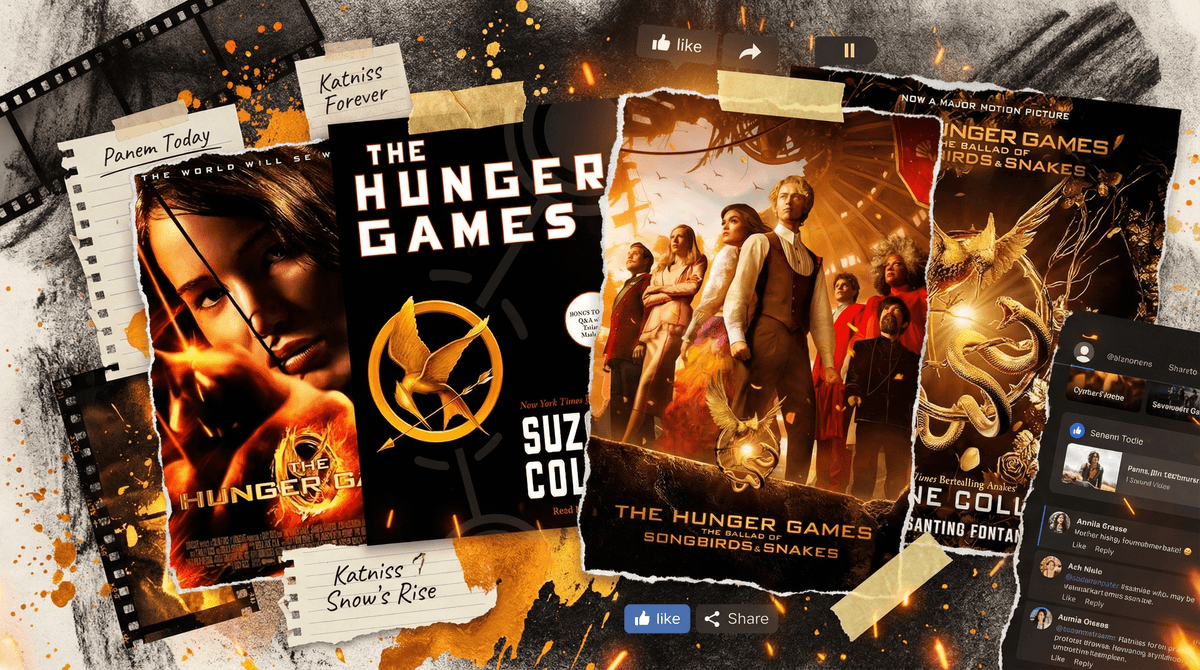
Okay, so if you somehow missed the cultural phenomenon that was The Hunger Games in the early 2010s, here's the deal:
The Hunger Games is a dystopian book series by Suzanne Collins that became a massive movie franchise. The story follows Katniss Everdeen, a 16-year-old girl living in a post-apocalyptic nation called Panem (formerly North America). The Capitol—the wealthy, controlling government—forces 24 kids (ages 12-18) from the impoverished districts to fight to the death in an annual televised event called the Hunger Games.
It's dark. It's violent. It's also brilliant social commentary about inequality, propaganda, war trauma, and resistance.
The original trilogy came out between 2008-2010, the movies wrapped in 2015, and now? It's having a massive resurgence thanks to:
- The 2023 prequel movie The Ballad of Songbirds and Snakes (which was actually really good)
- TikTok discovering the series and creating tons of content
- Kids who were too young for it originally now binge-watching on streaming
- That whole "dystopian YA" vibe hitting different in 2026
So if your 11-year-old is suddenly asking to read the books or watch the movies, you're not alone. This is happening in a lot of households right now.
Let's be real—kids are drawn to The Hunger Games for reasons that make total sense developmentally:
The protagonist is a teenager who matters. Katniss isn't waiting for adults to save her. She's making life-or-death decisions, protecting her family, and literally changing the world. For kids who feel powerless in their own lives (hello, middle school), that's intoxicating.
It validates their feelings about unfairness. The whole premise is about systemic inequality and adults forcing kids into impossible situations. If you've ever heard your teen rant about how "the system is rigged," this story speaks directly to that.
The romance is there but not the point. Yes, there's the whole Peeta vs. Gale thing, but Katniss is primarily focused on survival and revolution. It's refreshing compared to stories where romance is the entire plot.
It's actually smart. The books deal with propaganda, media manipulation, PTSD, war crimes, and the cost of violence. Kids who are starting to think critically about the world find SO much to dig into here.
The aesthetic is everywhere on TikTok. The Capitol fashion, the "girl on fire" dress, the three-finger salute, "may the odds be ever in your favor"—it's all over social media right now. FOMO is real.
This is where it gets tricky, because the official ratings don't tell the whole story.
The Books
The books are technically marketed as Young Adult (ages 12+), but honestly? That's optimistic for a lot of kids.
What makes them intense:
- Kids killing other kids is the central premise
- Graphic violence including stabbings, burnings, mutilations
- Deaths of beloved characters (including children)
- Themes of starvation, poverty, and oppression
- PTSD, nightmares, and trauma responses
- Some torture scenes in the later books
My take on age ranges:
Ages 10-11: Probably too young for most kids. The violence isn't gratuitous, but it's there, and the emotional weight is heavy. Some mature 11-year-olds might handle it, but I'd wait.
Ages 12-13: This is the sweet spot for a lot of kids, especially strong readers who've shown they can handle complex themes. They're old enough to understand the social commentary but young enough to still see themselves in the teenage characters.
Ages 14+: Totally appropriate. At this age, they can really engage with the political themes and understand the nuance of Katniss's trauma and moral complexity.
The key question: Has your kid shown they can handle heavy themes without intrusive thoughts or anxiety? Do they understand the difference between fiction and reality? Can they talk about hard things with you?
The Movies
The movies are all rated PG-13, which feels about right.
Here's the thing: The movies are actually LESS graphic than the books because they can't show as much violence without getting an R rating. The camera cuts away, things happen off-screen, and your brain fills in less than it does when reading.
BUT—they're still intense. The first movie especially has that scene where 11 tributes die in the first few minutes of the Games. It's chaotic and frightening even though you don't see much detail.
Movie age guidance:
- Ages 10-11: Probably still too intense for most
- Ages 12+: Generally fine, especially if you're watching together
- Sensitive kids of any age: Maybe skip it or wait until they're ready
The prequel movie (Ballad of Songbirds and Snakes) is similarly PG-13 but arguably darker in theme because you're following a villain's origin story. It's fascinating but definitely not lighter fare.
The Violence Question
Let's address the elephant in the room: yes, this is about children murdering each other for entertainment.
But here's what's important—the books never glorify the violence. Collins is very intentional about showing the horror, the trauma, the cost. Katniss has PTSD. She has nightmares. She struggles with what she's done. The story is actually a pretty powerful anti-war, anti-violence narrative.
That said, the premise alone is disturbing, and some kids just aren't ready for that kind of content. Trust your gut.
The Political Themes Are the Point
If your kid is reading/watching The Hunger Games, they're getting a masterclass in:
- Propaganda and media manipulation
- Economic inequality and class warfare
- Authoritarian government and resistance
- The ethics of war and rebellion
- Exploitation and spectacle
These are GOOD conversations to have! This is actually an amazing entry point for talking about real-world issues in a fictional context.
The Mental Health Representation Matters
Katniss has clear PTSD. Peeta is literally tortured and brainwashed. Finnick has been sexually exploited. Haymitch is an alcoholic dealing with survivor's guilt.
The books don't shy away from the psychological impact of trauma, which is both realistic and potentially triggering. If your kid has experienced trauma or struggles with anxiety, this might hit differently.
It's Not All Doom and Gloom
Yes, it's dark, but there's also:
- Strong themes of family, loyalty, and sacrifice
- A protagonist who refuses to lose her humanity
- Genuine friendship and love
- Hope and resistance in the face of oppression
- A critique of reality TV and performative culture that's incredibly relevant
If your kid is reading or watching The Hunger Games, here are some conversation starters:
"What do you think the story is really about?"
Let them tell you what themes they're picking up on. You might be surprised by their insights.
"How do you think Katniss is handling everything that's happening to her?"
This opens up conversations about trauma, coping, and mental health.
"Does anything in Panem remind you of the real world?"
They'll probably have thoughts about inequality, media, or political systems.
"What would you do in her situation?"
Moral dilemmas! No right answers! Great for developing critical thinking!
"How are you feeling about the violence in the story?"
Check in. Make sure they're processing it okay and not having intrusive thoughts.
Red Flags to Watch For
Stop or pause if your kid:
- Is having nightmares or intrusive thoughts
- Seems anxious or depressed after reading/watching
- Is acting out violence or seems desensitized
- Can't separate fiction from reality
- Is too young to process the themes
It's totally okay to say "let's wait a year or two" if it's too much right now.
Here's what's happening in a lot of friend groups right now:
Kid A watched the new movie and is obsessed. Kid B read all the books in a week. Kid C is making TikToks with Hunger Games sounds. And your kid feels left out because you said they're not ready yet.
This is hard! But also—you're the parent. You know your kid.
What you can say:
"I know a lot of your friends are into The Hunger Games right now. We can revisit it in six months/a year, but right now I don't think the content is right for you. What's something else you're excited about that we can do together?"
Or if you're on the fence:
"Let's watch the first movie together and see how you feel. If it's too much, we can turn it off, no judgment."
The Hunger Games is having a moment, and honestly? It's one of the better things your kid could be obsessed with.
It's smart, it's well-written, it has something to say, and it treats young readers with respect. But it's also genuinely dark and deals with heavy themes that not every kid is ready for.
Your job isn't to shield your kid from every difficult thing—it's to know when they're ready to engage with difficult things in a healthy way.
If your 13-year-old wants to read it, that's probably fine. If your 9-year-old does, maybe not yet. And if you're unsure? Read it yourself first (they're quick reads), watch the movie together, and see how it goes.
The fact that you're here reading this guide means you're already doing the work of being an intentional parent. Trust yourself.
If you're considering letting your kid read/watch:
- Read a detailed plot summary or watch the first movie yourself
- Have a conversation about what they know and why they're interested
- Set expectations: "This has some intense scenes. If it's too much, we can stop."
- Plan to debrief together afterward
If your kid is already into it:
- Ask them what they think about it—really listen
- Look for opportunities to discuss the themes
- Check in about how they're processing the darker content
- Maybe read it yourself so you can have real conversations
If you're saying "not yet":
- Explain why in age-appropriate terms
- Offer an alternative (maybe the movies in a year, or a different book series)
- Acknowledge the FOMO but hold your boundary
- Revisit in 6-12 months
Other dystopian options for younger kids:
- The Giver by Lois Lowry (ages 10+, much gentler)
- Among the Hidden series (ages 9-12)
- City of Ember (ages 8-11)
And remember—every kid is different. Your 11-year-old might be totally ready while your 14-year-old might not be. You know your kids best.
May the odds be ever in your favor. (Sorry, I had to.)