

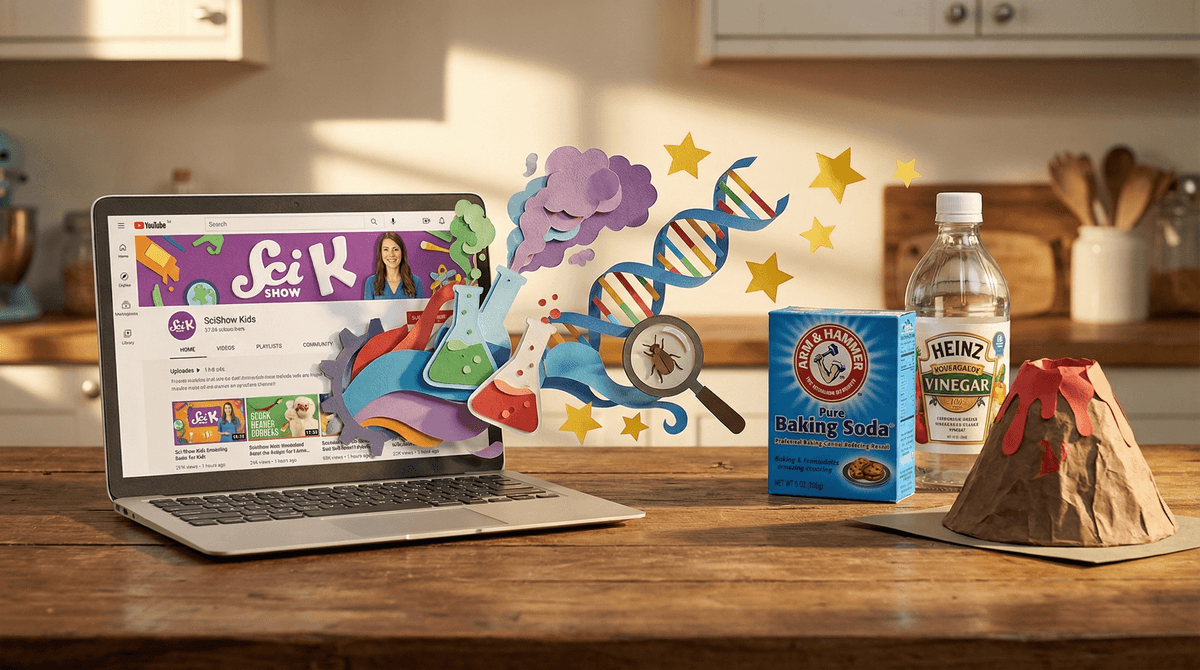
From SciShow Kids to Kitchen Science: Turning Screen Time into Hands-On Experiments
SciShow Kids is one of the best educational YouTube channels out there, but the real magic happens when you close the laptop and try the experiments yourself. This guide walks you through how to turn passive viewing into active learning—with specific episode recommendations, supply lists you already have at home, and strategies for making science exploration a regular part of your routine without turning into a Pinterest parent.
Quick wins:
- Keep a "science bin" with basic supplies ready to go
- Watch episodes together and pause to predict outcomes
- Start with easy kitchen chemistry experiments
- Let kids lead the mess-making (within reason)
Before we dive into the hands-on stuff, it's worth understanding why this channel works so well as a springboard for real experiments. Unlike a lot of educational content that just delivers facts, SciShow Kids models scientific thinking—asking questions, making predictions, testing ideas, and learning from what doesn't work.
The episodes are short (usually 3-5 minutes), focused on a single concept, and genuinely curious rather than condescending. Host Jessi Knudsen Castañeda talks to kids like they're capable humans who can handle complexity, which honestly is refreshing when so much kids' content feels like it's been focus-grouped into oblivion.
About 42% of families let their kids use YouTube solo