

Scotty and the Secret History of Hollywood: What Parents Should Know
TL;DR: This 2018 documentary tells the story of Scotty Bowers, a post-WWII Hollywood "fixer" who arranged sexual encounters for closeted stars. It's absolutely not for kids, but it's a fascinating piece of cultural history that older teens (17+) might find valuable for understanding Hollywood's hidden LGBTQ+ history and the damage caused by forced closeting. Graphic sexual content and language throughout.
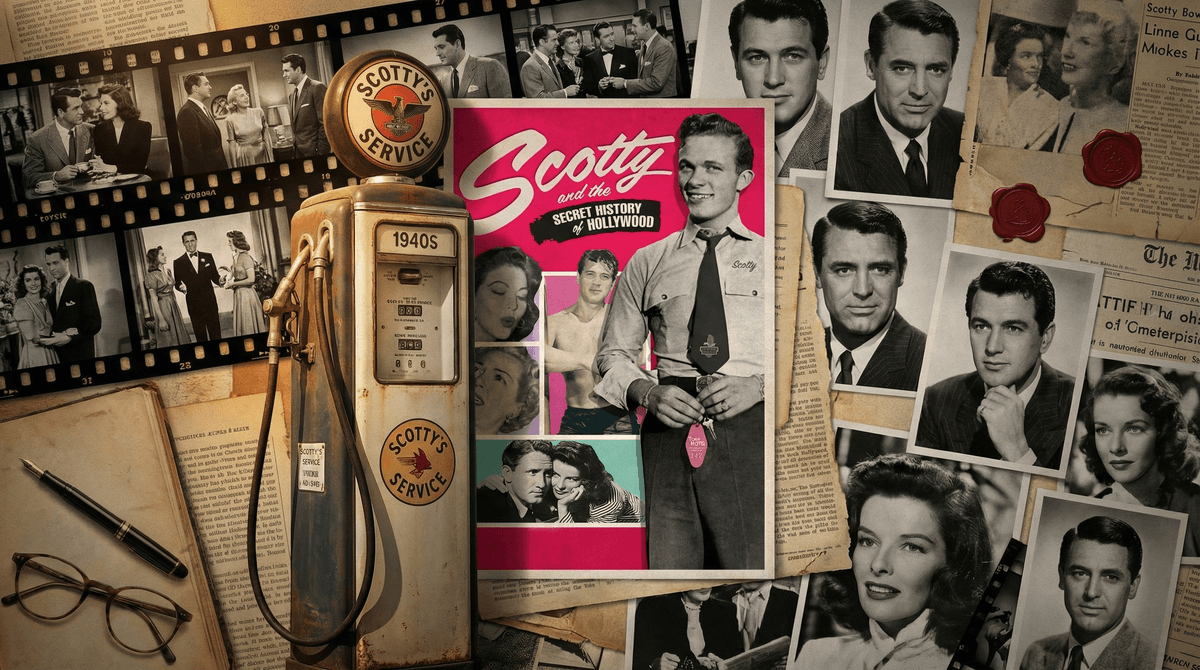
Scotty and the Secret History of Hollywood is a documentary about Scotty Bowers, a Marine veteran who ran a gas station on Hollywood Boulevard in the 1940s-80s that doubled as a discreet matchmaking service for Hollywood's elite. We're talking A-list stars—Cary Grant, Katharine Hepburn, Spencer Tracy—who needed to hide their sexuality to protect their careers in an era when being gay could literally end you professionally.
The documentary is based on Bowers' 2012 memoir "Full Service," published when he was 88 years old. Director Matt Tyrnauer (who also made The Reagans and Citizen Kane) interviews an elderly but sharp Bowers as he reflects on his decades facilitating secret encounters.
The documentary includes:
- Explicit sexual discussions throughout—Bowers doesn't mince words about what he arranged
- Graphic language about sex acts
- Discussion of sex work and the transactional nature of some encounters
- Drug use references from the Hollywood party scene
- Archival footage that, while not pornographic, is definitely adult-oriented
This got an R rating for good reason. It's not gratuitous, but it's very frank. If you're wondering whether your 14-year-old should watch it: no.
Here's the thing though—this documentary isn't just Hollywood gossip. It's a time capsule of what LGBTQ+ people had to do to survive professionally during the studio system era and beyond.
The historical context is crucial: In the 1940s-1980s, homosexuality could get you blacklisted, arrested, or institutionalized. The Hays Code (Hollywood's self-censorship rules from 1934-1968) explicitly forbade any positive depiction of "sexual perversion." Studios had "morality clauses" in contracts. Tabloids and gossip columnists could destroy careers with a single rumor.
So people like Scotty Bowers provided a service that allowed LGBTQ+ individuals to have some semblance of a personal life while maintaining their public personas. Was it ideal? No. Was it exploitative in some ways? Probably. But it was also a survival mechanism in a deeply homophobic system.
If you have a 17-18 year old who's interested in film history, LGBTQ+ history, or just understanding how Hollywood actually works behind the glossy facade, this documentary offers something valuable:
It demystifies "Old Hollywood": That golden era of glamorous movie stars? Many were living double lives under enormous pressure. Understanding this context makes you watch classic films differently.
It's a lesson in institutional homophobia: Seeing the actual mechanisms of how the closet worked—the studio fixers, the arranged marriages, the constant fear—makes abstract history concrete.
It raises complex questions about privacy and outing: Bowers waited until most of his clients were dead to tell these stories, but is it still ethical? The documentary doesn't preach an answer, which makes for good discussion.
It shows resilience: Despite everything, many of these people lived full lives and created incredible art. That's not nothing.
Some critics argue that Bowers is outing people who can't defend themselves or confirm his stories. Others question whether all his claims are accurate—he's telling stories from 70+ years ago, and some details are unverifiable.
The documentary addresses this head-on. Tyrnauer includes interviews with historians and archivists who provide context and, in some cases, corroboration. But you're still essentially taking an elderly man's word for scandalous claims about dead celebrities.
This is actually a great conversation starter for older teens about how we evaluate historical sources and the ethics of posthumous revelations.
Ages 17-18: Potentially appropriate for mature older teens, especially those interested in film history or LGBTQ+ history. Watch it with them if possible—there's a lot to unpack.
Ages 14-16: Too explicit and adult-oriented. If they're interested in the topic, start with something like The Celluloid Closet, a less graphic documentary about LGBTQ+ representation in film.
Ages 13 and under: Hard no.
If you do watch this with an older teen, some discussion questions:
"Why do you think so many stars felt they had to hide who they were?" (Leads to conversations about societal pressure, career vs. authenticity, economic survival)
"Do you think Scotty should have told these stories?" (Privacy, historical record, the right to control your own narrative even after death)
"How is it different for LGBTQ+ actors today?" (Progress and ongoing challenges—it's better but not perfect)
"What does this tell us about the difference between public image and private reality?" (Relevant for teens growing up in the social media age)
This documentary is essentially a primary source interview with someone who witnessed history from a unique vantage point. It's not a morality tale or a cautionary story—it's just one person's account of how things were.
Some parents will appreciate the historical value. Others will feel the explicit content outweighs the educational benefit. Both positions are valid. You know your teen and your family values.
If your teen is already learning about LGBTQ+ history in school or has expressed interest in film studies, this could be a valuable watch. If they're just looking for something to stream on a Friday night, there are better options that won't require a family debrief afterward.
Scotty and the Secret History of Hollywood is a fascinating, explicit, and controversial documentary that's absolutely not for kids but could be valuable for older teens who can handle adult content and complex historical questions.
It's not entertainment—it's education, albeit the R-rated kind. The documentary doesn't glorify or condemn; it just presents one man's memories of a Hollywood that existed behind closed doors.
If you're looking for age-appropriate documentaries about Hollywood history for younger kids, there are plenty of better options. But for that 17-year-old who's been binging classic films and asking questions about why certain actors never married or always had "roommates"? This might be exactly the context they need.
Just maybe watch it yourself first.