

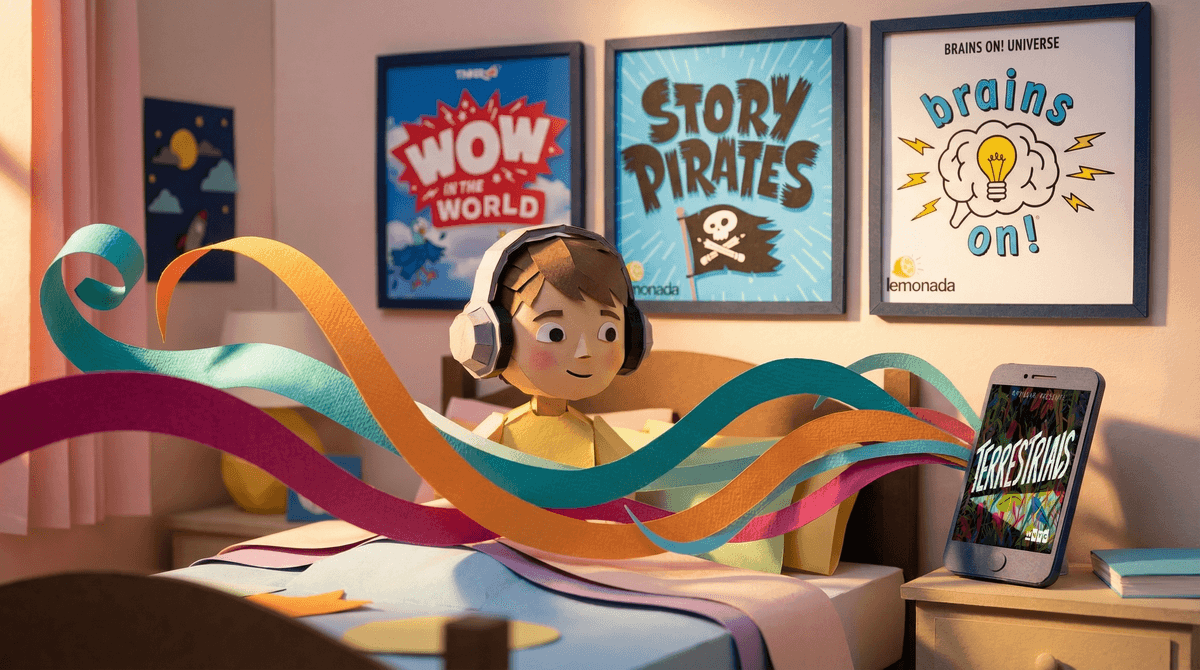
Educational podcasts are audio shows designed to teach kids something—science, history, storytelling, critical thinking—while keeping them entertained. Think of them as the evolved form of audiobooks, but more conversational, often funnier, and sometimes interactive.
The range is wild. You've got Brains On! answering kid questions about why farts smell and how black holes work. There's Wow in the World making science feel like a comedy show. Story Pirates turns kids' creative writing into full-blown musical productions. And for teens, you've got everything from Radiolab (mind-bending science and philosophy) to Stuff You Should Know (literally everything explained in a chill, conversational way).
Screenwise Parents
See allHere's what makes podcasts different from other screen time: they're not screen time. Kids can listen while drawing, building LEGO, doing chores, or staring out the car window. It's audio learning that doesn't add to that daily average of 4.2 hours families in your community are already hitting.
Let's be honest—getting kids excited about "educational content" usually requires bribery or threats. But podcasts hit differently.
For younger kids (ages 5-10): They love the direct address. Shows like Circle Round and Eleanor Amplified talk TO them, not at them. There's music, sound effects, and stories that feel like someone's performing just for them. Plus, many shows take listener questions, so kids feel like they're part of a community.
For tweens and teens (ages 10+): Podcasts feel grown-up without being boring. A 12-year-old listening to Short & Curly (ethics for kids) or Tumble Science Podcast for Kids isn't being talked down to. They're getting real information in a format that respects their intelligence. And honestly? It's a break from the constant dopamine hits of TikTok and YouTube.
Also—and this matters—podcasts give kids something to talk about that isn't Roblox drama or Skibidi Toilet lore. A kid who listens to But Why: A Podcast for Curious Kids has actual conversation starters at dinner.
Ages 5-8: Start with highly produced, story-driven shows. Story Pirates, Circle Round, and The Alien Adventures of Finn Caspian are perfect. Episodes are short (10-20 minutes), voices are animated, and content is squeaky clean.
Ages 8-12: This is the sweet spot for educational podcasts. Brains On! and Wow in the World are still engaging but meatier. Add in Smash Boom Best (debate-style show where kids argue which is better: cats vs. dogs, pizza vs. tacos) and The Past and The Curious (history for kids who think history is boring).
Ages 13+: Teens are ready for adult podcasts with appropriate content. Radiolab, Stuff You Should Know, TED Talks Daily, and Hidden Brain are all fair game. For teens into true crime (and let's be real, they all are), Criminal is less gory than most and genuinely fascinating. Just maybe preview episodes first—some topics get heavy.
The good news: Podcasts are one of the easiest wins in the digital wellness playbook. They're free, they're portable, and they don't require a device in hand. Given that 50% of kids in your community have unsupervised tablet access and 22% already have smartphones, podcasts offer a way to engage kids' brains without adding to screen dependency.
The reality check: Not all "educational" podcasts are created equal. Some are just glorified ads for toys or games. Others are technically educational but so dry that kids tune out after 30 seconds. And yes, there are podcasts that claim to be "for kids" but discuss topics better suited for adults. Always preview the first episode or two before handing over the headphones.
The logistics: Most podcast apps (Apple Podcasts, Spotify, Google Podcasts) let you download episodes for offline listening—crucial for car rides and flights. You can also create playlists so kids aren't scrolling through random content. For younger kids, consider using a dedicated kids' podcast app like Pinna or Spotify Kids, which curate age-appropriate content.
The conversation starter: Ask your kid what they learned. Not in a quiz-y way, but genuinely. "What was today's episode about?" opens the door to actual dialogue about ideas, not just screen time battles.
Educational podcasts are the rare digital tool that almost everyone agrees is a net positive. They build vocabulary, spark curiosity, and give kids a mental break from the visual overload of screens—all while teaching them something useful or interesting.
They're not a replacement for reading or outdoor play or family conversation. But they're a hell of a lot better than another hour of YouTube shorts or Fortnite rage-quitting.
Start with one podcast that matches your kid's interests. Try it on a car ride. See what sticks. And if they hate it? Try another one. There are thousands of options, and finding the right fit is half the fun.
1. Pick one podcast to try this week. Match it to your kid's current obsession—space, animals, mysteries, whatever.
2. Make it easy. Download a few episodes so they're ready to go. No friction = more likely to happen.
3. Listen together first. Even for older kids, co-listening to an episode gives you shared context and shows you're interested.
4. Get recommendations based on your kid's age and interests based on your kid's age and interests.
5. Normalize audio learning. Podcasts during chores, car rides, or quiet time can become a low-key habit that pays off for years.