

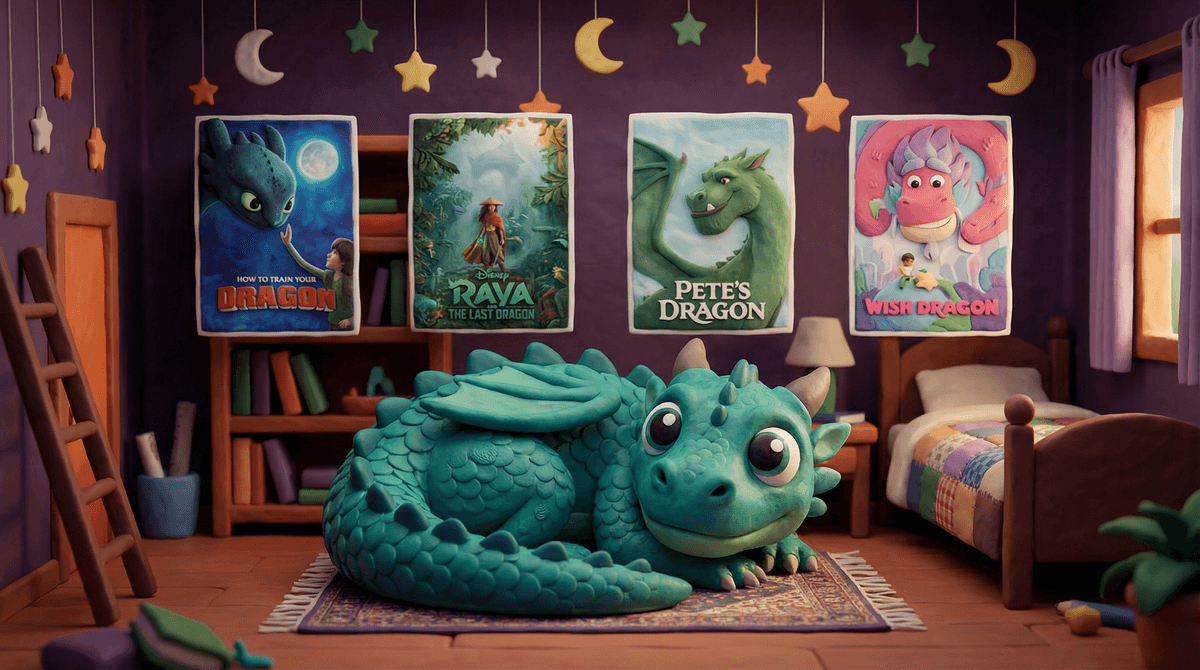
Dragon movies have been a staple of children's entertainment for decades, but the landscape has evolved dramatically. We're not just talking about knights slaying beasts anymore—modern dragon movies explore themes of friendship, acceptance, environmental protection, and challenging prejudice. From the beloved How to Train Your Dragon franchise to Disney's Raya and the Last Dragon, these films offer surprisingly rich material for family conversations.
The dragon movie genre spans everything from silly animated comedies to emotionally complex adventures. Some are perfect for preschoolers, while others tackle heavier themes that resonate more with tweens. The key is knowing which dragon lands where on the age-appropriateness spectrum.
Dragons hit that sweet spot of being simultaneously terrifying and cuddly. They're powerful enough to feel exciting but, in most modern kids' movies, ultimately friendly or misunderstood. For younger kids, dragons represent the ultimate pet fantasy—imagine having a giant flying creature as your best friend. For older kids, dragon stories often mirror their own experiences of feeling different, misunderstood, or learning to trust others.
There's also the pure visual spectacle. Dragon flight sequences are consistently stunning, and kids genuinely respond to that sense of soaring freedom. Plus, let's be honest—fire-breathing is just cool.
Ages 3-6: Gentle Introductions
Pete's Dragon (2016) is probably your best bet for the youngest dragon fans. The dragon, Elliot, is fuzzy, goofy, and genuinely sweet. There are some mildly tense moments when Pete is in danger, but nothing nightmare-inducing. The themes of found family and protecting nature are accessible without being heavy-handed.
Wish Dragon on Netflix is another solid choice—it's basically Aladdin with a dragon instead of a genie, set in modern Shanghai. Light, funny, and the dragon (Long) is more magical companion than scary creature.
Ages 6-9: Building Complexity
How to Train Your Dragon is the gold standard here. Yes, there are battle sequences and some peril, but the core story of Hiccup befriending Toothless instead of killing him is genuinely moving. This movie sparked countless conversations about questioning tradition, challenging prejudice, and finding your own path. The sequels get progressively more intense—How to Train Your Dragon 2 deals with loss and family trauma, while How to Train Your Dragon: The Hidden World explores letting go of the things you love.
Raya and the Last Dragon brings Southeast Asian culture to the dragon genre and tackles trust in a divided world. Sisu the dragon is quirky and optimistic, but the movie doesn't shy away from showing the consequences of broken trust. Some kids find the stone-turning scenes scary, so preview if your child is sensitive.
Ages 9-12: More Mature Themes
How to Train Your Dragon 2 works better for this age group because they can handle the death of a major character and the complexity of Hiccup's family reunion. The themes of leadership and responsibility resonate more with older elementary kids.
The Eragon movie exists, but honestly? Skip it and read the books instead. The movie is a mess—poor pacing, weak character development, and it completely butchers the source material. If your kid is ready for dragon content at this level, the book series by Christopher Paolini is infinitely better.
The violence question: Most modern dragon movies have moved away from graphic violence, but there's still combat, peril, and occasionally death. How to Train Your Dragon 2 has a parent death scene that hits hard. Raya and the Last Dragon has characters turning to stone, which some kids find more disturbing than traditional "defeat" scenarios.
The deeper themes: These aren't just "dragon goes rawr" movies. How to Train Your Dragon is fundamentally about disability acceptance (Hiccup loses his leg, Toothless loses his tail fin) and choosing peace over war. Raya and the Last Dragon is explicitly about rebuilding trust in a divided society—pretty relevant for 2026.
The scary factor: Dragons are big, loud, and breathe fire. Even friendly dragons can be overwhelming for sensitive kids. The Pete's Dragon dragon is intentionally designed to be non-threatening, while Toothless in How to Train Your Dragon starts scary and becomes endearing. Know your kid's tolerance.
Dragon movies are surprisingly rich for family discussions:
-
Challenging prejudice: "Why did the Vikings think all dragons were bad? Have you ever thought someone was mean before you got to know them?"
-
Trust and betrayal: After Raya and the Last Dragon, talk about what it feels like when someone breaks your trust and how hard it is to trust again.
-
Being different: Hiccup doesn't fit the Viking warrior mold. "Have you ever felt like you were supposed to be a certain way but you wanted to be different?"
-
Environmental themes: Many dragon movies position dragons as part of nature that needs protection. Good entry point for conservation conversations.
Dragon movies have evolved into some of the most thoughtful children's entertainment available. How to Train Your Dragon is a modern classic that holds up to repeated viewing (and you will watch it repeatedly). Raya and the Last Dragon brings cultural diversity and complex themes about trust. Pete's Dragon offers a gentler entry point for younger kids.
The key is matching the movie to your child's age and sensitivity level. A five-year-old might love the cuddly dragon in Pete's Dragon but find Toothless's initial attack scenes in How to Train Your Dragon too intense. An eight-year-old might be ready for the friendship story but not the parental death in the sequel.
Preview if you're unsure, watch together, and use these movies as springboards for conversations about courage, acceptance, and what it means to be different. That's when dragon movies become more than just entertainment—they become tools for helping kids navigate their own worlds.
Want more recommendations? Check out our guide to animated movies for kids or explore adventure movies that aren't too scary.