

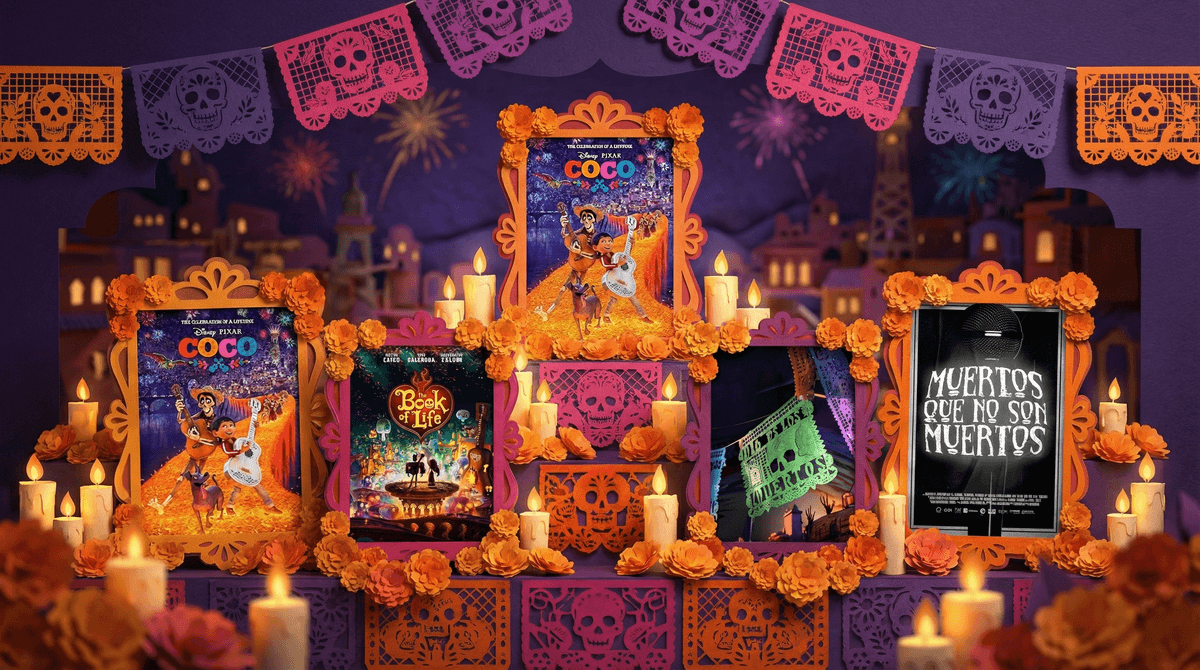
Day of the Dead movies center around Día de los Muertos, the Mexican holiday celebrated November 1-2 where families honor deceased loved ones through vibrant celebrations, ofrendas (altars), marigold flowers, and the belief that spirits return to visit. These films use this cultural tradition to explore themes of death, memory, family legacy, and what it means to be remembered.
The most prominent example is Pixar's Coco, but there's also The Book of Life (2014), and various documentaries and shorts that explore the holiday's real-world traditions. Unlike Halloween's spooky skeletons, Day of the Dead imagery is colorful, celebratory, and fundamentally about connection rather than fear.
These movies have become go-to viewing for families in late October and early November, but they're relevant year-round for conversations about grief, cultural traditions, and how different cultures approach death.
Coco is genuinely one of the best animated films ever made. I'm not being hyperbolic—it won two Oscars, has a 97% on Rotten Tomatoes, and will absolutely wreck you emotionally in the best way. The music slaps, the animation is stunning, and the story about a boy who accidentally enters the Land of the Dead while trying to pursue his dream of becoming a musician is both adventurous and deeply moving.
Kids love the vibrant visuals, the skeleton characters (who are funny and expressive, not scary), the catchy songs, and the adventure plot. The spirit world is gorgeously imagined—like a fantastical Mexican city made of marigold petals and warm light.
Parents love that it introduces kids to Mexican culture with genuine respect and authenticity (Pixar's research team spent years in Mexico), tackles the concept of death in a way that feels comforting rather than terrifying, and delivers a story about family that doesn't feel manipulative even as you're ugly-crying.
The Book of Life takes a different approach—more stylized, more romance-focused, with a love triangle at its center. It's visually distinctive (the characters look like wooden puppets) and has a great voice cast, but it doesn't hit quite as hard emotionally as Coco. Still absolutely worth watching, especially for kids 8+.
The Death Thing
Let's address the elephant in the room: these movies are about death. Characters are dead, we see the Land of the Dead, and the entire premise revolves around what happens after we die.
But here's the thing—the way Day of the Dead tradition approaches death is actually really healthy. It's not about fear or loss, but about remembrance and celebration. The core message of Coco is that death isn't the end as long as someone remembers you. Your loved ones live on in the stories you tell, the traditions you keep, the songs you sing.
For many kids (and honestly, many adults), this can be a more comforting framework for thinking about death than what they might encounter elsewhere. It normalizes talking about people who've died, keeping their memory alive, and processing grief as a family.
That said, if your child:
- Has recently experienced a death in the family
- Is particularly anxious about death
- Is very young (under 5-6)
You might want to preview the film first or wait until they're a bit older. There's a scene in Coco where a character experiences a "final death" (when no one living remembers them anymore) that can be intense. The movie also deals with themes of family conflict and a child feeling misunderstood, which might resonate deeply depending on your kid's current emotional state.
Cultural Authenticity Matters
Coco isn't just using Day of the Dead as a cool aesthetic—it's a genuine representation of Mexican culture created with extensive input from cultural consultants, Mexican artists, and families. The traditions shown (ofrendas, papel picado, marigolds, pan de muerto) are real, and the emotional core of honoring ancestors is authentic.
This is a great opportunity to talk with kids about:
- How different cultures have different traditions around death
- Why cultural representation in media matters
- The difference between appreciation and appropriation
If your family isn't Mexican or Latinx, this is also a moment to be thoughtful. Watching Coco doesn't mean your family should suddenly start building ofrendas or celebrating Día de los Muertos—that would be appropriation. But you can absolutely appreciate and learn from the traditions shown, and maybe explore how your own family or culture approaches remembering loved ones .
.
The Music Will Live in Your Head Forever
"Remember Me" is an absolute earworm and you will be singing it for weeks. Just... prepare yourself. The soundtrack is genuinely excellent though—Miguel's singing voice (Anthony Gonzalez) is incredible, and the songs range from upbeat to heartbreaking.
Coco: Ages 6+, ideally 7-8+
The PG rating is appropriate. Younger kids might enjoy the visuals and music but miss the emotional depth. The sweet spot is probably 7-10, when kids can grasp the themes but aren't too cool for animated movies yet (though honestly, teens and adults love this movie too).
Intense moments include:
- Miguel being trapped in the Land of the Dead and running out of time
- The "final death" scene
- Family conflict and a child feeling rejected
- A villain reveal that might be scary for very young viewers
But the resolution is ultimately hopeful and affirming.
The Book of Life: Ages 8+
Slightly older skewing because the romance plot is more central and the themes are a bit more complex. Also has some mildly intense action sequences and bullfighting scenes that might need context.
Documentaries about Día de los Muertos: Ages 10+
If you want to go deeper into the real traditions, there are some excellent documentaries (like "Día de los Muertos" on various streaming platforms). These are better for older kids who can appreciate the cultural and historical context.
Before watching:
- Ask what your kid knows about death and different cultural traditions
- Explain that this is based on a real Mexican holiday
- Set expectations that it might be emotional
During the movie:
- Let younger kids know they can ask questions
- Be ready to pause if they need to process something
- Notice the visual details—the animators packed in so much cultural authenticity
After watching:
- Talk about the movie's message: "What do you think it means that death isn't the end if someone remembers you?"
- Discuss your own family's traditions around remembering loved ones
- If appropriate, share stories about family members who've passed away
- Consider looking up real Day of the Dead celebrations to see how the movie compares
Some families use Coco as a springboard to create their own traditions—not appropriating Day of the Dead, but inspired to be more intentional about remembering and honoring family members who've died. Maybe you create a photo album together, or start sharing stories at family dinners, or visit a cemetery with flowers.
Coco is a masterpiece that happens to be animated. It's one of those rare kids' movies that doesn't talk down to children while still being age-appropriate. The way it handles death is honest, culturally grounded, and ultimately comforting—death is part of life, but love and memory transcend it.
Is it sad? Yes. Will you cry? Probably. Is it worth it? Absolutely.
The Book of Life is also lovely and worth watching, especially if your kids are into the romance angle or you want to compare different artistic interpretations of similar themes.
These movies are perfect for:
- October/November seasonal viewing
- Introducing kids to different cultural traditions
- Processing grief or talking about death in an age-appropriate way
- Family movie night when you want something with actual substance
Watch Coco. Then watch it again when your kids are older. Then watch it again when you need a good cry. It's that good.
- Start with Coco if you haven't seen it—it's on Disney+
- Check out The Book of Life for a different take on similar themes
- Explore other movies that handle death thoughtfully for kids
- Learn about how to talk to kids about death at different ages
And hey, if your kid becomes obsessed with the music and wants to learn guitar like Miguel? That's a pretty great outcome.