

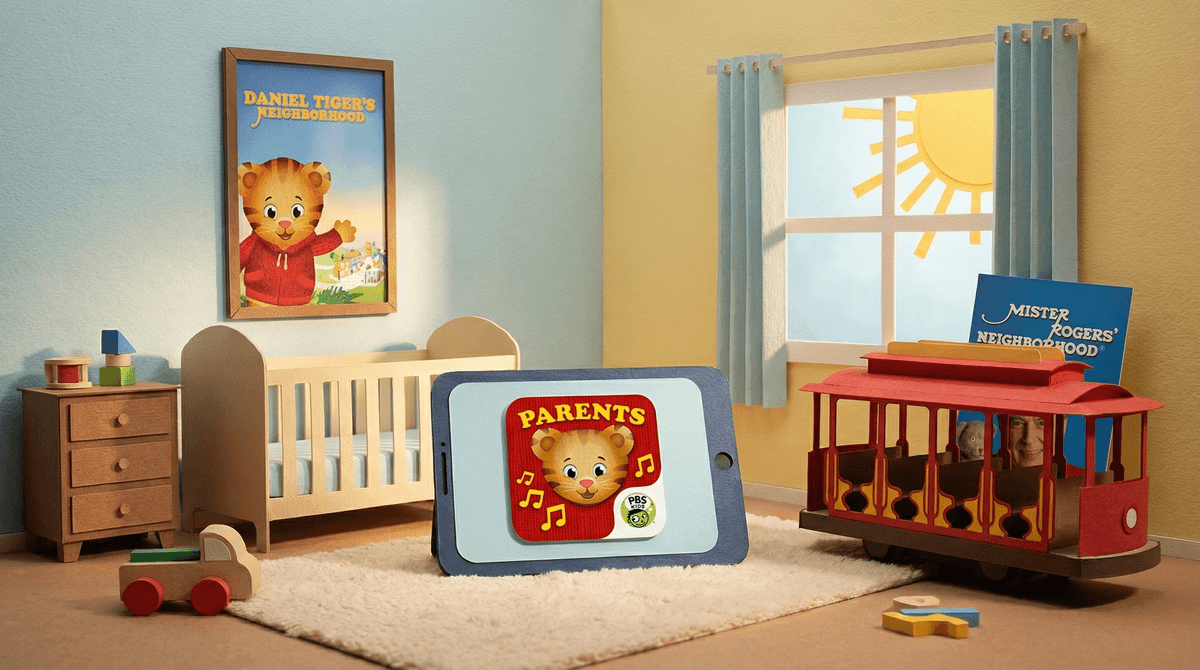
Daniel Tiger's Neighborhood is basically the Mr. Rogers' Neighborhood for a new generation – and yes, that's exactly what it is.
Created by the Fred Rogers Company, this animated PBS Kids show follows Daniel Tiger (the son of the original Daniel Striped Tiger from Mr. Rogers) as he navigates everyday preschool life. We're talking about going to the potty, dealing with big feelings, trying new foods, and making friends.
Each 30-minute episode tackles social-emotional learning through catchy songs that will absolutely live rent-free in your head for years. (You've been warned about "When you feel so mad that you want to roar, take a deep breath and count to four.")
The show premiered in 2012 and has become the go-to screen time for many intentional parents. There's also a Daniel Tiger app, YouTube clips, and let's be real – a merchandising empire of stuffed tigers and red trolleys.
But here's the question that probably brought you here: Is this actually appropriate for babies? And if so, when should you start?
Look, I get it. You're exhausted. Your baby won't let you put them down. You need to make lunch or take a shower or just stare at the wall for five minutes. And you've heard Daniel Tiger is "educational" and "gentle" and all the things that make it feel less guilt-inducing than other screen options.
The appeal is real:
Daniel Tiger teaches actual life skills through repetition and music. The pacing is slow. The animation is soft and not overstimulating. There's no violence, no commercials (on PBS), and honestly, the lessons about feelings and friendship are things you actually want your kid to learn.
Many parents report their toddlers using Daniel Tiger strategies in real life – singing the potty song, talking about their feelings, understanding transitions better.
But here's the tension:
The American Academy of Pediatrics recommends no screen time for babies under 18 months (except video chatting). For kids 18-24 months, they say high-quality programming is okay, but only if you're watching together.
Daniel Tiger is technically designed for ages 2-4. So when parents ask about "Daniel Tiger for babies," we need to get specific about what age we're actually talking about.
Ages 0-18 Months: The Reality Check
The research is pretty clear here – babies this young don't learn from screens the way they learn from real-life interaction. There's something called the "video deficit effect" where babies under 2 struggle to transfer what they see on screens to real life.
That said, we live in reality:
Some days you're solo parenting and need to clip the baby's nails without losing a finger. Sometimes you're on a plane. Sometimes you just need 15 minutes to not be touched.
If you're going to use Daniel Tiger with a baby this young:
- Keep it to true emergencies, not daily routine
- Sit with them if possible
- Expect they're mostly seeing colors and movement, not following the plot
- Don't count on it being "educational" at this age
- Use it as a last resort, not a first solution
Ages 18-24 Months: The Gray Zone
This is where Daniel Tiger starts making a bit more sense developmentally, but it's still the very beginning of being able to learn from screens.
If you're introducing it now:
- Always co-view – sit with them and talk about what's happening
- Limit to 15-20 minutes max
- Choose specific episodes about concepts you're working on (like brushing teeth or bedtime routines)
- Sing the songs together during the show AND in real life
- Make it interactive, not passive
At this age, Daniel Tiger works best as a supplement to your teaching, not the teacher itself. You're using the show as a conversation starter and a way to reinforce what you're already doing.
Ages 2-4: The Sweet Spot
This is who Daniel Tiger was made for, and it shows. Two-year-olds can start to follow simple storylines, understand cause and effect, and actually apply some of what they see.
Making it work well:
- Up to 30 minutes (one episode) is reasonable
- Still co-view when possible, especially at first
- Talk about the episodes afterward: "Remember when Daniel felt frustrated? What did he do?"
- Connect the songs to real situations: "You seem mad. Should we try Daniel's calm-down song?"
- Use it intentionally for specific challenges (new sibling, potty training, starting school)
The show's repetitive nature and musical cues are actually perfect for this developmental stage. Toddlers thrive on repetition and predictability.
The Good Stuff
The social-emotional learning is legit. Daniel Tiger teaches empathy, emotional regulation, and problem-solving in age-appropriate ways. The strategies are based on actual child development research.
The Fred Rogers legacy matters. This show carries the same gentle, respectful approach to children that made Mr. Rogers special. Kids are never talked down to.
The diversity is thoughtful. The neighborhood includes different family structures, cultures, and abilities woven naturally into the stories.
The songs actually work. Yes, they're annoyingly catchy, but that's the point. Kids remember them and use them in real situations.
The Considerations
It's still screen time. Even "good" screen time for babies and young toddlers replaces time they could spend moving, exploring, and interacting with real humans. That matters for brain development.
Co-viewing is non-negotiable with babies. Plunking a baby in front of Daniel Tiger while you do dishes in another room isn't going to deliver the educational benefits. The learning happens in the interaction with you.
It can become a crutch. If Daniel Tiger becomes your go-to for every transition, meal, or difficult moment, you're outsourcing emotional regulation to a screen instead of teaching it through your relationship.
Every kid is different. Some toddlers become more emotionally aware through Daniel Tiger. Others get overstimulated or scared by conflict in the episodes. Watch your specific kid.
The Comparison Trap
You're going to see parents on Instagram talking about how their 14-month-old "loves Daniel Tiger" or uses the potty because of the show.
Deep breath.
First, social media is a highlight reel. Second, every kid develops differently. Third, there's no prize for earliest screen introduction or fastest potty training.
Your baby doesn't need Daniel Tiger to thrive. If you choose to use it thoughtfully as they get older, great. If you wait until 2 or 3 or never use it at all, also great.
If you've decided Daniel Tiger has a place in your home, here's how to use it intentionally:
Create Clear Boundaries
- Decide in advance when screen time happens (not as a reaction to every fussy moment)
- Set a timer so it doesn't drift into "just one more episode"
- Have a consistent routine for turning it off (warning song, countdown, whatever works)
Choose Episodes Strategically
Not all episodes are created equal for your current needs. The Daniel Tiger website lets you search by topic:
- Potty training
- New sibling
- Bedtime struggles
- Trying new foods
- Managing frustration
Pick episodes that support what you're working on in real life.
Extend the Learning
- Get the books and read them together (no screen required)
- Sing the songs during actual situations
- Use Daniel Tiger language: "How do you think Daniel felt when...?"
- Role-play scenarios from episodes with stuffed animals
Watch Your Kid, Not Just the Show
Notice how your baby or toddler responds:
- Are they engaged or zoned out?
- Do they seem anxious during conflict scenes?
- Can they transition away from the screen calmly?
- Are they using any of the strategies in real life?
This feedback tells you if it's working for your specific child.
Daniel Tiger's Neighborhood is probably the best screen option if you're going to use screens with babies and toddlers. But "best screen option" doesn't mean it's necessary or even beneficial for babies under 18 months.
The honest truth:
Most of us will use screens with our kids earlier and more often than we planned. That doesn't make you a bad parent. But it's worth being intentional about it.
If you're using Daniel Tiger with a baby, acknowledge that it's more about survival than education. That's okay – survival matters too. Just don't convince yourself that a 10-month-old is learning emotional regulation from a screen.
If you're using it with a toddler over 18 months, co-viewing and real-life application make all the difference between passive consumption and actual learning.
And if you're choosing to wait or skip screens entirely? That's also a completely valid choice that plenty of kids thrive with.
There's no perfect answer here. Just the answer that works for your family's values, circumstances, and specific kid.
If your baby is under 18 months:
- Be honest about whether this is truly necessary or just convenient
- Look for screen-free alternatives first (baby-wearing, safe play spaces, asking for help)
- If you do use it, keep it minimal and don't expect educational benefits
If your toddler is 18 months to 2 years:
- Start with 15 minutes of co-viewing
- Choose one episode about a relevant topic
- Watch