

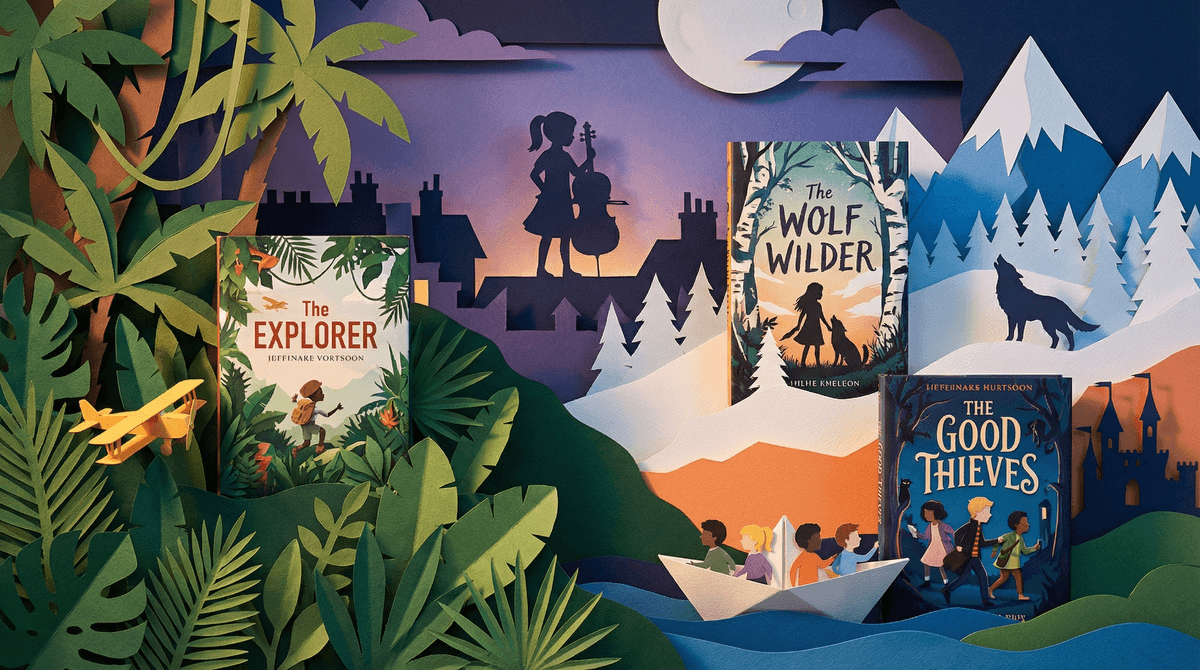
Katherine Rundell is one of those authors who makes you wonder why we ever let kids settle for mediocre children's literature. She writes middle-grade adventure novels that are genuinely literary — the kind where you find yourself reading passages out loud just because the sentences are so beautifully crafted, and where the stories stick with kids (and adults) long after the last page.
Her books include The Explorer, The Wolf Wilder, Rooftoppers, and The Good Thieves. She's won pretty much every major children's book award in the UK, and her work has that rare quality of being both wildly imaginative and emotionally grounding.
Think: kids on grand adventures in unusual settings (the Amazon jungle, Revolutionary Russia, the rooftops of Paris), with prose that doesn't talk down to young readers, and themes about resilience, found family, and what it means to be brave when the world feels impossible.
Here's the thing about Rundell's writing: it respects kids' intelligence. She doesn't simplify her vocabulary or shy away from complex emotions. Her characters face real danger, real loss, and real moral dilemmas. But the books never feel dark or cynical — they're fundamentally hopeful stories about resourceful kids who refuse to give up.
Kids love them because:
- The adventures are WILD — plane crashes in the Amazon, training wolves in Siberia, hunting for stolen emeralds in 1920s New York
- The protagonists are capable and clever — these aren't kids waiting to be rescued; they're solving problems and taking action
- There's always an animal companion — wolves, birds, sometimes a whole menagerie
- The settings feel magical but real — Rundell's research is impeccable, so even fantastical scenarios feel grounded
Parents love them because:
- The writing is actually good — like, you'll want to read these aloud because the prose is gorgeous
- They spark curiosity — kids will want to learn more about the Amazon, Russian history, architecture, whatever the book touches on
- Values are embedded, not preached — themes of courage, loyalty, and justice emerge naturally from the story
- They're conversation starters — these books raise questions about fairness, family, and doing the right thing
Ages 8-10: Start with Rooftoppers or The Explorer. Both have younger protagonists and slightly gentler stakes, though there's still real peril. Good for strong readers in this age range, or for reading aloud together.
Ages 10-13: All of her books work beautifully for this age group. The Wolf Wilder and The Good Thieves have slightly older protagonists and more complex historical contexts.
Content notes:
- Parental loss/absence is a recurring theme — many protagonists are orphans or separated from parents
- Peril and danger are real — characters face genuine threats, though violence is never gratuitous
- Historical settings include some difficult realities (poverty, political oppression, discrimination)
- No romance to speak of — these are adventure stories, not love stories
- No inappropriate language — completely clean on that front
The emotional content is more mature than the reading level might suggest. A kid who can technically read these at 8 might not be emotionally ready for themes of loss and injustice. You know your kid best.
These aren't "easy" books. Rundell uses sophisticated vocabulary and complex sentence structures. That's a feature, not a bug — kids will learn new words in context, and the language itself is part of the beauty. But if your kid is a reluctant reader or struggles with chapter books, these might be frustrating rather than engaging. Consider reading aloud together, or try an audiobook version first.
The historical settings are rich teaching opportunities. After reading The Wolf Wilder, your kid might want to learn about the Russian Revolution. The Explorer might spark interest in rainforest ecology. The Good Thieves touches on 1920s New York, Prohibition, and economic inequality. Have conversations about what interests them and follow those threads.
Found family is a major theme. Rundell's protagonists almost always build their own families from unlikely companions — other kids, eccentric adults, sometimes animals. This can be incredibly affirming for kids who feel different or who are navigating complex family situations. It can also prompt good conversations about what makes a family.
The environmental themes are strong but not preachy. Especially in The Explorer, there's a clear reverence for the natural world and a critique of those who would destroy it for profit. If you're raising environmentally conscious kids, these books align with those values without being didactic.
Katherine Rundell writes the kind of books that remind us what children's literature can be at its best: thrilling, beautiful, emotionally resonant, and intellectually stimulating all at once. These aren't books your kids will race through and forget — they're books that become favorites, that get reread, that shape how kids think about courage and kindness and the world.
In a media landscape where so much content for kids is designed to be consumed quickly and forgotten, Rundell's books are the opposite. They're slow food for the imagination. They require attention and reward it richly.
Start with The Explorer or Rooftoppers — both are excellent entry points. If your kid loves them, you've got a whole backlist to explore, and Rundell continues to publish new work.
And honestly? These are books worth reading yourself, even if you don't have kids in the target age range. They're that good.
- Check out this guide to middle-grade adventure books if you want more recommendations in this vein
- Looking for similar authors? Try Pax by Sara Pennypacker or anything by Eva Ibbotson for that same blend of adventure and literary quality
- Want to balance screen time with reading time? Here's how to make reading feel as appealing as screens without turning it into a battle