

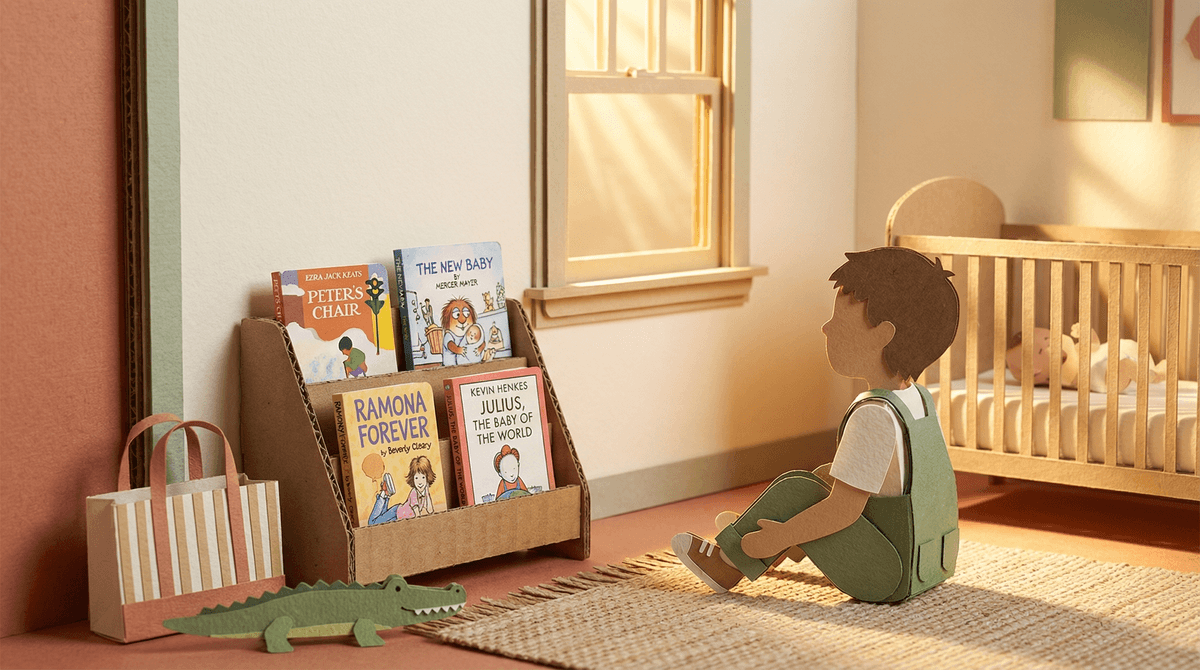
Look, adding a new baby to the family is a huge deal for kids. Like, genuinely massive. Your 3-year-old who's been the center of the universe suddenly has to share you with a screaming potato, and they're supposed to just... be cool with it?
Books about new siblings are picture books and chapter books specifically designed to help kids process the mixed-up feelings that come with becoming a big brother or sister. The best ones acknowledge that it's totally normal to feel excited AND jealous AND worried all at once. They're not just "yay babies!" propaganda—they're emotional processing tools disguised as bedtime stories.
And honestly? In an age where we're all worried about screen time, this is one category where old-school paper books really shine. There's something about cuddling up with your soon-to-be big kid and a picture book that just hits different than watching a YouTube video about it.
Here's the thing: kids don't have the emotional vocabulary to say "I'm experiencing anticipatory anxiety about my changing family dynamics and fear of parental attention displacement." They're more likely to act out, regress, or just seem "off."
Books give them:
- Language for big feelings - "Oh, that character feels mad AND happy, just like me"
- Permission to have mixed emotions - It's okay to not be 100% thrilled
- A safe way to ask questions - "Why is the baby crying so much in this book?"
- Preparation for what's coming - Real talk about diapers, crying, and how boring babies actually are at first
- Reassurance that they're still loved - The core message every kid needs to hear on repeat
Plus, reading these books together becomes a ritual. It's focused one-on-one time before the baby arrives, which is exactly what your kid needs more of right now.
For Toddlers & Preschoolers (Ages 2-5)
I'm a Big Sister/Brother by Joanna Cole - The classic for a reason. Simple, direct, and shows both the fun parts (teaching the baby things!) and the real parts (babies cry a lot). The illustrations are diverse and the tone is just right—not overly saccharine.
The New Baby by Mercer Mayer - Little Critter is JEALOUS and the book doesn't pretend otherwise. This one's great for kids who are already showing signs of not being thrilled about the upcoming arrival. It validates their feelings while showing how things can work out.
Za-Za's Baby Brother by Lucy Cousins - Bright, bold illustrations and a protagonist who straight-up wishes the baby would go back to the hospital. Then she realizes he's actually kind of cool. The emotional arc is realistic and the resolution feels earned, not forced.
Waiting for Baby by Rachel Fuller - This one's perfect for the pregnancy phase. It shows what's happening with the baby growing, what to expect at the hospital, and includes a little doll baby with the book so kids can practice being gentle. Very hands-on.
For Early Elementary (Ages 5-8)
Julius, the Baby of the World by Kevin Henkes - Lilly is OVER IT. She thinks her baby brother is disgusting. This book is hilarious and honest about sibling rivalry while still showing how love can grow. The turning point feels real, not preachy.
Sophie and the New Baby by Laurence Anholt - Sophie's feelings change throughout the book—sometimes she likes the baby, sometimes she doesn't. This captures the day-to-day reality better than books with one emotional arc. Great for kids who need permission to have complicated, changing feelings.
Peter's Chair by Ezra Jack Keats - A beautiful, quiet story about Peter watching all his baby stuff get painted pink for his new sister. He runs away with his chair (the last thing that's still his), then realizes he's outgrown it anyway. The metaphor about growing up and making room for new family members is gentle and profound.
For Older Kids (Ages 8-12)
Superfudge by Judy Blume - A chapter book where Peter finds out his parents are having another baby and he is NOT happy about it. Judy Blume is honest about the chaos of family life and the comedy-drama of sibling relationships. Great for kids who are past picture books but still need processing tools.
Ramona Forever by Beverly Cleary - Ramona gets a baby sister and the whole book deals with the family adjustment. Cleary is a master at capturing how kids actually think and feel, including the parts that aren't Instagram-worthy.
Start reading early - Don't wait until you're in the hospital. Start reading these books a few months before the due date so your kid has time to process and ask questions.
Read them on repeat - Kids need to hear these stories multiple times. The first read might be about the plot, but the fifth read is when they start saying "That's like me!" and actually processing their feelings.
Don't force enthusiasm - If your kid doesn't seem excited after reading these books, that's okay! The goal isn't to manufacture fake happiness—it's to give them tools to understand their real feelings.
Use them as conversation starters - After reading, ask open-ended questions: "How do you think the big sister felt?" "What do you think will be hard about having a baby?" "What might be fun?" Don't correct their answers, just listen.
Keep reading after baby arrives - Actually, these books might be even MORE useful once reality sets in and your kid realizes babies are boring and loud and smell weird.
Pair with real preparation - Books are great, but also involve your kid in practical prep: setting up the nursery, picking out a "big sibling" gift, practicing with a baby doll. The combination of emotional prep (books) and practical prep (actions) works best.
Books about new siblings won't magically eliminate sibling rivalry or guarantee your kids will be best friends. But they give your older child something crucial: the message that their feelings are valid and they're not alone in having them.
The best books in this category don't sugarcoat reality—they show that becoming a big sibling is complicated, that babies are both wonderful and annoying, and that families figure it out together. They're not selling a fantasy; they're offering a roadmap.
And honestly, in a world where we're constantly managing screens and apps and digital drama, it's kind of nice that one of the best tools for a major life transition is just... a stack of good books and some quality reading time together.
Start building your new sibling library now, read them until the pages fall out, and don't worry if your kid's favorite is the one where the big sister is openly jealous. That probably means it's doing its job.