

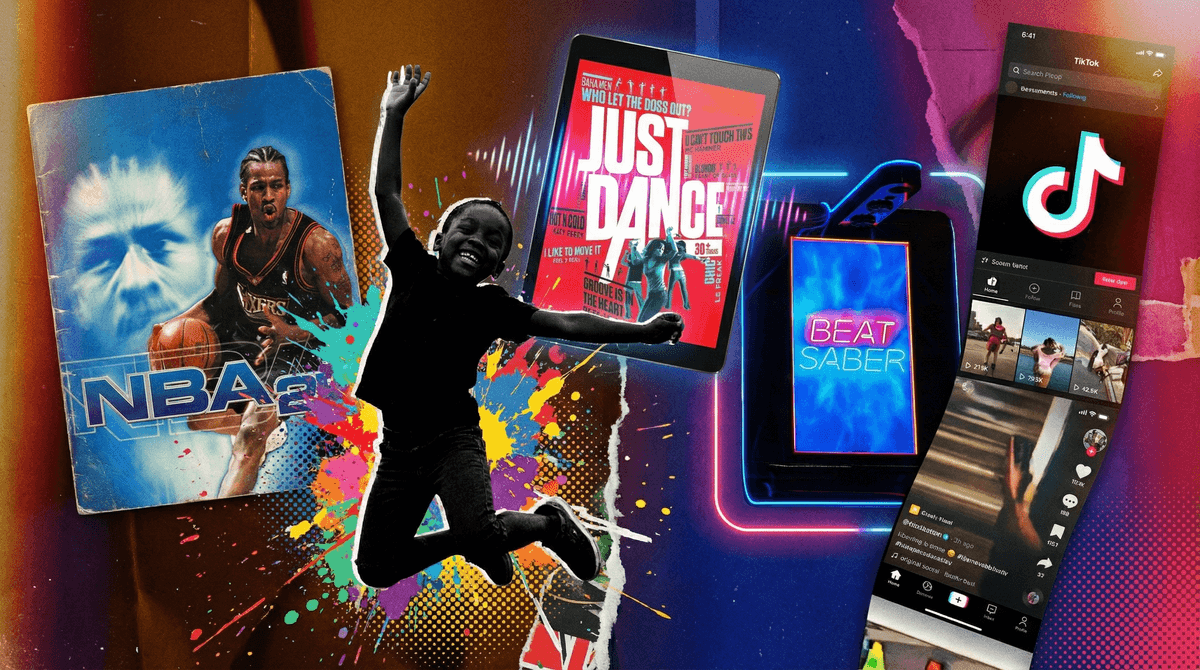
We're talking about interactive games, apps, and activities that combine movement, music, and Black cultural history — from rhythm games featuring hip-hop and jazz to sports games highlighting legendary Black athletes, to dance challenges that teach kids about the evolution of Black dance styles.
Think Just Dance with curated playlists featuring Black artists across generations, sports simulations that let kids step into the shoes of athletes like Jackie Robinson or Simone Biles, and rhythm games that introduce kids to the roots of genres like blues, funk, and go-go music. There are also apps specifically designed for Black History Month that turn learning into physical challenges — dance-offs, relay races with trivia, and movement-based storytelling.
The beauty here is that these aren't just "educational games with movement tacked on." They're genuinely fun activities that happen to create natural openings for conversations about Black contributions to sports, music, and culture.
Let's be real: most Black history education in schools still leans heavily on a handful of figures and a very narrow narrative arc. Kids learn about MLK, Rosa Parks, maybe Harriet Tubman, and then... that's kind of it for the year.
But Black history is everywhere in the things kids already love — the music they dance to, the sports they watch, the viral TikTok moves they're learning. When you connect learning to movement and music, you're tapping into how kids naturally absorb culture.
Plus, there's something powerful about learning through your body. Dancing to jazz while learning it was born in New Orleans Black communities hits different than reading about it in a textbook. Playing as Jackie Robinson in a baseball game and experiencing what it meant to break the color barrier creates empathy in a way a worksheet can't.
For Black kids specifically, seeing themselves reflected in the games they play — not just as historical figures but as athletes, dancers, and cultural innovators — is affirming. For non-Black kids, it's a window into the richness of Black culture beyond the sanitized versions they might get in school.
Ages 4-7:
- Sesame Street has great dance-along segments featuring Black musicians and dancers
- Simple freeze dance games with playlists featuring Black artists across genres (Motown, gospel, contemporary R&B)
- PBS Kids Games occasionally features movement-based activities during Black History Month
- Storytime + movement combos — read books about Black dancers or athletes, then act out the movements together
Ages 8-12:
- Just Dance — create custom playlists featuring Black artists and talk about the music history as you play
- NBA 2K series — yes, it's a sports game, but it includes historical teams and moments that can spark conversations about pioneers like Bill Russell or Kareem Abdul-Jabbar
- YouTube dance tutorials teaching the history of moves like the Running Man, the Dougie, or breaking (which, by the way, is now an Olympic sport)
- DIY dance challenges — research a Black dance style together (stepping, tap, hip-hop), learn some moves, create your own routine
Ages 13+:
- More complex rhythm games like Beat Saber with curated music from Black artists
- Documentary viewing + physical challenge combos — watch something like Jingle Jangle or High Flying Bird, then try the dance moves or basketball drills featured
- TikTok dance history deep dives — trace viral dances back to their Black creators (because yes, this is a real conversation worth having about cultural appropriation)
- Sports simulation games with historical modes that let teens play through significant moments in Black sports history
The good stuff: Movement-based learning is incredibly effective for retention and engagement. When kids are physically active while learning, they're more likely to remember the information and develop positive associations with it.
These activities also create low-pressure conversation opportunities. You're not sitting your kid down for a serious talk about race and history — you're dancing together, laughing, maybe failing spectacularly at a move, and naturally discussing "wait, who created this dance?" or "what was it like for this athlete back then?"
The watch-outs: Not all "Black history" content is created equal. Some apps and games slap a Black History Month label on pretty surface-level content. Look for stuff that goes beyond the same five historical figures and actually explores the breadth of Black cultural contributions.
Also, be mindful of games that might include Black athletes or musicians but don't actually provide any historical context. NBA 2K is fun, but if you're using it as a learning tool, you'll need to add the storytelling yourself.
The music conversation: If you're using contemporary hip-hop and R&B in your dance games, preview the lyrics. There's a difference between age-appropriate celebration of Black musical innovation and exposing your 8-year-old to explicit content they're not ready for. Clean versions exist for a reason.
Create a "movement playlist" featuring Black artists across generations and genres — Ella Fitzgerald, James Brown, Misty Copeland's performance music, Kendrick Lamar (clean versions), Lizzo, whatever fits your family's vibe. Use it for dance parties, workouts, or just background music.
Combine screen time with research time. Playing a sports game featuring a Black athlete? Take five minutes to watch a quick video about their actual life and achievements. Learning a TikTok dance? Look up who created it and what influenced that style.
Make it a family thing. This isn't just for kids. Parents getting out there and attempting the Cupid Shuffle or learning about the history of double dutch creates shared experiences and shows kids that learning about Black culture is valuable for everyone.
Connect it to current events and culture. When Beyoncé drops a new video with choreography rooted in Black dance traditions, that's a teaching moment. When a Black athlete makes history, that's a conversation starter.
Black history isn't a month — it's a living, breathing part of the culture kids are already consuming. Dance games and sports activities are just one entry point, but they're a joyful, active, engaging one that can lead to much deeper learning.
The goal isn't to turn every dance party into a history lesson. It's to create an environment where kids naturally encounter and celebrate Black cultural contributions in ways that feel fun and relevant to their lives. When learning happens through movement and music, it sticks. When it's connected to things kids already love, it matters.
So yeah, go ahead and have that dance-off in your living room. Just maybe take a minute to talk about who made the music, who created the moves, and why that matters. That's the good stuff.
- Explore alternatives to Just Dance for more family-friendly rhythm games
- Learn about age-appropriate documentaries
 featuring Black athletes and artists
 - Find books about Black dancers and athletes to pair with your movement activities