

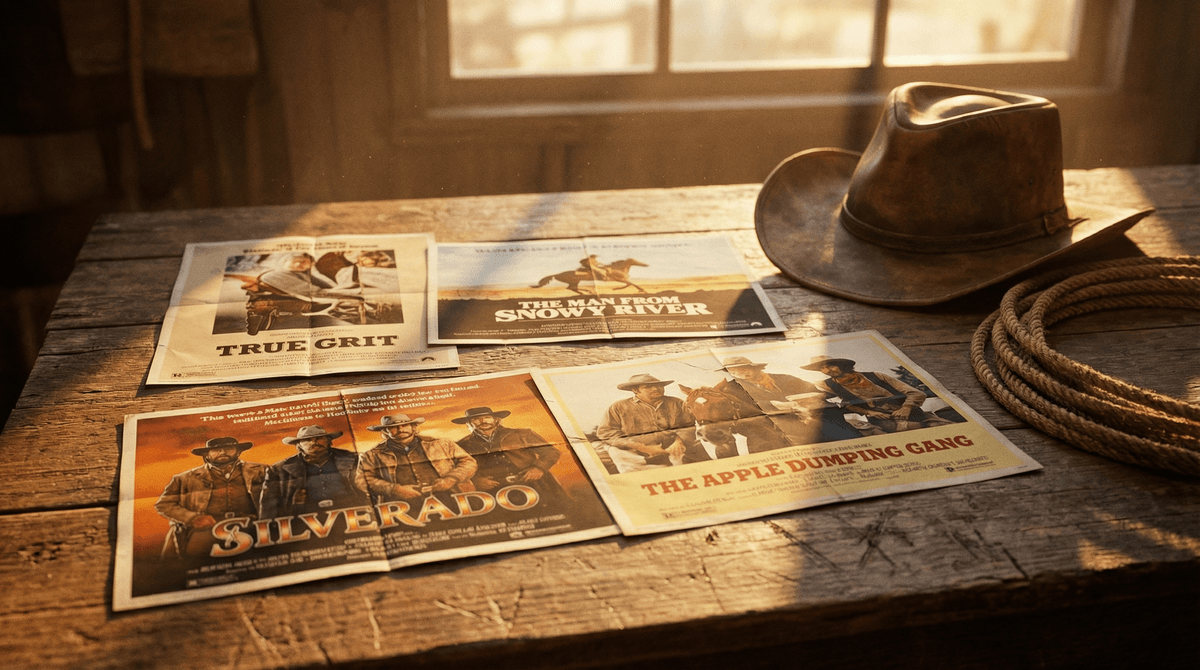
Look, I get it. When you think "Western," you probably picture Clint Eastwood squinting through dust clouds, dramatic shootouts, and a body count that would make John Wick blush. But here's the thing: the Western genre has some genuinely great family films that teach timeless values about courage, justice, and standing up for what's right—without the gratuitous violence.
These aren't the gritty, morally ambiguous Westerns of the '70s. We're talking about classic films where good and evil are clear, heroes actually act heroic, and conflicts get resolved through cleverness, bravery, and doing the right thing. Think of them as the opposite of whatever chaotic content your kids are watching on YouTube Shorts.
The best family Westerns spark real conversations. They show characters facing tough choices, standing up to bullies (often literal outlaws), and learning that courage isn't about being fearless—it's about doing what's right even when you're scared. Plus, they're a nice antidote to the constant digital stimulation. No jump cuts, no algorithm-driven chaos, just good storytelling.
In an age where kids are getting their morality lessons from Roblox roleplay servers and YouTube drama, there's something refreshing about watching a straightforward story where a character has to choose between what's easy and what's right.
Classic Westerns also offer a window into American history (with all its complexities—we'll get to that). They show frontier life, the challenges of building communities, and yes, the conflicts that came with westward expansion. These films can be starting points for deeper conversations about how we talk to kids about complex historical topics .
.
And honestly? They're just well-made films. Before CGI explosions became the default, filmmakers had to rely on actual storytelling, character development, and cinematography. Your kids might be surprised to discover that movies without special effects can actually be... good?
True Grit (2010) — Ages 10+
The Coen Brothers' remake is surprisingly family-appropriate (the 1969 original works too). Hailee Steinfeld plays 14-year-old Mattie Ross, who hires a U.S. Marshal to track down her father's killer. It's about a young person demanding justice and refusing to be dismissed because of her age. There's violence, but it's not glorified—it's shown as serious and consequential. The language is period-appropriate (and frankly, poetic), and Mattie is one of the best examples of determination and moral clarity you'll find in any film.
Why it works: Strong female protagonist, consequences matter, justice over revenge.
The Man From Snowy River (1982) — Ages 8+
Technically an Australian Western, but it counts. This is about an 18-year-old trying to prove himself after his father's death. There's a legendary horse chase down a mountain that's genuinely thrilling, a romance subplot that's sweet without being cringey, and themes about earning respect through character rather than bravado.
Why it works: Coming-of-age story, spectacular cinematography, minimal violence.
Silverado (1985) — Ages 10+
This is the Western equivalent of The Princess Bride—fun, adventurous, with clear good guys and bad guys. Four strangers team up to fight corruption in a frontier town. There's action, but it's more "adventure movie" than "violent Western." Kevin Kline, Scott Glenn, Kevin Costner, and Danny Glover have great chemistry, and the film never takes itself too seriously.
Why it works: Ensemble cast, humor, adventure over brutality.
The Apple Dumpling Gang (1975) — Ages 6+
Pure Disney comedy. A gambler gets stuck caring for three orphans who discover a gold nugget. It's silly, it's wholesome, and it's got Don Knotts and Tim Conway as the worst outlaws in cinema history. If your kids are younger or you want something genuinely light, this is it. No deep moral lessons here—just fun.
Why it works: Comedy, very young-kid appropriate, zero violence.
Butch Cassidy and the Sundance Kid (1969) — Ages 12+
Okay, hear me out. Yes, they're outlaws. But the film is more about friendship, loyalty, and the end of an era than glorifying crime. Paul Newman and Robert Redford have incredible chemistry, and the film is surprisingly funny and thoughtful. The violence is minimal and not graphic. It's a great choice for preteens/teens ready for more complex characters who aren't purely good or evil.
Why it works: Complex characters, humor, friendship, consequences of choices.
Historical accuracy and representation: Let's be real—classic Westerns have issues. Native Americans are often portrayed stereotypically or not at all. Women are frequently sidelined. Black cowboys (who made up about 25% of actual cowboys) are rarely shown. These films reflect the biases of when they were made.
This doesn't mean you can't watch them, but it does mean you should talk about them. Use these films as conversation starters: "What's missing from this story?" "Who else lived in the West during this time?" Here's how to have these conversations without it feeling like a lecture.
Violence levels: Even family-friendly Westerns have some violence—it's part of the genre. But there's a big difference between stylized action and graphic brutality. The films listed above keep violence minimal and consequences clear. Nobody's getting shot and then cracking jokes in the next scene.
Pacing: Modern kids used to TikTok and YouTube might find these films "slow." That's actually not a bad thing. Sitting through a film that builds tension gradually is a skill worth developing. But maybe don't start with the longest one on the list.
Language: Period-appropriate language can sound formal or old-fashioned. In True Grit, characters speak in a specific frontier dialect that's actually beautiful. Some films have mild language by today's standards. Nothing you wouldn't hear in a PG movie.
Set the stage: Tell your kids they're watching a film from before CGI, before Marvel, before everything looked like a video game. Frame it as an adventure in seeing how movies used to be made.
Watch together: These aren't "throw it on and walk away" films. Watch with your kids so you can pause for questions, point out cool cinematography, or discuss what's happening.
Follow up with questions: "What would you have done in that situation?" "Do you think the character made the right choice?" "What do you think was brave about what they did?"
Explore the real history: After watching, look up what the real West was like. Who actually lived there? What were their lives like? This is where you can fill in what the film left out.
Try other genres with similar themes: If your kid loves the adventure and moral clarity but isn't sold on Westerns, try The Princess Bride, The Secret of Roan Inish, or October Sky—different settings, similar values.
Family-friendly Westerns offer something increasingly rare: straightforward stories about courage, justice, and doing what's right, told at a pace that lets kids actually process what they're watching. They're not perfect—no film from any era is—but they're a solid alternative to the content chaos of modern streaming.
Will your kids immediately love them? Maybe not. But showing them that good storytelling existed before YouTubers and that heroes can be complex without being morally bankrupt? That's worth the occasional "this is boring" complaint.
Start with something accessible like Silverado or The Man From Snowy River, watch together, and see what happens. Worst case, they don't love it and you've spent 90 minutes together. Best case, you've introduced them to a genre that teaches values through story rather than lecture—and sparked conversations that matter way more than whatever's trending on their For You page.
Next Steps: Check out our guide on classic adventure films for families or explore how to talk about old movies with modern kids.