

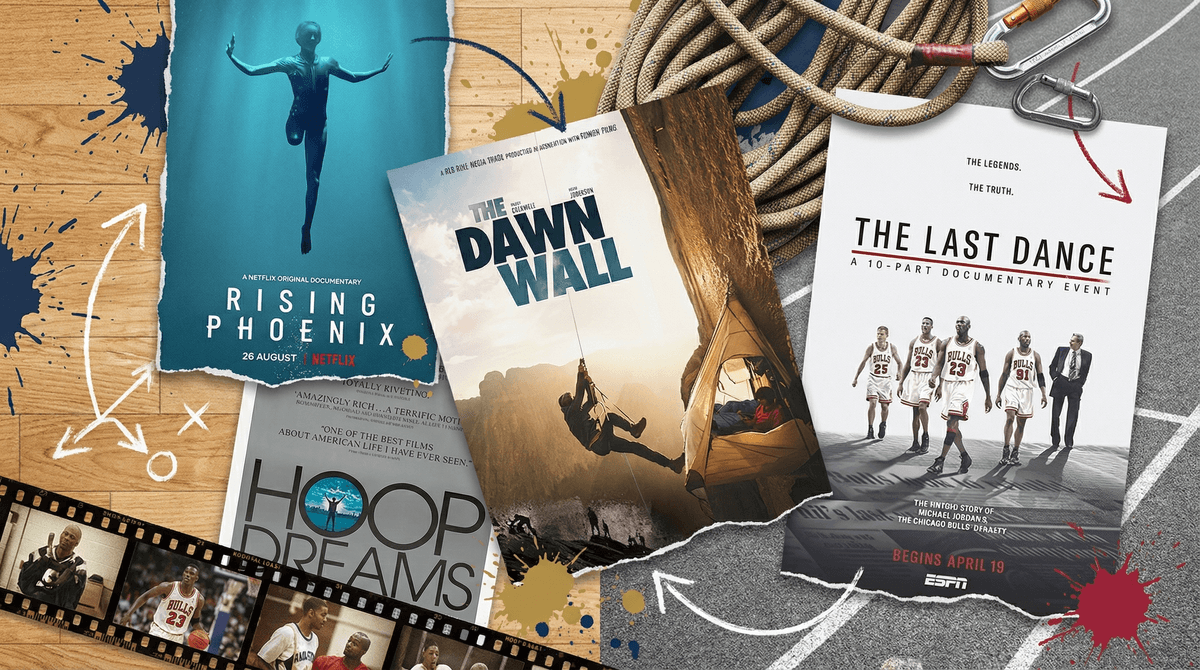
Sports documentaries go beyond highlight reels and championship moments. The best ones dig into the human stories behind athletic achievement — the sacrifices, the setbacks, the family dynamics, the systemic challenges, and the moments of triumph that have nothing to do with final scores.
Unlike fictional sports movies (your Remember the Titans, your Cool Runnings), these are real people, real struggles, and real stakes. Which means they hit different. Kids watch someone their age training at 5am before school, or see an athlete overcome actual discrimination or disability, and suddenly "I can't" becomes "maybe I could."
For families, sports documentaries offer something rare: content that genuinely appeals across ages. Your 8-year-old sees the skateboarding tricks, your 13-year-old connects with the underdog story, and you're getting emotional about the coach who believed in someone when no one else did.
Sports docs teach lessons that are hard to convey through lectures or even through playing sports yourself:
Resilience looks different than you think. It's not always about winning. Sometimes it's about showing up after you've lost everything, or redefining success when your body won't cooperate, or finding joy in the process when the outcome isn't guaranteed.
Teamwork is complicated. The best sports docs show real team dynamics — jealousy, ego, miscommunication, and the hard work of actually functioning as a unit. Not just "we're all friends and we won!"
Systems and context matter. Many sports documentaries explore how race, gender, economics, and access shape who gets to play, who gets to excel, and who gets remembered. These are heavy topics made digestible through personal stories.
Passion is contagious. Watching someone dedicate their life to perfecting a craft — even something as specific as competitive spelling or yo-yo tricks — can inspire kids to find and pursue their own thing with intensity.
Here are the sports documentaries that consistently resonate with families, organized by what makes them special:
For Younger Kids (Ages 8+)
Rising Phoenix (Netflix) — This documentary about Paralympic athletes is genuinely inspiring without being saccharine. The athleticism on display is jaw-dropping, and it reframes disability in ways that are eye-opening for kids. Some intense sports injuries shown, but nothing gratuitous.
Skater Girl — Okay, this one's technically narrative fiction, but it's based on the true story of Skateistan and follows a girl in rural India discovering skateboarding. It's accessible for younger viewers while touching on gender roles and community.
For Middle Schoolers (Ages 11+)
The Last Dance (Netflix/ESPN) — Michael Jordan's Bulls dynasty, but really about obsession, leadership, and whether being the greatest requires being kind of an asshole. This is 10 episodes, so it's a commitment, but families with basketball fans will be hooked. Note: Jordan's intensity and treatment of teammates is... a lot. Great discussion fodder about leadership styles.
Icarus (Netflix) — This one starts as a filmmaker trying to see if he can dope his way to cycling success, then accidentally uncovers the Russian Olympic doping scandal. It's part sports doc, part international thriller. Gets heavy with the political implications, but teens who think "cheating is just part of sports" will have their minds blown.
Free Solo (Hulu/Disney+) — Rock climber Alex Honnold attempts to scale El Capitan without ropes. The climbing footage is stunning, but the film is really about risk, relationships, and what we owe the people who love us when we pursue dangerous dreams. Intense anxiety-inducing moments even though you know he survives (he's in interviews throughout).
For High Schoolers (Ages 14+)
The Dawn Wall (Netflix) — Tommy Caldwell's attempt to free climb an "impossible" route on El Capitan. Unlike Free Solo, this is about partnership, patience, and recovery from trauma (Caldwell was kidnapped by militants in Kyrgyzstan and lost part of a finger). The climbing is spectacular, but it's the mental game that's fascinating.
Last Chance U (Netflix) — Follows junior college football players trying to get their grades and behavior together for a shot at Division I programs. It's raw, sometimes uncomfortable, and shows how the path to athletic success is wildly different depending on your starting point. Language and intensity are real — this is not sanitized.
Athlete A (Netflix) — The USA Gymnastics sexual abuse scandal and the journalists/survivors who exposed it. This is essential viewing for families with kids in competitive sports, but it's heavy and requires parental co-viewing. It's not graphic, but the systemic failures and abuse of power are deeply disturbing.
For the Whole Family
Cheer (Netflix) — Follows the competitive cheerleading team at Navarro College in Texas. Season 1 is genuinely great — it takes a sport many people dismiss seriously and shows the athletic demand, the dedication, and the diverse backgrounds of the athletes. Season 2 gets darker with criminal allegations against one team member. Stick with Season 1 for family viewing.
Hoop Dreams — The classic. Follows two Black teenagers in Chicago pursuing their NBA dreams over five years. Made in 1994 but still the gold standard for long-form sports documentary. It's about basketball, but really about race, class, education, family pressure, and the lottery-ticket mentality of sports as escape. Older kids (13+) will get the most from it.
These aren't always feel-good. Many sports documentaries explore failure, exploitation, abuse, and systemic problems. That's what makes them powerful, but it also means you can't just throw them on as background viewing. Read our guide on how to co-view difficult content with teens.
The language can be salty. Athletes curse. Coaches curse. If your family has strict language rules, preview first or be prepared to have the "this is how some people talk but not how we talk" conversation.
Some show intense injuries. Bones breaking, concussions, catastrophic failures. Most documentaries don't linger gratuitously, but sports are physical and sometimes that physicality is shown honestly.
They're long. Many sports docs are 90+ minutes, and series like The Last Dance or Last Chance U are multi-episode commitments. But that length allows for depth and complexity you don't get in 45-minute episodes.
The best ones raise hard questions. Is the sacrifice worth it? When does passion become obsession? Who profits from athletes' bodies? What do we celebrate and what do we excuse in the name of winning? These are features, not bugs — lean into the discussions.
Pick based on your kid's interests, not just sports they play. A kid who's never touched a basketball might be riveted by The Last Dance because of the storytelling and personality. A gymnast might need some distance from Athlete A because it hits too close.
Watch together and pause liberally. "What would you have done?" "Do you think that coach was too hard on them?" "How do you think their family felt?" Sports docs are dense with teachable moments.
Use them as conversation starters about your kid's activities. If your child plays competitive anything, these films open doors to talk about coaching styles, team dynamics, pressure, and what success means to them personally.
Balance inspiration with reality. Sports docs can be incredibly motivating, but they also show that elite success requires extraordinary sacrifice, often starting in early childhood. Make sure kids understand that playing for joy and health is just as valid as playing for championships.
The best sports documentaries do what all great documentaries do: they use a specific story to illuminate universal human experiences. Your kid doesn't need to care about climbing or gymnastics or basketball to connect with stories about perseverance, identity, injustice, and achievement.
These films offer families a way to explore big themes — ambition, ethics, sacrifice, systemic inequality — through the accessible lens of sports. They're conversation starters. They're empathy builders. And occasionally, they're the thing that inspires your kid to wake up early and practice, not because they think they'll go pro, but because they saw someone pour themselves into something they loved and thought, "I want to feel that way about something too."
Start with one that matches your family's interests, watch it together, and see where the conversation goes. That's the real win.
Want more family viewing recommendations? Check out our guides on best documentaries for kids and movies that spark meaningful conversations.
Dealing with a kid who only wants to watch sports content on YouTube? Here's how to curate better sports content for kids .
.
Wondering if your kid's sports commitment is healthy or excessive? Let's talk about youth sports culture and balance.