

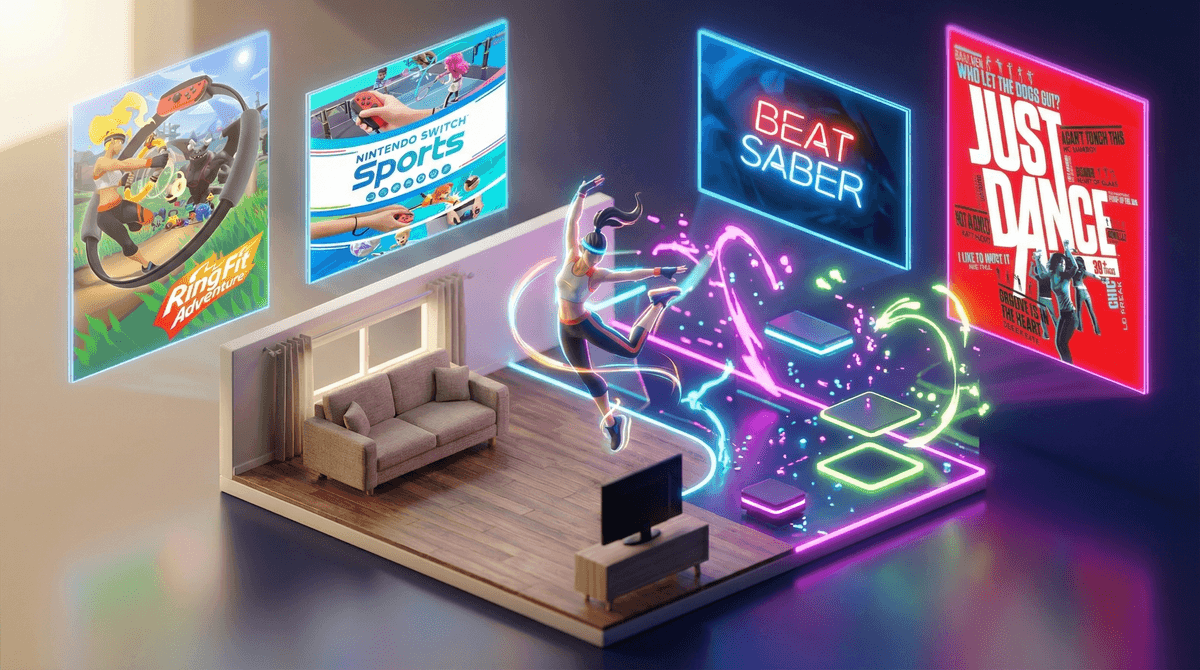
Look, we all know the irony of trying to get kids active by... putting them in front of a screen. But here's the thing: exercise games actually work. These are video games that require real physical movement—dancing, boxing, running in place, doing yoga poses—and they've gotten genuinely good at making fitness fun.
We're not talking about those sad Wii Sports knockoffs from 2008. Modern exercise games have motion tracking that actually works, real workout routines designed by trainers, and enough gamification to keep kids coming back. Yes, it's still screen time. But it's screen time where your kid is sweating, learning coordination, and building actual muscle memory instead of just thumb dexterity.
The best part? They're legitimacy good for the whole family. No judgment if you've found yourself doing Ring Fit Adventure squats after bedtime.
Traditional exercise can feel like homework to kids. "Go outside and run around" often translates to "stand in the yard looking bored." But exercise games tap into what kids already love about gaming: progression systems, unlockables, challenges, and immediate feedback.
When your 9-year-old is determined to beat their high score in Just Dance, they're doing 30 minutes of cardio without realizing it. When they're trying to defeat a boss in Ring Fit, they're doing legitimate strength training. The game mechanics make the physical effort feel purposeful instead of arbitrary.
Plus, there's the social element. Kids can compete with siblings, show off moves to friends, or even play together online. Exercise becomes a shared activity rather than a solitary chore.
Ring Fit Adventure (Nintendo Switch) - Ages 8+
This is the gold standard. You strap a resistance ring and leg band to your body and literally jog, squat, and plank your way through an RPG adventure. The game is surprisingly deep—there's a real story, skill trees, equipment upgrades, and difficulty settings that work for both kids and adults.
The workout is legit. You'll be sore the next day. Kids aged 8-12 especially love it because it feels like a "real" video game, not an exercise app pretending to be fun. The main downside is the Ring-Con accessory can be hard to find and expensive.
Just Dance Series (All Platforms) - Ages 5+
The franchise that refuses to die, and for good reason. New versions come out annually with current pop hits plus throwbacks. Kids follow on-screen dancers and get scored on their accuracy. It's pure cardio disguised as a dance party.
Best for: Kids who already love music and movement. Ages 5-7 can do simplified moves, while older kids and teens actually treat it like a legitimate workout. The phone app version is surprisingly good if you don't want to buy the full game. Pro tip: Just Dance 2025 has a kids mode with age-appropriate songs and choreography.
Beat Saber (VR Headsets) - Ages 10+
This is the VR rhythm game where you slash colored blocks with lightsabers to music. It doesn't feel like exercise—it feels like you're in The Matrix. But you'll be moving your whole upper body, doing lunges, and working up a serious sweat.
The catch: You need a VR headset (Meta Quest, PlayStation VR, etc.), and VR isn't recommended for kids under 10. For tweens and teens though, this is the exercise game that actually feels cool. Just set clear time limits because VR can be intense.
Nintendo Switch Sports (Nintendo Switch) - Ages 6+
The spiritual successor to Wii Sports. Bowling, tennis, soccer, volleyball, badminton, and more. It's less intense than Ring Fit but way more accessible for younger kids and families playing together.
Best for: Family game nights where everyone's moving around. The physical activity is moderate—you're doing arm movements and some footwork, but you're not going to get the same workout as Ring Fit. Still, it's infinitely better than everyone sitting on the couch with controllers.
Fitness Boxing Series (Nintendo Switch) - Ages 8+
Straightforward boxing workouts with rhythm game elements. You punch to the beat, following on-screen instructors. The routines are designed by actual fitness trainers and you can customize workout length and intensity.
Real talk: This is more "workout app" than "game." Kids who are already into fitness or sports might love it. Kids who hate exercise will see right through it. But if you have a kid interested in martial arts or boxing, this is a solid introduction to basic techniques and footwork.
Supernatural (Meta Quest VR) - Ages 13+
This is a VR fitness subscription service with guided workouts in stunning virtual environments. You're doing squats on a mountain peak, boxing in Iceland, flowing through yoga in fantasy landscapes.
The subscription model is annoying ($10-20/month after trial), but the production quality is genuinely impressive. Better for teens who are self-motivated about fitness than younger kids who need more game-like rewards.
These aren't magic. Exercise games work best as part of a broader movement routine, not as a replacement for outdoor play, sports, or just running around with friends. Think of them as a tool for rainy days, winter months, or families who genuinely struggle with traditional exercise.
Motion tracking requires space. You need a clear area of at least 6x6 feet, preferably more. Kids will punch walls, kick furniture, and absolutely destroy any nearby objects. Set up the play area thoughtfully.
Sweat happens. Controllers, VR headsets, and accessories get gross. Have a cleaning routine. Some families buy silicone covers for shared equipment.
Start easy. Even kids who are active in sports can be surprised by how different these movements are. Let them begin on lower difficulty settings to avoid injury and frustration.
Age ratings matter here. VR games have age restrictions for developmental reasons, not just content. Follow them. For younger kids (under 8), stick with games that use simple motion controls like Switch Sports or Just Dance.
If you're going to have screen time anyway, exercise games are one of the better compromises. They're not going to replace soccer practice or bike rides, but they're a legitimate way to get kids moving when the alternatives are Fortnite or YouTube.
Ring Fit Adventure is the best overall option if you have a Switch. Just Dance is the most accessible for families with multiple kids and age ranges. VR options like Beat Saber are incredible for teens but require more investment.
The real win is when kids start to associate movement with fun instead of obligation. If an exercise game helps build that connection, it's doing its job—even if it's happening on a screen.