

The Best Apps for Teens: What Parents Actually Need to Know
Look, the app landscape for teens is wild. Between social media, messaging apps, productivity tools, entertainment platforms, and whatever new thing went viral yesterday, it's genuinely overwhelming to keep track of what your teen is downloading and why.
And here's the thing: not all apps are created equal. Some are legitimately useful for school and life skills. Some are harmless fun. And some... well, some are designed to be addictive slot machines that happen to also expose teens to content and interactions they're not ready for.
Let's break down what's actually happening on teens' phones right now.
The big ones probably won't surprise you: Instagram, TikTok, Snapchat, and Discord dominate the social landscape for high schoolers. By freshman year, most teens are on at least two of these platforms. By junior year? Pretty much all of them.
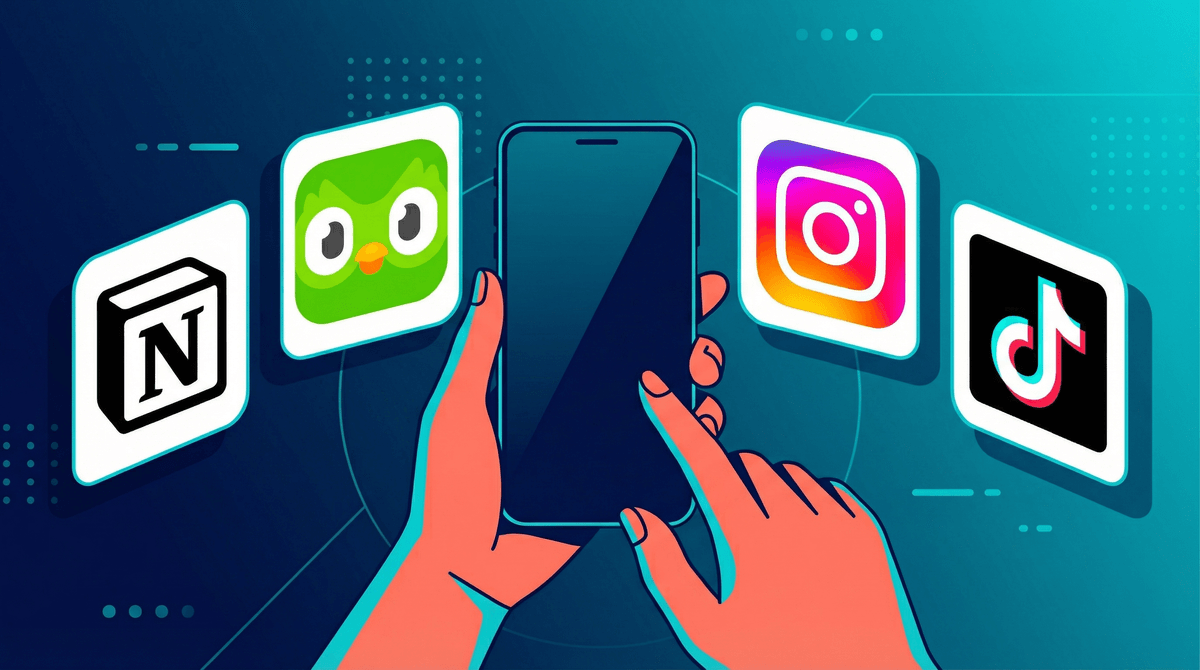
But there's a whole ecosystem beyond social media. Spotify and Apple Music for music (yes, teens still care about their playlists). YouTube for everything from entertainment to homework help to falling down rabbit holes at 2am. Duolingo for language learning (often because of school requirements, but the streak culture is real). Notion and Quizlet for school organization.
And then there's the messaging layer: iMessage (if they have an iPhone—and the green bubble stigma is unfortunately very real), Discord for friend groups and gaming communities, and GroupMe or WhatsApp for team sports and clubs.
Instagram (13+, though let's be real about that age gate): Still the dominant platform for high schoolers, though usage patterns have shifted. Stories and DMs matter more than feed posts. Finsta culture (fake Instagram accounts for close friends) is still a thing. The algorithm can serve up problematic content around body image, comparison culture, and increasingly, divisive political content.
TikTok (13+): The most addictive app on the planet, full stop. The algorithm is scary good at serving content teens want to watch. Can be genuinely creative and funny, but also serves up mental health misinformation, dangerous challenges, and content that normalizes things like disordered eating or self-harm. The "For You" page is different for every user, which means you can't really know what your teen is seeing.
Snapchat (13+): Still huge for direct messaging and streaks (those little fire emojis that mean you've messaged someone daily—teens will literally hand their phone to a friend on vacation to keep streaks alive). Snap Map shows real-time locations, which is... a whole thing. The disappearing messages feel private but aren't—screenshots exist, and so does Snapchat's "My Eyes Only" feature for hiding photos.
Discord (13+): Originally for gamers, now used by every kind of community. Can be great for shared interests and friend groups. Can also expose teens to unmoderated spaces with strangers. Learn more about Discord's server structure because it's genuinely different from other social platforms.
Not everything is doom and scroll. Some apps are legitimately helpful:
For School:
- Notion or Goodnotes for organization
- Quizlet for studying (though sometimes used for finding test answers, just FYI)
- Photomath for math help (same caveat)
- Google Drive for collaboration
For Real Skills:
- Duolingo for languages (gamified but actually effective)
- Khan Academy for learning basically anything
- Coursera or Skillshare for deeper dives
For Mental Health:
- Headspace or Calm for meditation (if they'll actually use them)
- Finch (a self-care pet app that's surprisingly beloved)
The real concerns aren't usually about specific apps—they're about how teens use them:
Time suck: TikTok and YouTube Shorts are designed to be endless. An hour disappears in what feels like ten minutes.
Comparison culture: Instagram and TikTok both fuel the highlight reel effect. Everyone else's life looks better, more exciting, more put-together.
Privacy and permanence: Teens don't always grasp that "disappearing" messages can be screenshotted, or that colleges and employers can find their digital footprint.
Stranger danger (but make it 2025): Discord servers, Snapchat's "Quick Add" feature, Instagram DMs—there are lots of ways for strangers to contact teens. Most are harmless. Some aren't.
The algorithm rabbit hole: Platforms serve up more of what you engage with. If your teen watches one video about extreme dieting, the algorithm will serve up fifty more. This applies to everything from fitness content to political extremism.
Ages 13-14: If they're getting social media, start with the most restrictive settings and one platform. Instagram with a private account and approved followers is a common starting point. Consider using parental controls that actually work for this age.
Ages 15-16: They're probably on multiple platforms by now. Focus less on blocking and more on conversations about what they're seeing and sharing. This is when friend drama moves online and gets messy.
Ages 17-18: They're about to have complete digital freedom in college. Use this year to practice making good decisions with your safety net still in place. Talk about digital reputation, privacy settings, and what they want their online presence to look like.
There's no perfect app ecosystem for teens. Every platform has upsides and downsides. The goal isn't to find the "safe" apps—it's to help your teen develop the judgment to navigate digital spaces thoughtfully.
That means:
- Talking about what they're seeing (not just what they're posting)
- Understanding why they're drawn to certain apps (connection? creativity? boredom?)
- Setting boundaries together that make sense for your family
- Modeling healthy tech use yourself (yes, this one's hard)
The apps will keep changing. New ones will go viral, old ones will die out (RIP Vine, Yik Yak, and Houseparty). But the skills your teen needs—critical thinking, privacy awareness, time management, emotional regulation—those stay constant.
Want to dig deeper on specific platforms? Check out our guides on TikTok, Snapchat, and Instagram for platform-specific safety tips and conversation starters.
And if you're wondering whether your teen's app usage is typical for their age, take our family tech survey to see how your family compares to others in your community. Sometimes just knowing what's normal helps you figure out what boundaries make sense for your household.