

Books that slow a kid down aren’t just a nice-to-have for a quiet Sunday afternoon; they are the antidote to the high-speed, dopamine-loop media that defines most of their digital lives. When you hand a kid a book that demands they look twice—whether it’s through a wordless mystery, a daily animal poem, or pages that literally shrink in their hands—you aren’t just "reading," you’re building their capacity for deep attention and genuine awe.
The Poetry & Wonder collection is a curated set of high-art, high-impact books designed to spark big conversations and slow the household tempo. From the daily ritual of Tiger, Tiger, Burning Bright! to the wordless visual storytelling of Flotsam, these picks prioritize imaginative depth over fast-paced plots. They are perfect for ages 4-8 but have enough artistic sophistication to hold an adult’s interest through the hundredth read.
If you want to bake wonder into your routine without it feeling like a chore, you need a "multivitamin" approach. Something high-quality, consistent, and low-friction.
This is the heavy hitter of the group—literally. It’s a massive, lavishly illustrated volume that provides one animal poem for every single day of the year. The genius here is the curation; it mixes heavy hitters like William Blake with modern voices, all wrapped in illustrations that belong in a gallery.
The move: Keep this on a coffee table or a dedicated nightstand spot. It’s too big for a diaper bag, but it’s the perfect "one more thing before bed" anchor. For a 3-year-old, it’s about the pictures and the rhythm; for an 8-year-old, it’s a masterclass in how language can describe the natural world.
Some books use the physical medium of paper to do things a screen simply can't. These are the picks for the kids who like to pull things apart to see how they work.
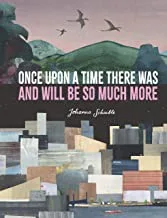
This book tackles the concept of "Deep Time" in a way that is actually intuitive for a child. It starts at the Big Bang and moves toward the present, with the physical pages shrinking as the time scales get smaller. It’s a brilliant piece of paper engineering that makes abstract history feel tangible. It’s the right choice for the kid who is starting to ask, "Where did the world come from?" or "What happens next?"
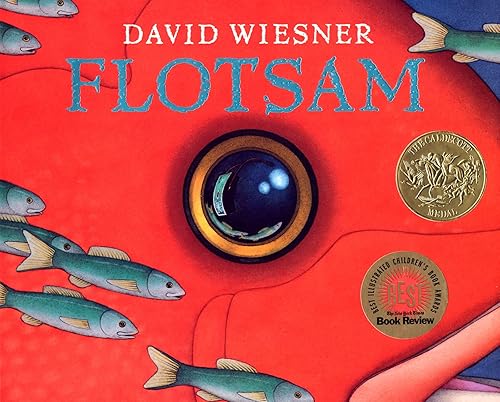
David Wiesner is the king of the wordless picture book, and Flotsam is his masterpiece. A science-minded boy finds an old underwater camera, and the photos inside reveal a surreal, secret world beneath the waves. Because there are no words, the kid has to do the heavy lifting of narrating the story.
Pro-tip: This is a "co-engagement" goldmine. Sit with them and ask, "Wait, what is happening in the background of that photo?" It builds visual literacy and rewards the kind of "looking twice" that the list title promises.
These are the "forever books"—the ones you don't donate when the kid hits middle school. They lean into sentiment and history with a level of craft that makes them feel significant.
Sophie Blackall built the art for this book using actual scraps of wallpaper and fabric from a real, dilapidated 19th-century farmhouse. It’s a dollhouse-style peek into the lives of the twelve children who grew up there. The prose is one long, rhythmic sentence that pulls you through the decades. It’s quiet, it’s detailed, and it introduces the concept of time and change without being a downer.
If your kid is going through a "perfectionist" phase or struggling with a new skill, this is the visual pep talk they need. It’s very earnest—maybe a bit too "heavy" for a kid who only wants slapstick—but the artwork is legitimately museum-grade. It’s often gifted to graduates, but its real home is on the shelf of a 6-year-old who needs to hear that their "potential" is a real, exciting thing.
The mistake most parents make with "wonder" books is trying to explain the wonder. You don't need to turn these into a science lesson or a philosophy seminar.
- For wordless books like Flotsam: Let them tell you the story. If they get stuck, point to a tiny detail in the corner of the frame and ask, "I wonder why that’s there?"
- For poetry: Don't worry if they don't "get" the metaphor. Poetry is as much about the music of the words as the meaning. Let the rhythm do the work.
- For the "big concept" books: Follow their lead. If Once Upon a Time sparks a 20-minute conversation about dinosaurs and the future, great. If they just want to flip the shrinking pages, that's fine too. The physical interaction is the first step toward the intellectual one.
Q: My kid only likes books with jokes or action. Will these land? They might take a minute to click. These are "slow" books. Start with Flotsam—the "impossible" photos usually hook the action-oriented kids because they want to figure out the mystery.
Q: Are wordless books actually good for reading skills? Yes. In the "Reading Rope" framework, literacy isn't just decoding letters; it's language comprehension and narrative structure. Wordless books force kids to build the "comprehension" strand by identifying plot, character motivation, and cause-and-effect without the crutch of text.
Q: What's the best age for this list? The sweet spot is 4 to 8. Younger kids will love the art and rhythm; older kids will start to appreciate the sophisticated themes and the "how-did-they-make-this" aspect of the illustrations.
Q: Is Maybe too abstract for a toddler? Probably. A 3-year-old will like the pictures, but the concept of "unbound potential" is going to fly over their head. Save that one for when they start noticing they're "good" or "bad" at things—usually around age 5 or 6.
You don't need a massive library to raise a kid who appreciates the world; you just need a few books that refuse to be rushed. This list is a great starting point for moving away from "default" bedtime reads and toward something that actually sticks.
- For more high-quality reading, check out our best books for kids list.
- If you have an early elementary reader, see our digital guide for elementary school.
- Get book recommendations for a 7-year-old who loves animals and art