


Podcasts for curious kids are the ultimate carpool hack—they turn the "Are we there yet?" into "Wait, don't turn it off yet!" while effectively outsourcing the 400 questions your child has about tardigrades or why feet stink.
TL;DR: The best podcasts for curious kids combine high-quality production with genuine respect for a child's intelligence. For high-energy science, start with Wow in the World; for kid-led inquiries, try Brains On!; and for creative kids who want to see their own ideas come to life, Story Pirates is the gold standard. These shows aren't just "filler"—they are legitimate literacy tools that build vocabulary and background knowledge.
Before we dive into the queue, let's kill the myth that podcasts are just "screen-free entertainment." In the world of reading science, literacy is built on two main pillars: decoding (turning letters into sounds) and language comprehension (understanding what those sounds mean).
While your kid needs eyes-on-page time to practice decoding, podcasts are a powerhouse for the language comprehension strand. They expose kids to sophisticated vocabulary, complex narrative structures, and deep background knowledge that they might not be able to read on their own yet. For a kid who struggles with decoding or just hasn't "clicked" with books, a great podcast keeps their intellectual engine running while their reading skills catch up. For the full breakdown of how to balance audio and print, check out our best books for kids list.
If your kid is in a "why is the sky blue" phase that never ends, these three are your heavy hitters. They cover similar ground but with very different vibes.
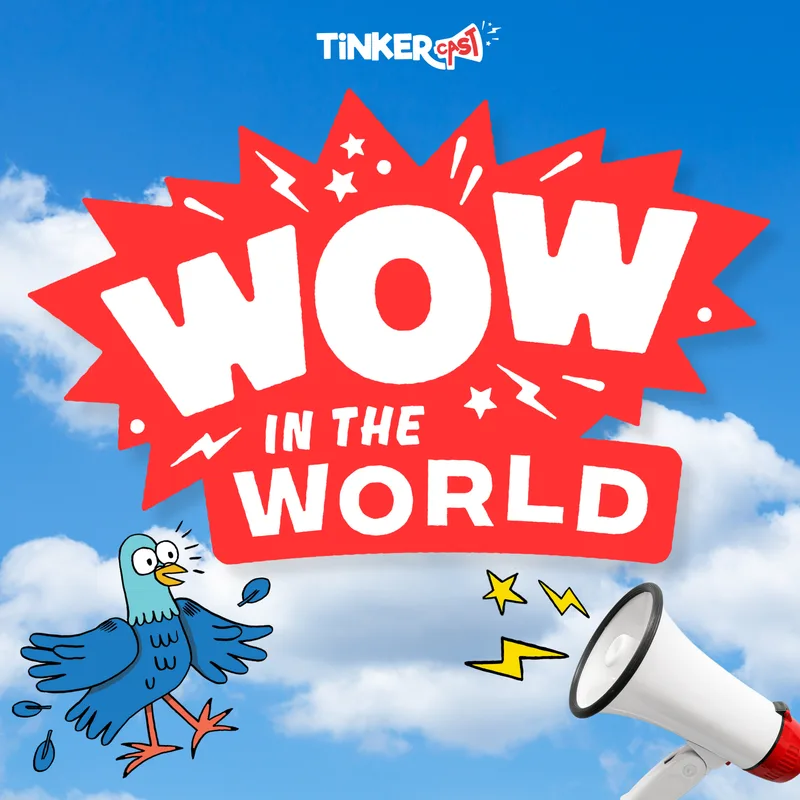
This is the "blockbuster" of the category. Hosts Mindy Thomas and Guy Raz have a chemistry that feels like a classic morning radio show, but for the 7-year-old set. It’s high-octane, heavy on the sound effects, and genuinely funny. It’s the move for a kid who needs to be entertained while they learn. If your kid finds standard educational content "boring," this is the one that will change their mind.
Where Wow in the World is a scripted adventure, Brains On! feels like a community project. Every episode features a different kid co-host, which does something subtle but important: it validates that kids’ questions are worth investigating with real scientists. It’s slightly more grounded than Wow, making it a great pick for kids who want the facts without the slapstick.
Tumble focuses on the process of science. It’s hosted by a science journalist and a teacher, and they do a great job of showing that science isn't just a list of facts to memorize—it’s a way of asking questions and failing until you find an answer. It’s perfect for the kid who always asks, "How do they know that?"
Sometimes the questions aren't about biology or physics; they’re about how the world works and why people do what they do.
This show has a distinct "public radio" energy—it’s calm, thoughtful, and incredibly respectful. They tackle everything from "why do we have skin?" to much heavier topics like war or climate change. They don't talk down to kids, and they use actual voice recordings of kids from around the world. If you have a sensitive or deeply introspective child, this should be your first stop. It’s also the best "wind-down" podcast for a long evening drive.
Curiosity isn't just about facts; it's about what you can build with your imagination. These picks move from the "what is" to the "what if."
The premise is genius: kids submit story ideas, and professional comedians turn them into high-production sketches and songs. It’s essentially Saturday Night Live for elementary schoolers. It’s the best way to show a kid that their creative "brain rot" ideas—like a cat who is also a lawyer—actually have value. It’s also one of the few kid podcasts that is legitimately funny for adults. You will find yourself humming the songs long after the kids are out of the car.
If Story Pirates is the comedy show, Story Seeds is the masterclass. It pairs kids with actual children's book authors to collaborate on a story. It pulls back the curtain on the creative process, showing kids that "real" authors also start with a tiny, weird idea and have to work to grow it. It’s a must-listen for any kid who is constantly filling up notebooks with their own stories.
The best move with these podcasts isn't to just hit play and zone out (though we've all been there). Use them as a springboard for conversation.
- Ask the "What if" question: After an episode of Brains On!, ask, "If you were the scientist they interviewed, what would you have asked next?"
- The "Fact Check" game: Ask your kid to tell you one thing from the episode that sounds fake but is actually true.
- Co-listen to the heavy stuff: If you're playing an episode of But Why that touches on a big world event, stay in the loop. These shows handle tough topics gently, but your kid might still need you to translate the "public radio" tone into "family" language.
For more ways to integrate intentional media into your routine, see our digital guide for elementary school.
Q: What age are these podcasts appropriate for? Most of these land in the 5-12 range. Kids on the younger end (4-6) will gravitate toward the energy of Wow in the World, while older kids (9-12) will appreciate the complexity of Tumble or the creative process in The Story Seeds Podcast.
Q: Are podcasts better for kids than YouTube? It’s not an either/or, but podcasts offer a different developmental benefit. Without visuals, kids have to build the "mental theater" of the story or concept, which is a massive workout for their imagination and focus. It’s a great way to build attention spans that the "scroll" of social media can sometimes erode.
Q: How do I listen to these for free? Almost all of these are available on major platforms like Spotify, Apple Podcasts, or Amazon Music. Many also have their own websites where you can stream directly if you want to avoid an app interface.
Podcasts are the rare "win-win" in the parenting world. They keep the peace in the back seat, they build the comprehension side of the literacy rope, and they actually make you feel like you’re learning something too. If you aren't sure where to start, download three episodes of Wow in the World and see if the "why" questions start getting a little more interesting.
Find more podcasts for your kid's specific interests Get a customized listening list