


Elephant & Piggie is the gateway drug for kids who claim they hate reading. Mo Willems managed to bottle the lightning of Vaudeville comedy and pour it into books that a five-year-old can decode without a meltdown. If you want your kid to stop looking at books as "homework" and start looking at them as entertainment, this is where you start.
Elephant & Piggie books are the ultimate confidence builders for early readers (ages 3–8), using elite comedic timing and sparse dialogue to teach literacy. Start with Today I Will Fly! to see the dynamic, then grab Elephant & Piggie Biggie! Volume 1 to get the most bang for your buck. These books aren't just "safe"—they’re genuinely funny for adults, too.
Most early reader books are a slog. They’re repetitive, dry, and feel like a chore for both the kid and the parent. Elephant & Piggie flips the script. Willems uses a dialogue-only format—no "he said, she said" fluff—which makes them the perfect transition from being read to, to reading independently.
The real magic is in the typography. When Gerald the Elephant is panicking, the text is HUGE. When Piggie is whispering, it’s tiny. This teaches kids how to read with inflection and emotion before they even know what "prosody" is. It’s a masterclass in visual storytelling that makes a kid feel like a superstar reader because they can finish a 64-page book in ten minutes.
If you aren't ready to commit to the full 25-book box set yet, these are the two essential singles that define the series.
This is the origin story. It establishes the "Odd Couple" dynamic: Piggie is the eternal, chaotic optimist who thinks she can fly, and Gerald is the "well, actually" friend who knows elephants don't have wings. It’s the perfect intro to Willems’ use of the page-turn for a punchline.
This is arguably the most relatable book for any human who has ever dealt with a toddler. Gerald’s dramatic, soul-crushing meltdowns over having to wait for a surprise are hilarious because they’re true. It’s a great way to talk about "big feelings" without it feeling like a lecture. It’s also one of the easiest for brand-new readers to tackle alone because the vocabulary is so tight.
Once your kid realizes they can actually read these, they’re going to want more immediately. Buying them one by one is the expensive way to do it.
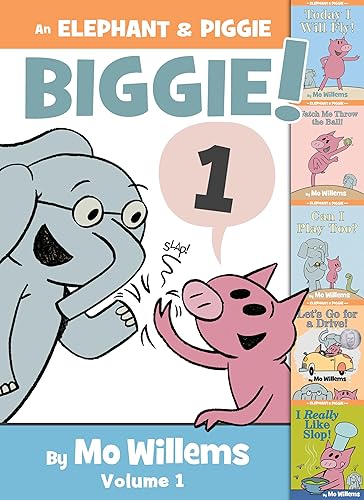
This is the smart move for the 1st-grade demographic. It binds five stories into one volume. It’s a massive confidence builder—a kid carrying around a "thick" book feels like they’ve graduated to the big leagues, even if they’re still just reading hilarious dialogue about throwing a ball.
If you’ve got a preschooler and a kindergartener, just get the 10-pack. It includes "We Are in a Book!"—which is a meta-masterpiece where the characters realize they are being read by a "reader"—and "Can I Play Too?", which is a stealth lesson in inclusion that doesn't feel preachy.
The "nuclear option." This is all 25 books. It’s a big investment, but if you have a kid who is struggling to find a reason to like books, this is the ultimate starter kit for turning them into a reader. Just be prepared: once this box enters your house, you will be doing the voices for Gerald and Piggie every night for the foreseeable future.
At Screenwise, we’re big on the idea that literacy is multi-stranded. Reading isn't just about sounding out words; it's about comprehension, narrative structure, and vocabulary.
When you read Elephant & Piggie with your kid, you’re building the language comprehension half of the "reading rope." You do the voices, they follow the bubbles. Eventually, you swap—they read Piggie’s parts, you read Gerald’s. This kind of co-engagement is what makes the skill stick. It turns reading into a social activity rather than a solitary struggle.
There’s almost zero "content" risk here—no bathroom humor, no mean-spiritedness, and 100% wholesome vibes. However, a few practical things to know:
- The Volume Level: These books encourage loud, expressive reading. If you’re looking for a "quiet down for bed" book, Gerald’s shouting might not be the move.
- The "Again" Loop: These have high replay value. You will read them until you’ve memorized them.
- The Couch Jumps: Piggie’s "try anything" attitude in Today I Will Fly! has been known to inspire some literal flight attempts off the living room furniture.
Q: What is the best age for Elephant & Piggie? The sweet spot is ages 3 to 7. They work as great read-alouds for preschoolers, but the "magic moment" happens in Kindergarten or 1st Grade when the kid realizes they can read the whole book by themselves.
Q: Is Elephant & Piggie better than the Pigeon books? They’re different. The Pigeon is about a power struggle between the character and the reader. Elephant & Piggie is about the relationship between two friends. Both are great, but E&P is better for building independent reading skills.
Q: Which Elephant & Piggie book should I buy first? Start with Today I Will Fly!. It’s the first one published and perfectly introduces the dynamic between the cautious Gerald and the impulsive Piggie.
Q: My kid is a struggling reader in 2nd grade. Is this too "babyish"? Not at all. Because the humor is genuinely funny and the characters are expressive, it doesn't feel like a "baby book." It’s often the exact thing a struggling reader needs to get a "win" and build momentum.
Mo Willems is a genius because he respects kids' intelligence while keeping the vocabulary simple. Elephant & Piggie isn't just a series; it's a tool for building a kid who actually likes books. Start with one, but clear some shelf space—you’ll likely end up with all twenty-five.
- Check out our digital guide for preschoolers for more early literacy wins.
- See the full best books for kids list for what to read after they graduate from Mo Willems.
- Get help picking a next book series