
Hooking an 8-year-old on reading isn't about finding the most "educational" titles on the shelf; it’s about finding books that feel like a secret they’re finally old enough to be in on. At this age, kids are moving away from the "learning to read" phase and into the "reading to escape" phase, and the right book is the difference between a kid who views reading as a chore and one who gets caught with a flashlight under the covers at 10:00 PM.
TL;DR: To turn an 8-year-old into a lifelong reader, skip the dry classics and go for books with high-stakes wonder and smart narrators. The gold standard right now includes the ego-driven dog in The Eyes and the Impossible, the STEM-powered magic of Zoey and Sassafras, and the survivalist heart of The Wild Robot. These aren't just "kids' books"—they’re genuinely great stories that respect the reader’s intelligence.
For kids who like to know how things work, the best way to hook them is to make logic feel like a cheat code. We’re seeing a massive trend in "STEM-fiction" that actually lands because it doesn't feel like a textbook in disguise.
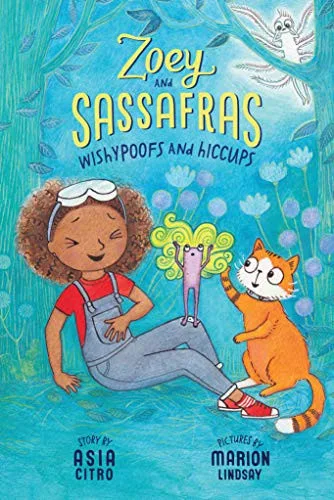
This series is the perfect transition for kids who are over picture books but intimidated by a 300-page novel. Zoey doesn't solve problems with a magic wand; she solves them with hypotheses and experiments. It’s science-meets-fantasy in a way that makes the scientific method feel like a secret weapon. If your kid is sensitive, there’s some very mild "animal" peril (magical creatures showing up sick), but it’s always handled with care and fixed by logic.
If you’ve read the picture books (Rosie Revere, Iggy Peck), you know the vibe. The chapter books take those same characters and put them in low-stakes mysteries that require blueprints and logic to solve. The big win here is how it normalizes failure. For 8-year-olds who struggle with perfectionism, watching these "science fair Avengers" mess up and try again is a better lesson than any lecture you could give.
Sometimes a kid just needs a narrator with a massive personality to keep them turning pages. We’re in a bit of a golden age for animal-led narratives that skip the "cutesy" tropes and go straight for high-level storytelling.
This is the Newbery winner your kid will actually finish. Johannes is a dog with a massive ego who lives in a park and considers himself the "Eyes" of the ecosystem. It’s fast-paced, hilarious, and the vocabulary is sophisticated—it doesn't talk down to kids. One thing to note: the artwork is integrated into classical landscape paintings, making it a great physical book to own. If you have a sensitive animal lover, be ready for a slightly stressful sequence involving a goat, but the payoff is worth it.
If your kid is a reluctant reader, start here. The chapters are incredibly short, which creates a "just one more" loop that helps them build stamina. Roz is a robot who has to learn to survive on a wild island, and the themes of found family (she adopts a gosling) are handled with more emotional depth than most adult novels. It doesn't sanitize nature—animals hunt, and winter is harsh—but it’s a masterclass in empathy.
For the kid who wants to get lost in a world that feels thousands of years old, you want something lyrical but grounded.
Think The Wizard of Oz meets Chinese mythology. Grace Lin uses a "story-within-a-story" structure that keeps the pacing tight. It deals with some heavier themes like poverty and the feeling of failure, but it’s wrapped in such a vibrant, quest-driven narrative that it never feels heavy. The full-color illustrations (also by Lin) are stunning and help visual learners stay anchored in the story.
If your kid is struggling to get through the first few chapters of a new book, the "on-boarding" is usually the problem, not the reading level.
The move: Read the first 20-30 pages aloud to them. Once the world is built and they’re hooked on the conflict, they’re much more likely to take the book to their room and finish it solo.
Also, don't sleep on audiobooks. At Screenwise, we’re big believers that listening is literacy. Audiobooks build the "language comprehension" half of the reading rope—vocabulary, narrative structure, and syntax—while their eyes take a break. If you’ve got a long car ride, Where the Mountain Meets the Moon or The Wild Robot are top-tier family listens.
Q: Is The Eyes and the Impossible too hard for an 8-year-old to read alone?
The vocabulary is definitely sophisticated, but the voice is so engaging that most 8-year-olds can handle it if they’re confident readers. If they’re struggling, it makes an incredible read-aloud because the narrator's "voice" is so fun to perform.
Q: My kid only likes graphic novels like Dog Man. Will these land?
The Wild Robot and The Questioneers are the best "bridge" books for graphic novel fans. They have heavy illustration support and fast pacing that mimics the feel of a comic without being one.
Q: Do audiobooks "count" as reading for these books?
Absolutely. Listening builds the comprehension strands of literacy—vocabulary and syntax—which are just as important as decoding the words on a page. For a book like Where the Mountain Meets the Moon, the oral storytelling tradition makes the audiobook feel like the intended experience.
At age 8, the goal is intentionality—helping them choose books they actually want to spend time with, rather than just what’s assigned. If they finish one of these and ask for the sequel, you’ve won.
Next Steps:
- Check out our best books for kids list for more age-by-age picks.
- See the full digital guide for elementary school to balance reading with the rest of their screen life.
- Get a personalized reading list for your kid