

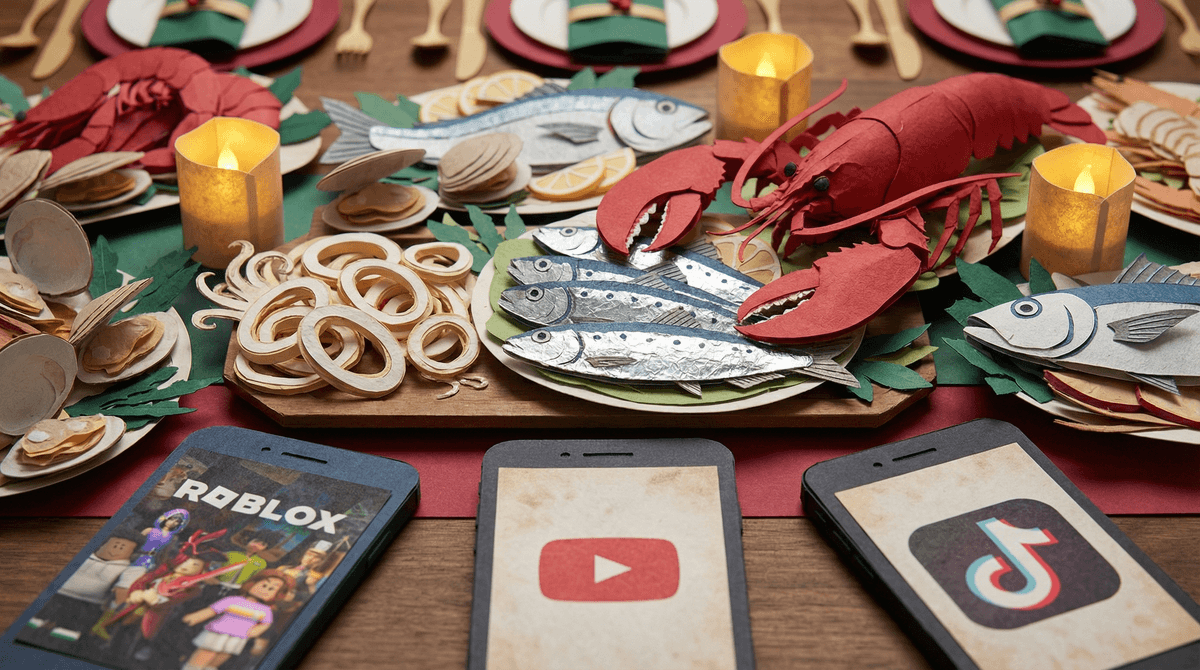
The Feast of the Seven Fishes (or La Vigilia if you want to sound fancy at your next dinner party) is an Italian-American Christmas Eve tradition that's basically the opposite of doomscrolling through TikTok while eating takeout alone on the couch.
It's a multi-course seafood dinner—traditionally seven dishes, though some families go rogue with nine or thirteen—served on Christmas Eve. The tradition comes from Southern Italy, where Catholics abstained from meat before holy days. When Italian immigrants came to America, they turned this simple fish dinner into an elaborate, hours-long feast that became less about religious fasting and more about gathering everyone around a table with zero screens and maximum chaos.
And here's the thing: in 2026, when the average family spends more time looking at devices than at each other, this tradition is basically a masterclass in analog connection.
Look, I'm not about to tell you that eating baccalà will cure your kid's screen addiction. But the Feast of the Seven Fishes does something genuinely powerful: it creates a mandatory, multi-hour block of time where everyone's doing the same thing together, and that thing doesn't involve Wi-Fi.
Think about it. When was the last time your family spent 3-4 hours together without someone checking their phone, watching a show, or sneaking off to play Roblox? The structure of this feast—the cooking, the courses, the stories between dishes—naturally creates what parenting experts call "sacred time." It's not forced family game night where everyone's secretly wishing they could get back to their screens. It's a genuine ritual.
And rituals? They're the secret weapon against digital overwhelm. Kids (and adults) crave predictable, meaningful traditions. When you establish something like this, you're not just making dinner—you're building a family identity that exists completely outside the digital world.
You don't need to be Italian to do this. You don't even need to like seafood that much (though that helps). What matters is the framework: a special meal, multiple courses, everyone involved, phones in another room.
Here's how to ease into it:
Start Small
Your first year doesn't need seven courses. Try three or four simple dishes: shrimp scampi, linguine with clams, a Caesar salad, and some crusty bread. The point isn't culinary perfection—it's time together.
Get Kids Involved
Even young kids can help prep. Ages 5-8 can tear lettuce, set the table, or arrange bread in baskets. Ages 9-12 can help cook simpler dishes under supervision. Teens can actually take on full courses (and this is where you casually teach them that cooking is a life skill that will make them more attractive to future partners, but I digress).
The involvement is key. When kids help create the meal, they're invested. They're less likely to whine about wanting to watch YouTube because they're proud of what they made.
Make It Screen-Free (But Be Smart About It)
Here's where you need to be clear and consistent. Before the feast starts, everyone puts phones in a basket or drawer. No exceptions. But—and this is important—you can't spring this on them Christmas Eve. Talk about it a week ahead. Explain why. Let them complain. Then hold the boundary.
If you've got teens who will absolutely mutiny, compromise: one designated phone break between courses where everyone can check messages together for 5 minutes. Not ideal, but better than constant sneaking.
Lean Into the Stories
Between courses, this is when the magic happens. Ask your oldest family member to tell a story from their childhood. Ask your kids about their favorite memory from the past year. Play a question game—nothing cringe, just genuine conversation starters. This is the part that sticks with kids decades later, not the fish.
If you want to go traditional, here are classic dishes:
- Baccalà (salt cod) - usually in tomato sauce or fried
- Calamari - fried or in marinara
- Shrimp - scampi style or in pasta
- Clams - linguine with clams is the move
- Mussels - marinara or white wine sauce
- Anchovies - on pizza, in pasta, or straight up if you're brave
- Octopus or eel - the advanced level stuff
But honestly? You can do salmon, tuna, crab cakes, fish tacos, or whatever seafood your family actually likes. The number seven isn't even historically accurate—it's more of an Italian-American invention. Some families do thirteen fish (representing Jesus and the twelve apostles), some do nine (the Holy Trinity times three). Do what works for you.
Make it the Feast of the Seven Dishes and do vegetarian courses. Or do a Taco Night Feast with seven different toppings and sides. Or a Pizza Feast where everyone makes their own. The food is just the vehicle—the point is the ritual.
The core elements that matter:
- Multiple courses (creates natural pacing and conversation breaks)
- Everyone participates in prep or setup
- No screens during the meal
- It happens the same time every year
- There's storytelling or intentional conversation
The Feast of the Seven Fishes isn't about being Italian or even about fish. It's about creating a non-negotiable family tradition that exists entirely outside the digital world. It's about teaching your kids that some of the best moments in life happen when you're fully present, slightly uncomfortable (because Aunt Marie is asking about school again), and surrounded by people who knew you before you had a digital footprint.
In a world where Discord servers and Fortnite squads can feel like "community," this is how you show kids what real, embodied connection looks like. It's messy. It's long. Someone will definitely complain. And it's absolutely worth it.
This year: Start planning now. Pick 3-4 seafood dishes (or alternatives). Block off 3-4 hours on Christmas Eve. Tell your family this is happening. Buy a basket for phones.
Make it stick: Take one photo at the start of the meal (then put the phone away). Next year, show your kids that photo and ask if they want to do it again. Let the tradition build naturally.
Get help if you need it: If your family's screen habits feel too entrenched to imagine a 4-hour phone-free dinner, start with smaller steps . Even 30-minute screen-free dinners are a win.
The goal isn't perfection. It's presence. And sometimes that starts with seven fish.