

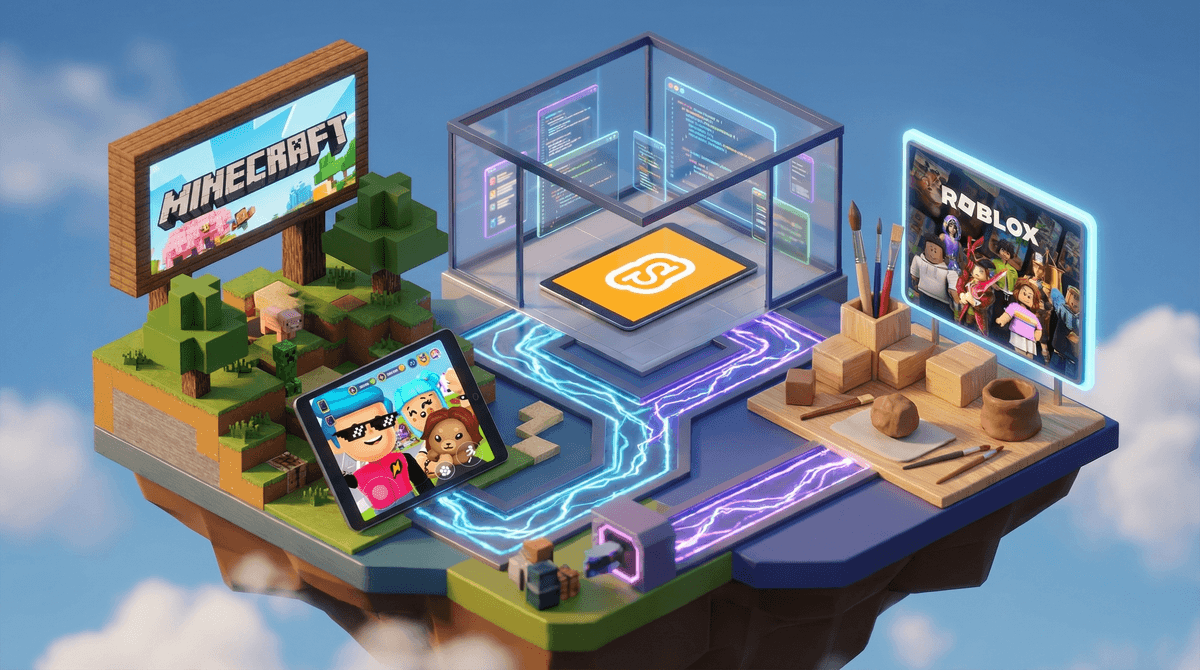
You know that moment when you realize your kid could tell you the entire economic system of Adopt Me but can't remember to brush their teeth? When they've designed three elaborate Roblox worlds but their actual room looks like a crime scene? That's Roblox energy—and it's not inherently bad.
This isn't about demonizing Roblox or treating your kid's genuine interest as a problem to solve. It's about recognizing when something that started as a healthy hobby has tipped into something that's crowding out other parts of life. And then figuring out how to channel that same enthusiasm, creativity, and dedication into a more balanced mix of activities.
The tricky part? Your kid isn't "addicted" in the clinical sense most of the time. They're genuinely passionate about something that happens to be designed by very smart people to be as engaging as possible. Learn more about how game design hooks kids .
.
Here's what we're seeing: a lot of kids ages 8-14 are spending 15-25+ hours per week on Roblox. That's not a judgment—it's just math. And when you do the math on a week, that's a significant chunk of their discretionary time.
The issue isn't that Roblox is evil. It's that when any single activity dominates that heavily, kids miss out on:
- Physical movement and outdoor time (which we know impacts mood, sleep, and development)
- Face-to-face social skills that don't translate through a screen
- Boredom (which, weirdly, is where creativity actually lives)
- Varied interests that help them figure out who they are
- Family connection that isn't mediated through a device
And honestly? Sometimes the Roblox energy is masking something else—anxiety about school, friendship struggles, or just the general overwhelm of being a kid right now.
The passion is real. If your kid is designing games in Roblox Studio, they're learning actual skills: basic coding, 3D design, user experience, even business concepts if they're monetizing. Don't dismiss this as "just gaming."
But the design is intentional. Roblox uses every psychological trick in the book—daily rewards, FOMO-inducing limited items, social pressure through friend activity feeds, and an economy that makes you might want to understand how Robux actually works. It's not a level playing field between your kid's willpower and a multibillion-dollar company's engagement metrics.
The social piece is complicated. Yes, they're "playing with friends." But also, they're often playing near friends while mostly grinding solo, or they're in servers with strangers. The social connection is real but it's not the same as shooting hoops in the driveway.
Withdrawal is real. When you try to set limits, you might see genuine emotional dysregulation—mood swings, irritability, even what looks like grief. That's not manipulation (usually). Their brain has genuinely gotten used to that dopamine pattern.
Start With Curiosity, Not Crackdown
Before you change anything, spend a week really understanding what they're doing. Ask them to show you their favorite game, explain what they're building, walk you through why they love it. You need to understand what need it's meeting before you can offer alternatives.
Maybe they love the creative building (hello Minecraft, Lego, actual art supplies). Maybe it's the social hangout (can you facilitate more IRL friend time?). Maybe it's the achievement system (sports, music lessons, martial arts all offer this). Maybe it's genuine escape from stress (that's a different conversation to have).
Bridge, Don't Ban
Look for activities that honor what they love about Roblox while expanding their world:
If they love building/creating:
- Minecraft (yes, still screen time, but different social dynamics and creative constraints)
- Physical building: Lego, Lego Mindstorms, K'NEX
- Actual coding classes (many libraries offer free ones)
- Scratch for game design that's more educational
- Tinkercad for 3D design
If they love the social aspect:
- Structured group activities (sports teams, Dungeons & Dragons groups, theater)
- Gaming cafes or arcade trips where gaming is social but time-limited
- Board game nights (there are incredibly strategic modern board games that appeal to gamers)
If they love the achievement/progression:
- Martial arts (literal leveling up with belt systems)
- Music lessons (concrete progress, performances as "achievements")
- Duolingo or similar apps that scratch the achievement itch but for learning
- Sports with clear skill progression
Set Boundaries That Make Sense
Time limits alone often backfire. If you just say "one hour a day," they'll spend the other 23 hours thinking about that one hour. Instead:
- Anchor to real life first: "After homework, after dinner with family, and after 30 minutes of outdoor time, you can have screen time until 7:30pm"
- Create tech-free zones: Bedrooms, mealtimes, car rides, first hour after school
- Use natural endpoints: "You can play until dinner" works better than a timer that interrupts mid-game
- Weekend vs. weekday rules: Different limits for different days helps kids feel less restricted
The Robux conversation matters. If they're spending real money (or begging you to), that's a separate issue about digital economics and impulse control. Understanding the Robux economy helps you have this conversation.
Fill the Void Proactively
Here's the thing nobody tells you: if you just remove Roblox without adding anything, you're creating a vacuum. And vacuums get filled with YouTube, TikTok, or just general moping.
You might need to be more involved for a while:
- Plan weekend activities that compete with screen appeal
- Facilitate friend hangouts at your house
- Say yes to the art supplies / sports equipment / whatever they're interested in
- Be present for boredom—don't rush to fill it, but be available when they're figuring out what else they like
Involve Them in the Solution
Kids 10+ can be surprisingly reasonable if you treat them like partners. Try:
"I've noticed Roblox is taking up a lot of your time, and I'm worried you're missing out on other stuff. I'm not trying to take away something you love, but I do need to make sure you're getting balance. What do you think would be fair?"
You might be surprised. They often know when it's too much. They just don't have the executive function to regulate it themselves yet.
Ages 6-8: At this age, you're still mostly in control. Transition to more parent-directed activities is easier. Focus on replacing screen time with high-engagement alternatives like playground time, craft projects, and hands-on building toys.
Ages 9-12: This is peak Roblox age, and also peak social pressure. Acknowledge that "everyone plays" but hold boundaries anyway. Emphasize activities where they can see their friends IRL. Consider letting them earn extra screen time through other activities.
Ages 13+: They're old enough for real conversations about self-regulation, opportunity cost, and how they want to spend their time. Focus less on control, more on helping them develop their own awareness. Ask questions like "How do you feel after three hours of Roblox versus after basketball practice?"
Redirecting Roblox energy isn't about eliminating something your kid loves. It's about helping them build a life where that passion has a healthy place alongside other experiences that matter.
The goal isn't to raise a kid who never plays Roblox. It's to raise a kid who can enjoy Roblox, but also knows how to build something with their hands, connect with friends face-to-face, move their body, and sit with boredom long enough for their own creativity to emerge.
Some kids will need firm boundaries. Others will respond to gentle guidance. Most will need both at different times. There's no perfect formula—just your knowledge of your kid, your family values, and your willingness to stay engaged even when it's easier to just let them play.
This week:
- Spend 20 minutes watching them play and asking genuine questions
- Identify what need Roblox is meeting (creativity? social? achievement? escape?)
- Have one conversation about what balance might look like—without implementing changes yet
This month:
- Introduce one new activity that bridges their Roblox interests
- Implement one new boundary (start small—maybe tech-free dinners)
- Check in weekly: "How are you feeling about the balance?"
Remember: You're not trying to win a battle. You're trying to teach a skill—the skill of self-regulation and balanced living. That takes time, mistakes, and lots of conversations.
Want to understand more about your family's specific situation? Screenwise can help you see how your family's tech use compares to others in your community and give you personalized strategies that actually fit your life.