

Raising Kids with Conscience: Teaching Empathy and Values in a Digital World
Look, I'm not going to sugarcoat it: raising kids with a strong moral compass has always been hard, but doing it in 2026 when they're swimming in an ocean of digital content, algorithmic rage-bait, and infinite scrolling? That's expert-level parenting.
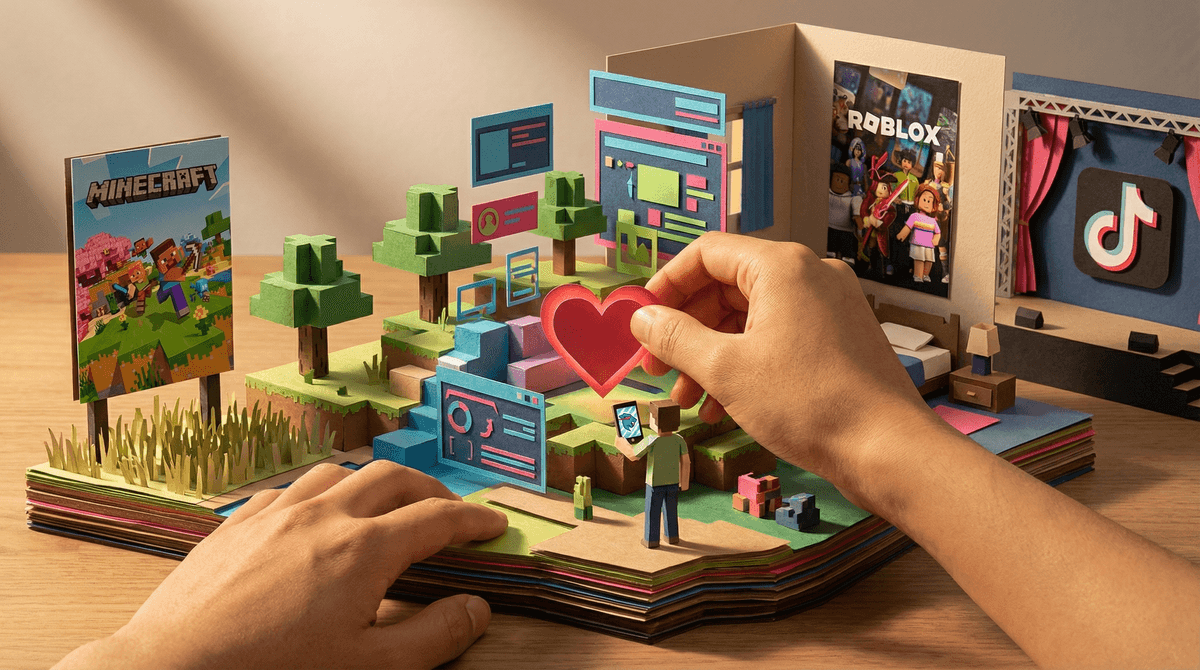
The good news? The digital world isn't the enemy of conscience—it's actually an incredible training ground. Every TikTok comment section, every Roblox scam attempt, every group chat drama is a chance to help kids develop empathy, critical thinking, and moral courage. You just need to know how to use these moments.
We're talking about helping kids develop:
Empathy - The ability to understand and care about other people's feelings, even (especially) when those people are just usernames on a screen
Critical thinking - Questioning what they see, recognizing manipulation, understanding that not everything online is true or fair
Moral courage - Standing up for what's right even when it's awkward, unpopular, or means losing social capital
Values alignment - Making choices that reflect your family's values, even when no one's watching
The tricky part? Kids are learning about human behavior from algorithms designed to maximize engagement, not develop character. They're watching MrBeast give away millions while also seeing influencers fake pranks for views. They're playing Roblox games that teach entrepreneurship and games that are basically gambling simulators. It's a lot.
Here's what's different about raising kids now versus when we grew up:
Anonymity breeds cruelty. It's way easier to be mean to "xXGamerKid2013Xx" than to Emily from math class. Kids need explicit teaching about digital empathy—that real humans exist behind every avatar.
Algorithms reward outrage. Platforms literally pay creators for engagement, which means the most extreme, divisive, shocking content rises to the top. Your kid's feed is optimized for reaction, not reflection.
Peer pressure is 24/7. It used to be that you could escape social dynamics at home. Now the group chat follows them everywhere, and FOMO is a constant background hum.
The stakes feel lower (but aren't). Sharing someone's embarrassing photo or piling on in comments doesn't feel as serious as in-person bullying. But the harm is real and often permanent.
Ages 5-8: Start with the basics
At this age, kids are just beginning to understand that other people have different thoughts and feelings. Use their screen time as empathy practice:
- When watching Bluey or Encanto, pause and ask: "How do you think they're feeling right now? How can you tell?"
- If they're playing Minecraft with friends, talk about what it feels like when someone destroys your build
- Model empathetic language: "I wonder if that made them sad" or "That must have been frustrating"
Ages 9-12: Connect online actions to real feelings
This is when many kids get their first devices and social accounts. Time to get explicit:
- Have them imagine the person behind the screen. "If you were going to post that comment, would you say it to their face? Why or why not?"
- When they encounter meanness online (and they will), process it together: "How do you think that person felt when they read that? Why do you think someone would write something like that?"
- Celebrate upstander behavior. When they defend someone in a group chat or report bullying, make a big deal about their moral courage
Ages 13+: Navigate moral complexity
Teenagers are developmentally wired to question authority and figure out their own values. Use digital dilemmas as discussion starters:
- "Your friend group is roasting someone in the chat. You don't think it's that funny. What do you do?"
- "You see a video that seems fake but everyone's sharing it. How do you figure out if it's real?"
- "Someone's getting cancelled for something they said years ago. Is that fair?"

Teach them to question everything:
Start young. Even kindergarteners can learn that "not everything on a screen is real." By middle school, they should be asking:
- Who made this and why?
- What are they trying to get me to think, feel, or do?
- What information might be missing?
- Who benefits if I believe/share this?
Use their interests as teaching moments:
If they're into Fortnite, talk about how the game is designed to keep them playing and spending. If they watch YouTube, discuss how creators use thumbnails and titles to get clicks. If they're on Discord, talk about how communities can become echo chambers.
This isn't about making them cynical—it's about making them savvy.
The hardest part of having a conscience? Actually acting on it when it costs you something.
Practice in low-stakes situations:
- Role-play: "What would you say if your friend wanted to copy your homework?"
- Discuss hypotheticals: "If everyone in your squad was using a cheat code, would you?"
- Celebrate small acts of integrity: returning extra change, admitting mistakes, speaking up when something feels wrong
Acknowledge that it's genuinely hard:
Don't minimize the social risk. "I know it feels scary to be the only one saying something" is more helpful than "just do the right thing!" Talk about times you've struggled with moral decisions. Share stories of people who stood up for what was right even when it was unpopular.
Give them language:
Sometimes kids want to do the right thing but don't know how to say it without sounding preachy. Offer scripts:
- "That doesn't feel right to me"
- "I'm out on this one"
- "Not my thing"
- "I'm good"
Your values are caught more than taught. How do you talk about people online? Do you doomscroll and complain, or do you model critical consumption? Do you gossip in the group chat? Kids are watching.
Conscience develops slowly. Young kids are rule-followers. Tweens test boundaries. Teens question everything. This is normal and healthy. Your job isn't to control their every choice—it's to give them a framework for making good ones.
Mistakes are part of the process. Your kid will probably do something online they regret. They might share something mean, believe something false, or go along with the crowd when they shouldn't have. These are teaching moments, not catastrophes.
Different families, different values. You might care deeply about environmental issues, social justice, religious faith, or political principles. Whatever your family's specific values are, make them explicit and connect them to digital choices.
Raising kids with conscience in a digital world means being present, asking questions, and using every app, game, and platform as a chance to practice empathy and integrity.
It means teaching them that the person on the other side of the screen is real, that their choices matter even when no one's watching, and that having moral courage sometimes means being the weird one who doesn't go along.
It's not about achieving perfection or shielding them from everything problematic online (impossible). It's about building their internal compass so that when they encounter moral complexity—and they will, constantly—they have the tools to navigate it.
This week:
- Pick one show or game your kid loves and watch/play together, asking empathy questions
- Share a time you struggled with a moral decision and what you learned
- Practice one "upstander" scenario together
This month:
- Have a family conversation about your core values and how they show up online
- Establish one clear expectation about digital behavior (e.g., "We don't share photos of people without asking")
- Celebrate a moment when your kid showed moral courage, online or off
Ongoing:
- Stay curious about their digital life without being invasive
- Process moral dilemmas together when they come up (and they will)
- Remember that building conscience is a long game, not a sprint
The digital world is messy, complicated, and often designed to bring out our worst impulses. But it's also where your kids are growing up. By engaging with it thoughtfully, you're not just teaching them to survive online—you're teaching them to be good humans, period.