

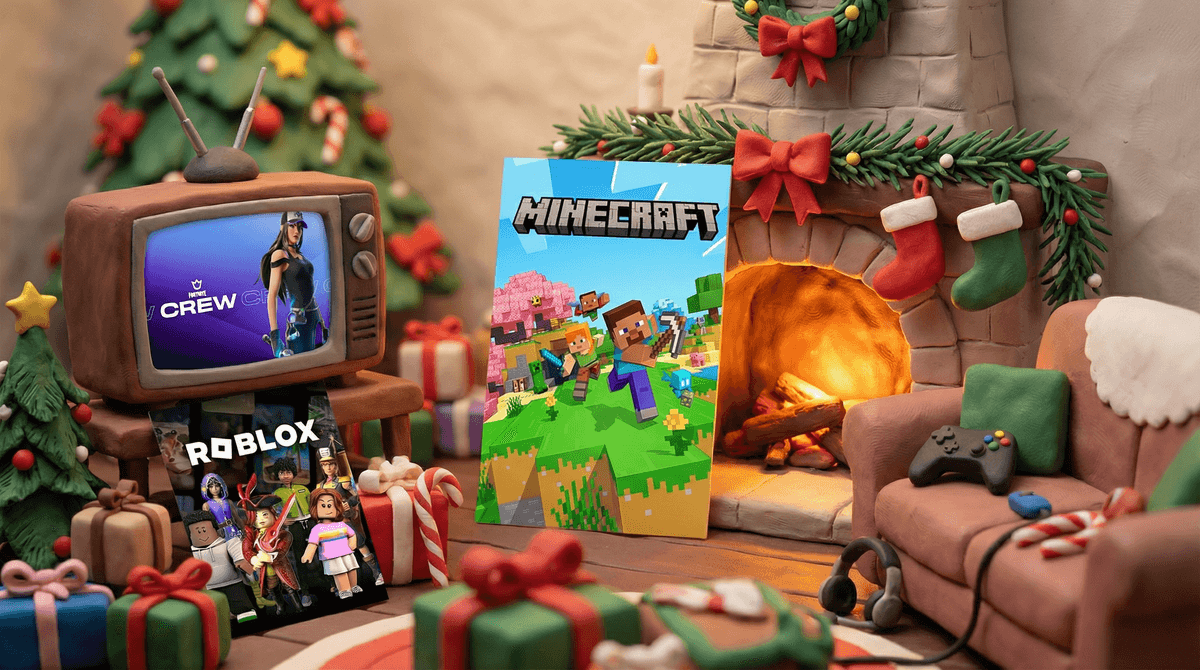
You know what's coming. The wish lists are already rolling in—a new gaming console, Robux gift cards, V-Bucks for Fortnite, that specific gaming headset their friend has. Then winter break hits and suddenly you're navigating two weeks of "can I play just one more game?" while trying to maintain some semblance of family time.
The holidays create this perfect storm of gaming intensity: new games and devices under the tree, extended time off from school, cold weather keeping everyone inside, and that post-gift-opening dopamine rush that makes kids want to dive immediately into their new digital worlds.
Here's the reality check: 55% of families in our community allow gaming, and those numbers spike dramatically during holiday break. You're not alone in this, and you're definitely not the only one wondering how to handle it without becoming the fun police.
Holiday gaming isn't just about screen time—it's layered with a bunch of emotional landmines:
The gift guilt factor: You just spent money on these games and devices. It feels weird to immediately restrict them, right? Kids know this and will absolutely use it as leverage.
Multiplayer FOMO: Roblox doesn't pause. In our data, 60% of kids are playing Roblox on servers with others—meaning their friends are online during break, and your kid feels like they're missing out on every single moment they're not playing.
Family visiting dynamics: Grandparents who think you're too strict. Cousins with different rules. The "but they get to play all day" comparisons that make you question everything.
The boredom trap: "There's nothing else to do" becomes the constant refrain, especially when it's dark by 4:30pm and everyone's been together for days straight.
The biggest mistake? Waiting until December 26th to figure out the rules. Have these conversations before gifts are opened:
The Pre-Holiday Gaming Agreement
Sit down together and actually write out expectations. This isn't about being controlling—it's about clarity. Cover:
- Daily gaming limits during break (be specific: weekdays vs. weekends, morning vs. evening)
- What happens with new gifts (maybe Christmas Day is a free-for-all, but December 27th returns to structure)
- Family time that's non-negotiable (meals, movie nights, that one day trip you're planning)
- Earning additional time (through reading, outdoor play, helping with chores)
Make it collaborative. Kids who help create the rules are more likely to follow them without the constant negotiation.
Managing the Wish List Wisely
When kids ask for gaming stuff, get specific about what they're actually requesting. That Minecraft request—are they asking for the game itself, or access to multiplayer servers, or a Realm subscription? These are very different things with different implications.
Our data shows 35% of kids play Minecraft offline while 25% are on servers. If your kid currently plays offline and is asking for server access, that's a bigger conversation about online safety and chat features than just "more Minecraft."
Same with Fortnite—only 30% of families allow it at all, and there's a big difference between playing offline creative mode versus battle royale with voice chat enabled with strangers.
The Daily Reset
Don't let gaming be the first and last thing that happens each day. Try bookending: no gaming until after breakfast and getting dressed, and gaming ends at least an hour before bedtime. This creates natural boundaries without feeling arbitrary.
The Multiplayer Reality Check
Here's where it gets tricky. When your kid is mid-game with friends, "pause it" isn't an option. But that doesn't mean they get infinite time. Solutions that actually work:
- Set end times in advance: "You can start a game at 3pm, but at 4:30 you need to wrap up—so choose a good stopping point"
- Use the game's natural breaks: Most games have rounds or matches. "After this match" is clearer than "in 10 minutes"
- Teach them to communicate: They can tell friends "I can play for one more round" without drama
The New Console/Game Situation
If they get a new Nintendo Switch or PlayStation, the first few days will be intense. That's actually normal—it's new and exciting. Consider:
- Letting Christmas Day be more relaxed about limits
- Building in "exploration time" for new games
- Setting up parental controls immediately (not three weeks later when you realize you should have)
When Relatives Have Different Rules
Your nephew plays Fortnite with voice chat on with strangers. Your kid doesn't. Now they're visiting and it's awkward.
You're allowed to maintain your family's boundaries even when visiting. A simple "We handle it differently, and that's okay—different families, different rules" works. Don't apologize for your choices, but don't judge theirs either.
Let's be specific about what you're likely dealing with:
Roblox: With 75% of families allowing it in some form, this is probably already in your house. The holiday requests are usually for Robux. Remember: Robux is real money, and kids can easily spend $50 in an afternoon. Set clear budgets.
Minecraft: Generally parent-approved (60% allow it), but watch for that server access request. Minecraft servers can range from family-friendly to absolutely not.
Fortnite: Still controversial—70% of families say no. If you're considering it, understand it's a battle royale shooter with voice chat and in-game purchases. Ages 13+ is the rating for a reason.
Perfect balance doesn't exist. Some days they'll play more, some days less. The goal isn't to eliminate gaming during the holidays—it's to keep it from consuming everything else.
The framework that works: Clear expectations set early + flexibility for special circumstances + consistent enforcement = way less arguing.
And honestly? If you make it through winter break without completely losing your mind over gaming negotiations, you're doing great.
- This week: Have the pre-holiday gaming conversation and write down agreed-upon limits
- Before gifts are opened: Set up parental controls on any new devices or games
- During break: Check in mid-week to see if the plan is working or needs adjustment
- After the holidays: Reassess what worked and what didn't for next time
Need help figuring out if a specific game is appropriate for your kid? Ask about age ratings and content concerns or explore our guide to understanding game ratings.
You've got this. And remember: you're not ruining their childhood by having boundaries. You're teaching them that good things exist both on screens and off them.