

Is TV Really Bad for Kids? What the Science Actually Says
Look, if you grew up in the 80s or 90s, you probably heard some version of "TV will rot your brain" from a well-meaning adult. And now here we are, trying to figure out if letting our kids watch Bluey for the third time today makes us bad parents.
The short answer? TV isn't inherently bad for kids. But like most things in parenting, it's way more nuanced than a simple yes or no.
Here's what decades of research tells us: it's not really about whether kids watch TV—it's about what they watch, how much they watch, and what they're not doing instead.
The American Academy of Pediatrics recommends no screen time for kids under 18 months (except video chatting), limited high-quality programming for ages 2-5, and consistent limits for older kids. But even they've softened their stance over the years, recognizing that not all screen time is created equal.
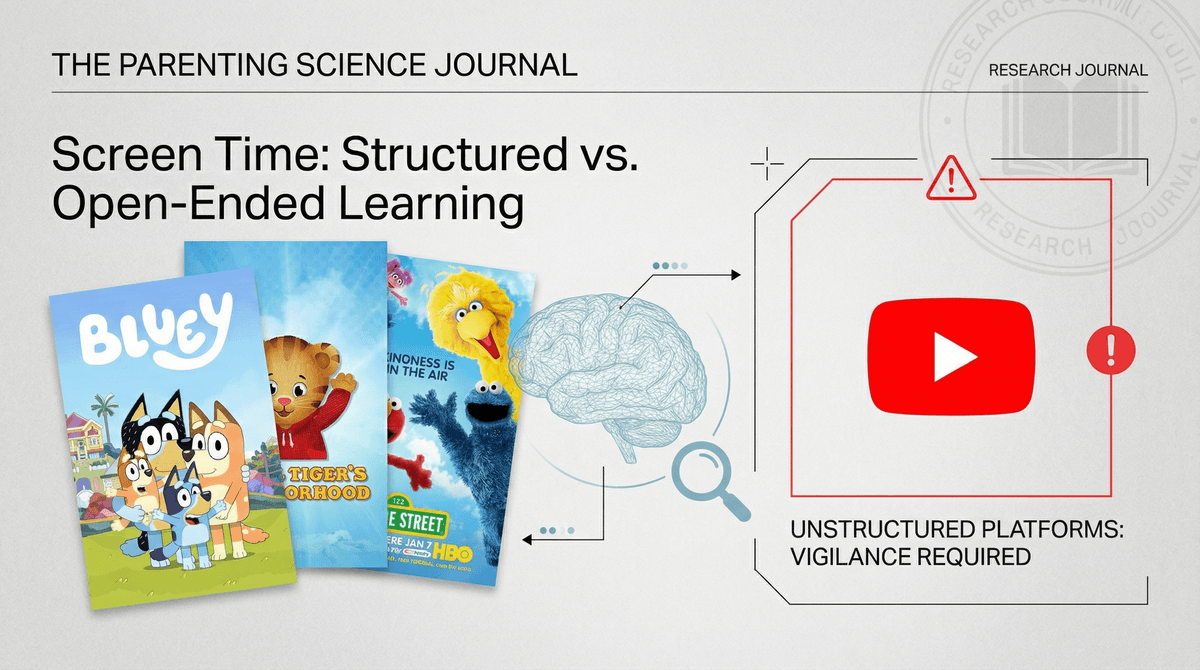
The quality matters more than you think. A 2019 study found that educational content like Sesame Street actually improved vocabulary and school readiness in preschoolers. Meanwhile, fast-paced, low-quality content (yes, I'm looking at you, certain YouTube channels) can negatively impact executive function and attention spans.
The displacement effect is real though. Every hour of TV is an hour not spent playing outside, reading, or having conversations. And those activities? They're crucial for development, especially in younger kids.
Because modern TV isn't just TV anymore. We're not talking about Saturday morning cartoons with commercial breaks. We're dealing with:
- Streaming platforms that autoplay the next episode before you can blink
- YouTube algorithms designed to keep kids watching "just one more"
- Apps disguised as educational content that are really just digital candy
- The blurred line between "watching TV" and "playing on an iPad"
Plus, let's be honest—parenting is exhausting. Sometimes you need 30 minutes to make dinner or take a work call, and Bluey is there for you. That's not lazy parenting. That's survival.
The research keeps pointing to the same factors that make TV harmful or helpful:
Content quality: Daniel Tiger's Neighborhood teaching emotional regulation? Great. Random YouTube compilations of surprise egg unboxings? Not so much.
Co-viewing: Watching together and talking about what you see amplifies the benefits. Even just being in the room and available for questions makes a difference.
Active vs. passive: Shows that encourage kids to participate, predict, or problem-solve are better than pure passive viewing.
What it's replacing: TV during dinner or before bed instead of family time or reading? That's where problems creep in. TV on a rainy Saturday afternoon when you've already been to the park? Probably fine.
Your family's overall media diet: One kid might watch 2 hours a day and be totally fine because they're also playing outside, reading, and engaged in other activities. Another kid watching the same amount might struggle if that's their primary activity.
Under 2: The research is pretty clear here—minimal screen time is best. Their brains are developing at lightning speed, and they learn best from real-world interactions. If you do use screens, make it interactive (video calls with grandparents) rather than passive.
Ages 2-5: An hour a day of high-quality content is the sweet spot. Think Sesame Street, Bluey, Daniel Tiger. Co-viewing makes a huge difference at this age. Check out our guide to preschool shows for specific recommendations.
Ages 6-12: Quality still matters, but they can handle more complex narratives. This is where you can introduce shows with actual plot and character development. The bigger concern shifts to what they're watching and whether it's crowding out other activities. Many families find 1-2 hours on school days and a bit more on weekends works well.
Teens: At this point, it's less about limiting TV and more about helping them develop media literacy and self-regulation. The conversation shifts to: Are they getting enough sleep? Physical activity? Social interaction? Is their viewing interfering with responsibilities?
Let's be specific about what the research shows does cause problems:
-
Background TV: Having the TV on "for company" actually disrupts play and reduces parent-child interaction. Kids in homes with high background TV exposure show lower reading scores and reduced attention spans.
-
Violent or age-inappropriate content: Pretty obvious, but worth stating. A 5-year-old watching Squid Game? That's genuinely harmful.
-
Screens before bed: The blue light and stimulation interfere with sleep, which affects everything else. Aim for screens off at least an hour before bedtime.
-
Eating in front of screens: Associated with obesity, mindless eating, and reduced family connection.
-
Replacing human interaction: Especially for young kids, a screen should never be a substitute for conversation and play with real humans.
Your guilt is probably overblown. Unless your kid is watching 6 hours of random YouTube daily while never going outside, you're probably doing fine. The research on moderate, quality screen time is actually pretty reassuring.
"Educational" doesn't always mean educational. Lots of apps and shows slap that label on without any evidence. Look for content created by actual educators or backed by research. Common Sense Media is your friend here.
TV isn't a moral failing. It's a tool. Like sugar or video games or anything else, it can be used well or poorly. A kid who watches quality TV in moderation while also reading, playing, and connecting with family? That kid is going to be fine.
The rules you set matter less than consistency. Whether you allow 30 minutes or 2 hours isn't as important as being consistent and intentional about it. Kids do better with clear boundaries they can count on.
Context is everything. A sick kid binging Avatar: The Last Airbender on the couch? That's different from daily multi-hour sessions that replace all other activities.
TV isn't bad for kids. But like most things, it can be used in ways that aren't great. The science suggests focusing on:
- Quality over quantity (though quantity still matters)
- Co-viewing when possible, especially with younger kids
- Being intentional about what and when
- Making sure TV isn't crowding out sleep, physical activity, reading, and human connection
- Trusting yourself to know what works for your family
If you're reading this article, you're already being intentional about your family's media habits. That self-awareness matters more than any specific screen time rule.
Want to get more specific about your family's TV habits? Take our digital wellness survey to see how your family's screen time compares to others in your community and get personalized recommendations.
Looking for quality shows for your kids' age? Check out our guides:
And if you're wondering about how TV time compares to other screen time , or whether you should count audiobooks and podcasts in screen time limits, our chatbot can help you think through those specifics for your family.